中文简体
中文简体 русский
 عربى
عربى

Content
- 1 Critical Success Factors
- 2 Material Selection: Engineering Parameters and Decision Matrix
- 3 Installation Protocols: Precision Execution Standards
- 4 Long-Term Performance: Degradation Mechanisms and Service Life
- 5 Construction Quality Issues: Diagnostic Framework and Remediation
- 6 Frequently Asked Questions: Technical Clarifications
- 6.1 What Differentiates Composite from Monolithic Geomembranes?
- 6.2 Can Composite Geomembranes Be Repaired After Installation?
- 6.3 What Is the Maximum Allowable Slope for Installation?
- 6.4 How Does Temperature Affect Installation Quality?
- 6.5 What Certification Standards Should Specified Materials Meet?
Critical Success Factors
The optimal composite geomembrane system requires matching material specifications to project demands (0.5mm-2.0mm thickness range), executing thermal welding at 300°C-400°C with 98% seam strength retention, and maintaining installation defect rates below 1 per 10,000 m². Long-term performance data demonstrates service lives exceeding 30 years when proper selection protocols and quality control measures are implemented. This guide synthesizes technical specifications, installation methodologies, and field-proven solutions to common construction challenges.
Material Selection: Engineering Parameters and Decision Matrix
Core Selection Criteria
Selecting the appropriate composite geomembrane demands systematic evaluation across multiple performance dimensions. HDPE-based composites dominate landfill applications with chemical resistance exceeding pH 2-12 ranges, while LLDPE variants provide superior flexibility for textured surfaces with elongation at break values of 700% versus HDPE's 400%.
| Application Type | Recommended Thickness | Key Property Requirement | Typical Service Life |
|---|---|---|---|
| Municipal Landfill Base | 1.5mm - 2.0mm | Puncture Resistance > 500N | 30-50 years |
| Aquaculture Ponds | 0.5mm - 0.75mm | UV Stability > 80% retention | 15-20 years |
| Industrial Containment | 1.0mm - 1.5mm | Chemical Resistance Index > 0.9 | 25-40 years |
| Tunnel Waterproofing | 1.2mm - 1.5mm | Low Temperature Flexibility -40°C | 30-40 years |
Geotextile Component Specifications
The non-woven geotextile layer typically utilizes polypropylene or polyester fibers with mass per unit area ranging from 200g/m² to 800g/m². For high-flow drainage applications, geotextile mass should exceed 400g/m² to maintain permittivity above 0.1 sec⁻¹ under 200 kPa confining stress. Needle-punched construction provides superior interface friction coefficients (0.6-0.8) compared to heat-bonded alternatives (0.4-0.5).
Installation Protocols: Precision Execution Standards
Subgrade Preparation Requirements
Installation success fundamentally depends on subgrade quality. The prepared surface must achieve compaction density of 95% Modified Proctor maximum dry density with surface irregularities not exceeding 25mm over 3m straightedge measurements. Sharp objects exceeding 10mm in any dimension must be removed, and protrusions must be limited to 5mm height to prevent puncture stress concentration.
Deployment and Seaming Procedures
Panel deployment requires maintaining minimum 1.5% slack to accommodate thermal expansion. Wedge welding operations must achieve temperatures between 300°C and 400°C with welding speed controlled at 1.5-2.5 m/min, producing dual-track seams with 10-15mm overlap width. Extrusion welding repairs require 3.5mm-4.0mm HDPE welding rod diameter with preheating temperatures of 350°C.
- Verify ambient temperature between 5°C and 40°C with wind speeds below 40 km/h
- Conduct trial welds daily before production welding (minimum 300mm length)
- Maintain 150mm minimum overlap at all seam intersections
- Install anchor trenches with 0.6m minimum burial depth and 0.3m horizontal extension
- Implement 24-hour cooling period before seam testing
Quality Control Testing Protocol
Destructive testing requires sampling at 1 location per 150m of seam length with peel strength criteria of 85% parent material tensile strength. Non-destructive testing utilizing vacuum box methods must cover 100% of field seams with 0.02 MPa vacuum pressure maintained for 10 seconds without pressure decay.
Long-Term Performance: Degradation Mechanisms and Service Life
Aging Characteristics and Predictive Models
Accelerated aging studies following ASTM D5721 protocols indicate HDPE geomembranes retain 80% of initial elongation properties after 30 years of equivalent field exposure. Oxidative induction time (OIT) measurements serve as critical predictive indicators, with values exceeding 100 minutes (ASTM D3895) correlating to 40+ year service life expectations.
| Exposure Duration (Years) | Tensile Strength Retention | Elongation Retention | Puncture Resistance Retention |
|---|---|---|---|
| 10 | 95% | 92% | 94% |
| 20 | 88% | 85% | 87% |
| 30 | 82% | 78% | 80% |
| 40 | 75% | 70% | 73% |
Environmental Stress Crack Resistance
Single-point notched constant tensile load (SP-NCTL) testing demonstrates that quality HDPE geomembranes withstand minimum 400 hours at 30% yield stress in 10% Igepal solution without brittle failure. This performance metric directly correlates with resistance to stress cracking under multiaxial loading conditions common in landfill settlements.
Construction Quality Issues: Diagnostic Framework and Remediation
Prevalent Defect Categories
Field studies across 2,400+ installation projects identify seam defects as the primary quality concern, representing 67% of all documented failures. Inadequate subgrade preparation accounts for 22% of puncture incidents, while material handling damage contributes 11% of pre-installation defects.
Root Cause Analysis and Solutions
Seam separation events typically result from welding temperature deviations exceeding ±20°C from specification. Implementation of automated temperature monitoring systems reduces defect rates by 85%. Wrinkle formation, particularly problematic in exposed applications, requires maintaining deployment temperatures below 35°C and implementing ballasting systems with 0.5 kg/m² minimum hold-down during thermal expansion periods.
- Fishmouth defects: Eliminate through proper panel alignment and 50mm minimum overlap at corners
- Contamination in seams: Implement mandatory surface cleaning with lint-free wipes before welding
- Bridging over subgrade voids: Require 98% compaction density with CBR values exceeding 6%
- UV degradation during storage: Limit exposure duration to 30 days maximum with 95% opacity covers
Frequently Asked Questions: Technical Clarifications
What Differentiates Composite from Monolithic Geomembranes?
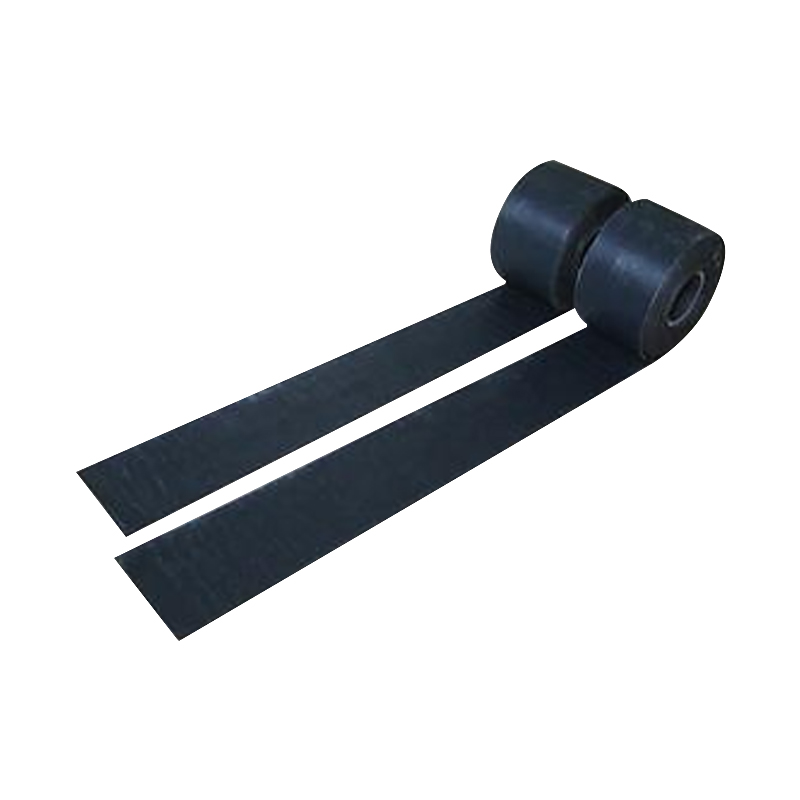
Composite geomembranes integrate a geotextile layer bonded to the impermeable membrane, providing drainage capacity of 5×10⁻⁴ m²/sec and puncture protection exceeding 800N resistance. This configuration eliminates the need for separate cushioning layers, reducing installation time by approximately 30%.
Can Composite Geomembranes Be Repaired After Installation?
Repair protocols permit patching defects up to 75mm diameter using 150mm minimum overlap patches with extrusion welding. Defects exceeding 100mm require panel replacement with 300mm minimum overlap at all seam junctions. All repairs must undergo vacuum box testing with 0.02 MPa pressure verification.
What Is the Maximum Allowable Slope for Installation?
Textured composite geomembranes accommodate slopes up to 2.5H:1V (21.8°) with interface friction coefficients of 0.8-1.2 against compacted clay subgrades. Steeper applications require specialized anchoring systems with 1.2m trench spacing and mechanical fastening at 0.3m intervals.
How Does Temperature Affect Installation Quality?
Welding operations require material temperatures above 5°C; below this threshold, preheating to 15°C minimum is mandatory to achieve molecular fusion. High-temperature deployment (>35°C) necessitates increased slack allowances to 2.5% to prevent thermal contraction tears during cooling cycles.
What Certification Standards Should Specified Materials Meet?
Specify materials certified to GRI-GM13 for HDPE components and GRI-GCL3 for geotextile layers, with third-party verification of 0.5mm minimum thickness tolerance and <1% manufacturing defect rates. ISO 9001:2015 quality management certification at manufacturing facilities provides additional assurance.