中文简体
 русский
 عربى


Content
The symptom: two winters after a fresh load of 40–20 mm crushed stone went down, the wheel tracks are 40 mm deep, the stone has migrated to the edges, and every rain leaves a puddle in the same two spots. The stone is not the problem. Nothing is holding it in place.
The short answer: a driveway gravel stabilizer must do two things — confine the aggregate so a tire cannot push it sideways, and stop fine soil from pumping up into the stone bed. A three-dimensional honeycomb geocell handles the first job. A nonwoven geotextile handles the second. A geogrid adds tensile strength where the subgrade itself is weak. Buying one of these and expecting it to do all three is the most common specification mistake on residential driveways.
What follows is how each product actually behaves under load, how to write a specification a supplier cannot dodge, and where the budget really goes.
What a gravel stabilizer does under a wheel
Load on a gravel surface never arrives straight down. Every tire contact patch pushes stone outward at the edge of the rut, which is why ruts appear along the wheel lines first and rarely in the middle of the drive. Angular crushed stone interlocks for a while; once water softens the subgrade or heavier vehicles become routine, the aggregate floats and the rut deepens.
Three-dimensional confinement: the geocell
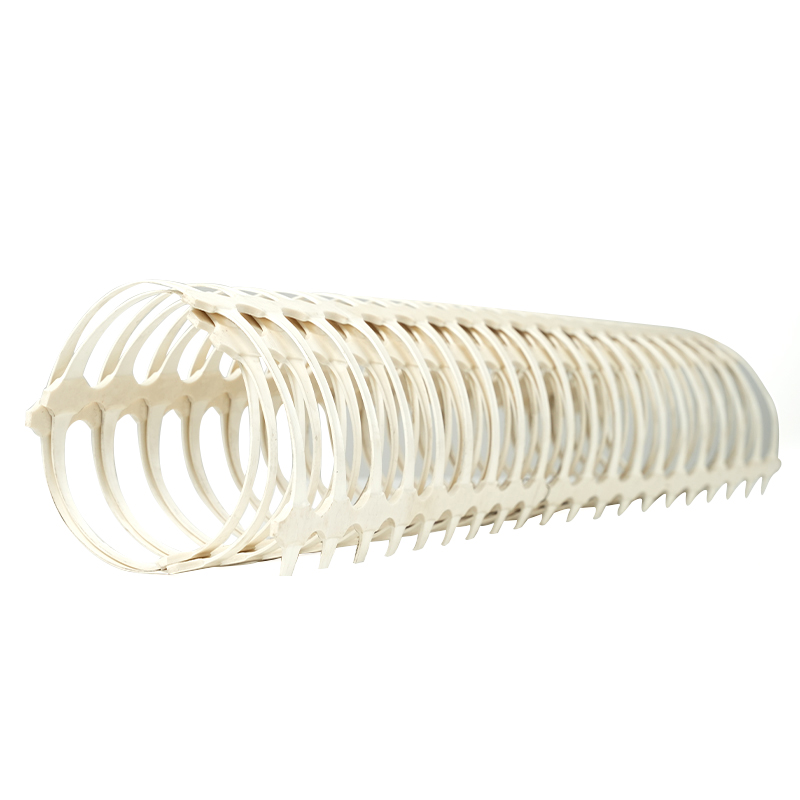
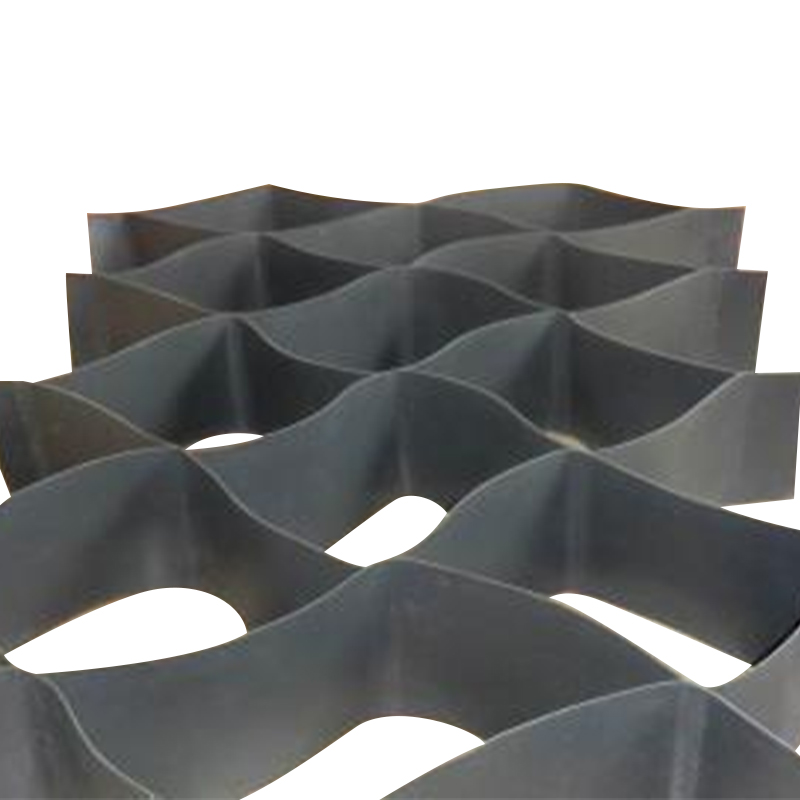
A geocell is a honeycomb of strips 75–150 mm deep, welded or riveted into cells roughly 200–400 mm across. The panel is expanded over the prepared subgrade, anchored, and filled with aggregate. Each cell traps its own stone, so material under the tire can be compacted but cannot be pushed away. This is what the term driveway gravel stabilizer usually refers to, and it explains why the product performs best on a surface that still wants to move.
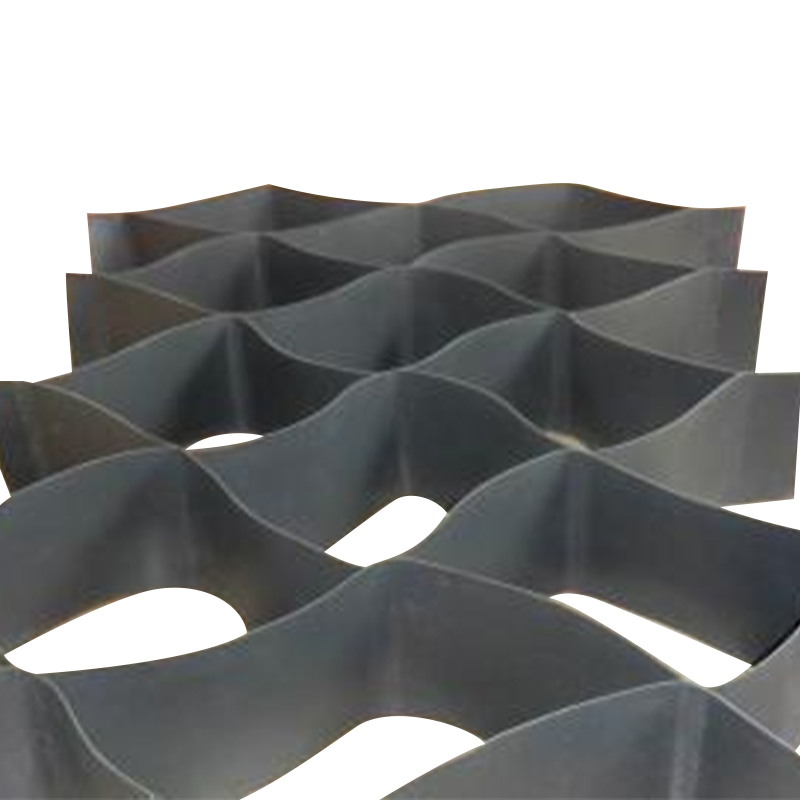 Custom HDPE Geocell for Gravel StabilizationExpandable HDPE cell panels confine aggregate and provide lateral restriction for driveways, weak subgrades, and load-dispersing roadbed applications.View Product →
Two-dimensional reinforcement: the geogrid
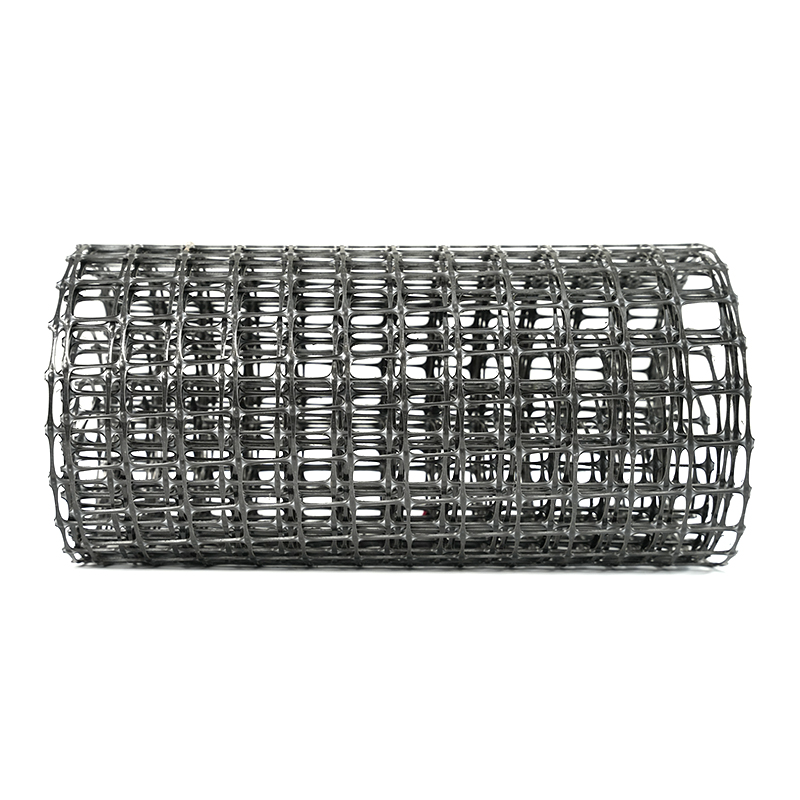
A biaxial geogrid works in tension. Laid between subgrade and aggregate, the ribs carry part of the tensile stress that would otherwise reach the stone layer and reduce differential settlement over soft ground. It suits wet, weak subgrades well — but a grid does not enclose stone, so on its own it will not stop surface aggregate from being shoved aside.
Separation and filtration: the geotextile
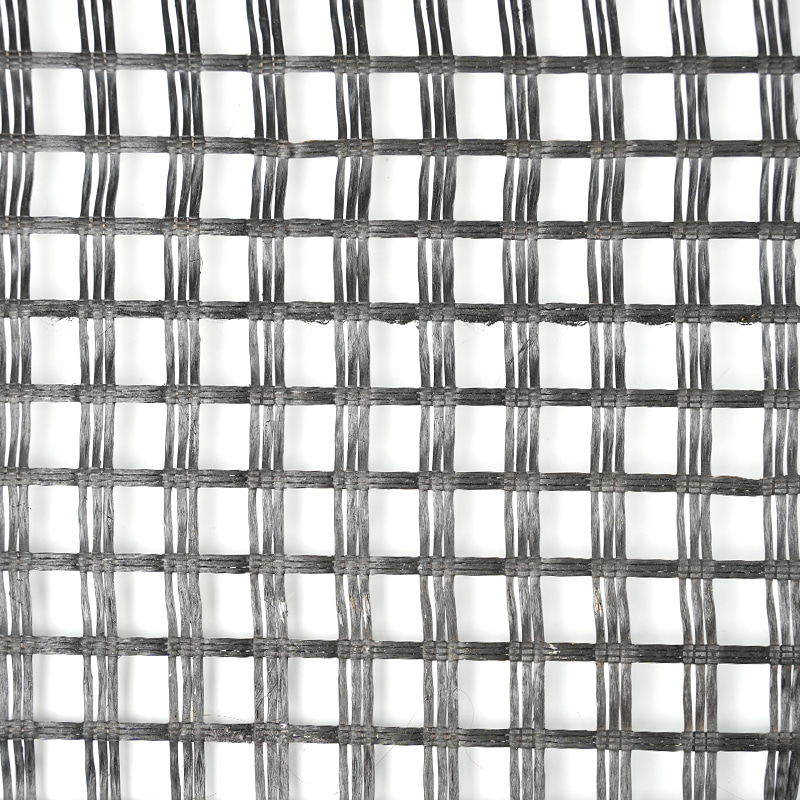
Fine particle migration is a separate problem. Without a separation layer over silty or clay subgrade, water pumps fines up into the stone and slowly turns the drainage layer into mortar. A 150–300 g/m² nonwoven geotextile filters and separates at once, costs very little, and is the component most often installed in the wrong position.
Much of this material comes from factories built around geosynthetic production lines, so experience in geosynthetic equipment and manufacturing is often a better guide to a supplier's judgement than price alone — a geocell and a geotextile solve genuinely different problems.
Writing a specification a supplier cannot dodge
Three choices decide everything else: the confinement system, the aggregate, and the subgrade preparation. Get the first one wrong and the other two cannot rescue the driveway.
| Product | Primary function | Typical specification | Where it earns its cost | What it does not do |
|---|---|---|---|---|
| 3D geocell (honeycomb) | Lateral confinement of aggregate | Cell depth 75–150 mm; cell size 200–400 mm; seam strength matched to the system | Residential driveways, parking bays, gentle ramps, regular delivery traffic | Does not filter fines; needs angular graded stone to fill |
| Biaxial geogrid | Two-dimensional tensile reinforcement | Tensile strength around 30–40 kN/m in both directions | Soft ground, reinforced base courses, approach aprons | No vertical confinement; will not hold surface stone |
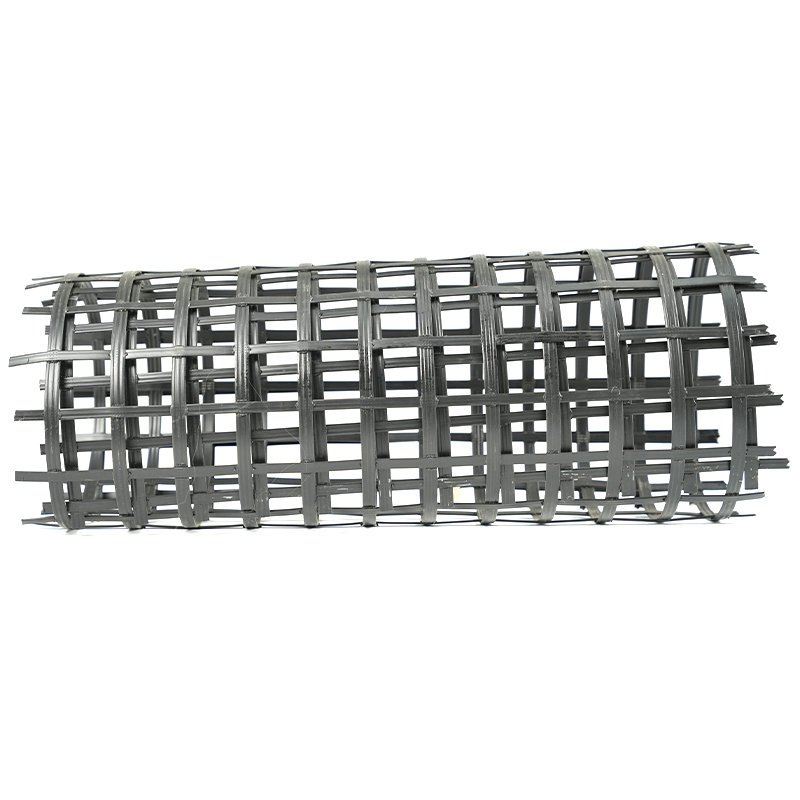
| Steel-plastic geogrid | High-strength reinforcement at low elongation | Project-specific, set by design load | Very weak subgrade, yard traffic, loaded vehicles | Higher cost per square metre; still needs surface confinement |
| Nonwoven geotextile | Separation and filtration | 150–300 g/m² | Any silt or clay subgrade | No stabilizing effect on its own |
Beyond the comparison table, these are the points worth pinning down before an order goes out:
- Aggregate: angular, graded crushed stone, commonly 40–20 mm. Rounded river pebble rolls out of the cells under a tire and is the single most common cause of failure with this type of product.
- Subgrade: compacted to at least 95% of standard Proctor before anything is laid. A weak base always telegraphs through to the surface.
- Seam strength: ask for test data on welded or riveted cell seams, not just the raw strip tensile figure. Seams are what fail first under concentrated load.
- UV stabilization: relevant if the panels will sit exposed for months before the paving window opens.
- Edge restraint: the outer row must be pinned or edged, otherwise the perimeter cells bulge outward and the surface unravels from the border in.
Where a loader or tipper will use the drive as a working surface, adding a high-tensile grid beneath the confined layer is standard practice — reinforcement, not a substitute for confinement.
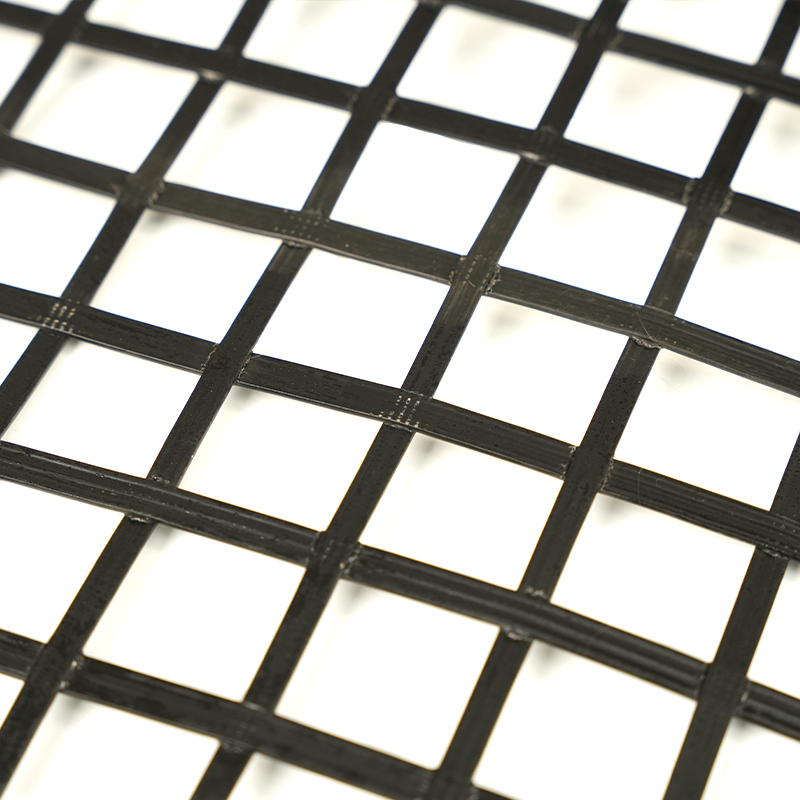 Steel Plastic Geogrid for Soil ReinforcementHigh-strength welded geogrid strips reinforce working surfaces and roadbeds where confinement alone is insufficient, with models up to 150 kN/m.View Product →
Installation sequence and the costliest mistakes
Order of work matters more than most crews expect:
- Excavate to cell depth plus 20–30 mm of surface blinding, typically 200–300 mm down after compaction.
- Level and compact the subgrade, then lay the geotextile with at least 300 mm overlaps and turn it up the sides of the excavation.
- Expand the geocell panels and anchor them tight before any stone goes in. A panel filled loose is a panel that does nothing.
- Fill with angular stone, leaving the aggregate 10–20 mm proud of the cell walls, and plate-compact once in each direction.
- Apply a thin fine aggregate dressing for a level finish and avoid over-compacting it — its job is appearance, not structure.
Mistakes behind most failures
- Filling the cells and then tensioning them.
- Using rounded, single-size stone that cannot interlock.
- Insufficient geotextile overlap, or laying it above the cells rather than beneath them.
- Leaving the perimeter unanchored, so it bulges in the first hot summer.
Poor overlap on the separation layer is the quietest of the lot — it rarely shows up in year one. Since it is also the cheapest item on the sheet, specify it as a checkable line item rather than a verbal assumption.
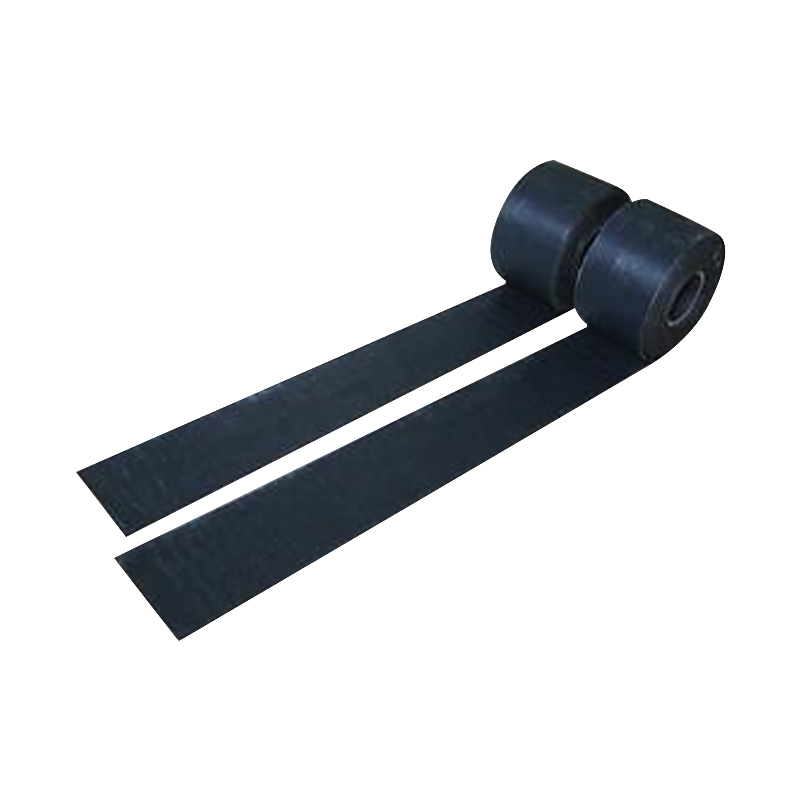
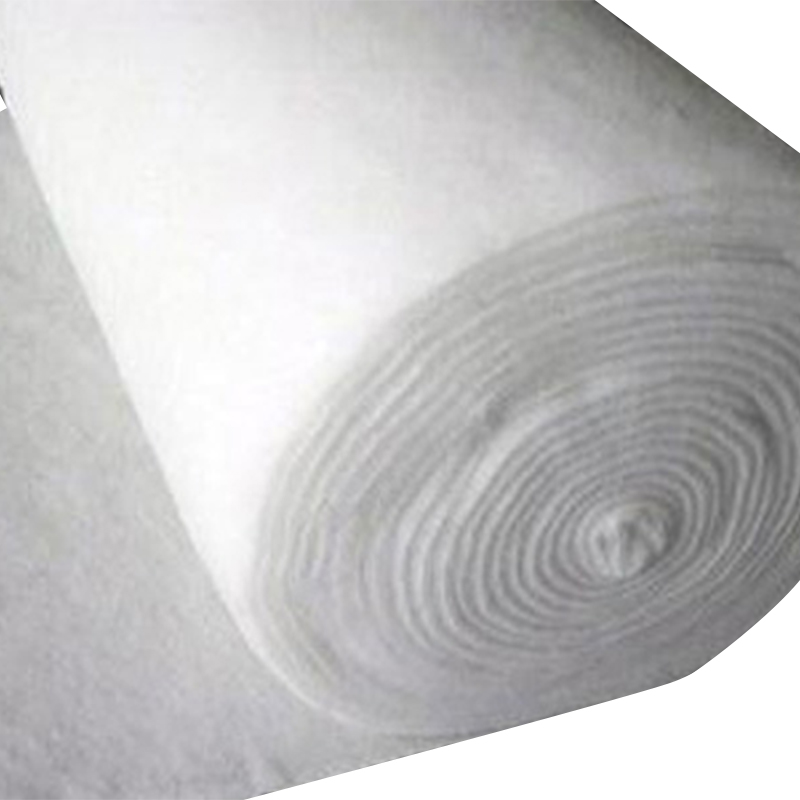 Nonwoven and Woven Geotextile Separation LayerPermeable geotextile traps soil, supports drainage, and separates aggregate layers; suitable as a checkable specification item for drive and road projects.View Product →
Where the money actually goes
Rather than an absolute number, the useful ratio is this: a complete geocell system typically costs 1.5 to 2.5 times a plain gravel drive of the same size, with the gap set mainly by aggregate price and haul distance. The extra spend sits in the materials, but the real cost drivers are earthworks and compaction.
- Excavation and spoil removal: usually the largest line on the sheet, particularly where truck access is awkward.
- Subgrade compaction: thin lifts and sensible moisture control. This is the step most often cut to hit a budget, and the one whose absence voids everything above it.
- Confinement material: frequently the cheapest item listed, and the one that decides whether the rest holds.
- Aggregate: allow roughly 0.1–0.15 m³ per square metre. Grading and angularity affect consumption more than unit price.
- Surface dressing: a small quantity that determines whether the result reads as a driveway or as a pile of stone.
One cost rarely appears in a quotation: topping up. A loose gravel drive without edge restraint needs fresh stone every season or two, and five years of that usually costs more than doing the job properly once.
Common questions about gravel driveway stabilizers
Can you drive on a geocell driveway?
Yes — these systems are designed for vehicle loads. The practical limits are subgrade compaction and edge anchoring, not the surface itself.
How deep should the gravel be?
Cell depth plus overfill and compaction, so a typical residential build uses 100 mm cells with 40–20 mm stone. On soft clay, adding stone thickness does not solve the problem; treat the subgrade or place a grid beneath the confined layer.
Does it work on a slope?
Slopes are exactly where confinement outperforms loose stone, since cells stop downslope migration. Anchor the perimeter more densely than on flat ground and always drain the toe.
How long will it last?
Buried geocell polymer will work for decades; the realistic service life is set by subgrade settlement and by how well the perimeter is protected. Those failure modes are covered in more detail in the long-term durability considerations for geocell installations.
Will weeds come through?
Less often than people expect when the surface layer is thick and fine, because seeds need soil contact to establish. A thinner, coarser surface looks more natural but invites more growth — an appearance trade-off, not a structural one.