中文简体
 русский
 عربى


Content
A producer who has just won a reinforcement package for a highway widening job usually reaches the same conclusion at the same moment: the tender never asked for a machine. It asked for a tensile class, an aperture size and a roll dimension — and the production line is simply whatever can hold those numbers repeatably, shift after shift.
That is the right lens for the current wave of geogrid equipment demand. Orders are not climbing because construction activity in general is climbing; they are climbing because a specific set of project types now specifies reinforced-soil design as the cheaper option against thick granular replacement. Equipment demand follows those project types, and it arrives ahead of the material — a plant cannot bid credibly on a supply contract two years out without capacity already standing on the floor.
The sections below cover which project packages actually convert into purchase orders, how to turn a design specification into machine requirements, and where buyers most often misjudge capacity and quality before signing.
Which project packages actually convert into equipment orders
The projects that move equipment share one economic feature: reinforcement is cheaper than the alternative. Where a designer can replace a few hundred millimetres of selected fill with a thinner, grid-reinforced layer, the saving is large enough to justify the design effort — and that is the point at which a specification becomes firm enough to order machines against.
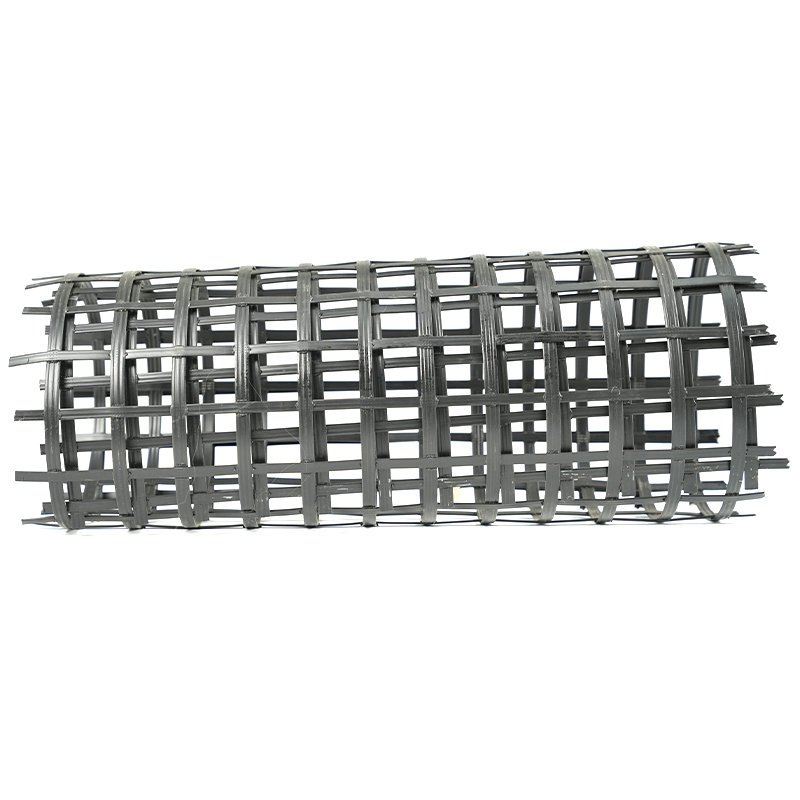
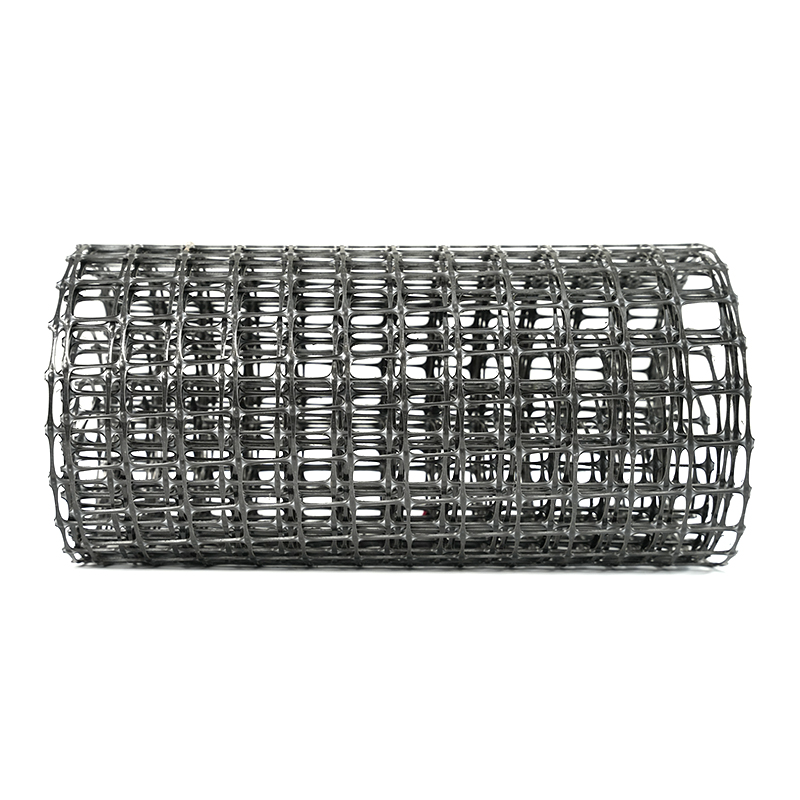
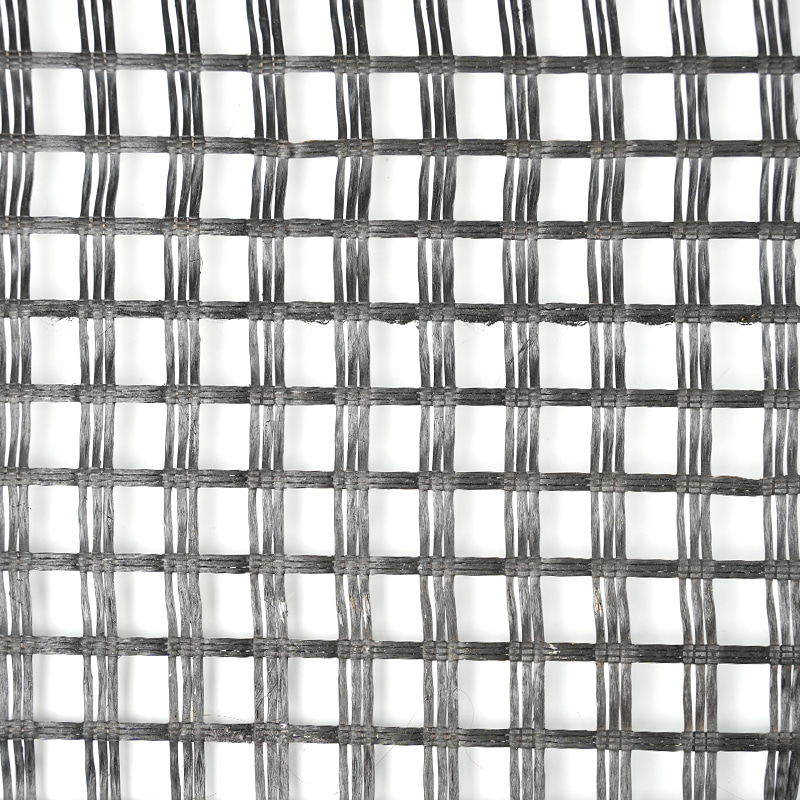
- Highway widening and rehabilitation on soft or variable ground. Widening creates a longitudinal joint where old and new pavement settle differently. Basal reinforcement plus separation reduces differential settlement and reflective cracking. This is the largest single consumer of biaxial grid in the 30–40 kN/m class, and it also pulls in glass fibre grid for asphalt layers.
- New expressway and heavy-haul road construction over low-CBR subgrade. Reinforcement allows a thinner granular base while keeping the design traffic factor. Demand concentrates on high-tensile biaxial grades and, increasingly, on steel-plastic grid for very heavy axle loads.
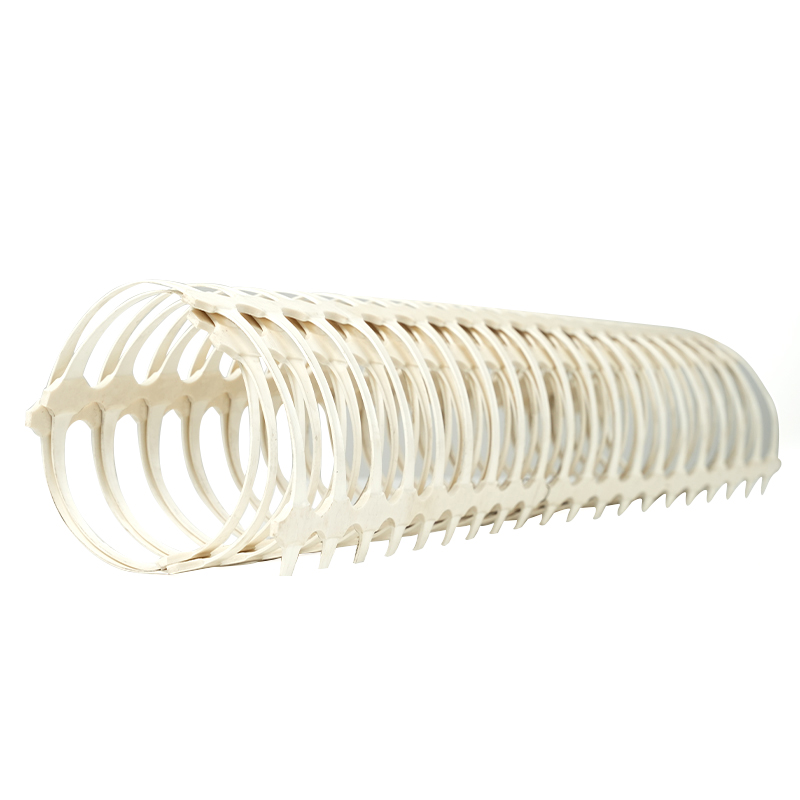
- Rail formation, sidings and freight yards. Cyclic loading and tight settlement tolerances push designers towards stiff reinforcement and confinement, which means biaxial grid and geocells rather than simple separation fabrics.
- Embankments, retaining structures and slope stabilisation. These consume uniaxial grid and geocells, and they are less sensitive to price per square metre than road work because the alternative — piling or a larger footprint — is far more expensive.
- Ports, logistics parks and industrial platforms. Heavy static loads with strict settlement limits create steady, specification-heavy demand that rewards consistent roll-to-roll quality over headline tensile numbers.
- Containment and tailings works. Landfill cells, reservoirs and tailings dams pull the same plant portfolio towards geomembranes, composite liners and protective geotextiles rather than grid alone.
The mix matters more than the total. A plant supplying mostly road rehabilitation needs a biaxial line running at high utilisation; a plant serving embankments and slope work needs uniaxial capacity and often nonwoven fabric capacity as well. That mix, not the size of the national infrastructure budget, determines how many lines a producer should own.
Reading a design specification backwards
A design note is written in the language of material performance, while a purchase order is written in the language of machinery. The translation is short but unforgiving, because each performance requirement locks a specific process stage.
| Design requirement | What it fixes in the product | What to verify on the line |
|---|---|---|
| Tensile strength at 2% or 5% strain | Polymer grade, draw ratio, molecular orientation | Stretching oven length, temperature zoning, ratio control accuracy |
| Reinforcement direction (uniaxial, biaxial, multiaxial) | Machine architecture and stretching sequence | Whether the transverse stage has independent heating and tension control |
| Aperture size and rib geometry | Punching pattern and dimensional precision | Punching unit accuracy, die wear rate, edge trim and scrap percentage |
| Roll width, roll length, joint-free delivery | Output web width, winding tension | Winder capacity, tension taper control, roll hardness consistency |
| Long-term durability, UV and chemical resistance | Additive package, coating, or fibre type such as glass or polyester | Dipping or coating section, where the process route includes one |
| Batch consistency (tensile coefficient of variation) | Thermal uniformity across the web | Number and control of heating zones, closed-loop thickness and tension feedback |
Why the biaxial route carries the most risk
Biaxial grid is the volume product in most road programmes, and it is where specification mismatches appear most often. A line demonstrated at a lower tensile class will not hold a step up in class at the same efficiency, because the draw ratio has to rise and the transverse stage becomes the bottleneck. Buyers who compare quotations on hourly output alone are comparing numbers measured under different conditions.
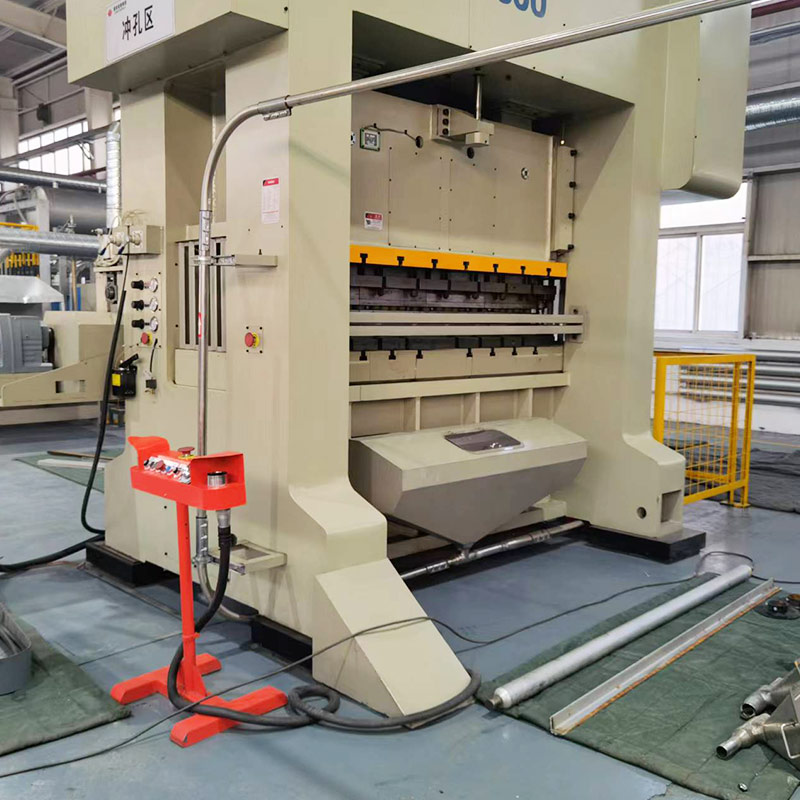 Bidirectional Plastic Geogrid Production LineProduces biaxial tensile PP/PE geogrids through extrusion, punching and sequential longitudinal/transverse stretching, with a compact oven and a clamping fixture designed for multiple specifications.View Product →
Glass fibre and polyester routes sit outside this problem entirely. They use a different architecture — impregnation or warp knitting rather than sequential stretching — which is why a producer serving asphalt reinforcement usually needs a separate line rather than an upgrade.
The capacity arithmetic buyers get wrong
Nameplate output is a marketing figure. Effective output is an engineering one, and the gap between them is where commissioning disappointment lives. A simple frame helps: annual tonnage equals effective hourly output, multiplied by effective operating hours, multiplied by first-pass yield.
A line quoted at 350 kg/h, running 6,000 effective hours a year at 92% first-pass yield, produces roughly 1,930 tonnes — but only if changeover and start-up scrap are already excluded from those 6,000 hours. If they are not, the real figure can fall by 10–15% without a single mechanical fault.
- Effective hourly output at your target tensile class. Insist the figure is quoted against the hardest product in your range, not the easiest.
- Start-up and changeover scrap. Ask how many metres pass before the web is back on specification, and how often a grade change occurs in your planned schedule.
- Stabilised uptime assumption. Ask which downtime categories are included — die changes, filter changes, roller cleaning, planned maintenance — and which are quietly excluded.
- Utilities per tonne. Installed power per kilogram of output, cooling water demand and compressed air consumption all feed directly into unit cost, and they vary noticeably between otherwise similar lines.
Once these four numbers are on the table, quotations become comparable. Before that, they are descriptions of different machines measured under different assumptions.
Where quality claims break down on site
Two failure modes account for most disputes between geogrid producers and their customers, and neither shows up cleanly on a certificate.
The first is the trade-off between tensile strength and elongation. Tensile strength on a test report is a single number, but the designer relies on tensile at a stated strain. Push the draw ratio too hard in one stage and the strength figure improves while the strain response and the resistance to installation damage deteriorate. A line that can hit the number is not automatically a line that can hit the number with acceptable elongation and junction efficiency.
The second is thermal uniformity. A temperature difference of a few degrees between web edge and centre is enough to shift the tensile profile across the roll width, and it surfaces months later as inconsistent roll-to-roll values that fail a customer's incoming inspection. This is the reason buyers should ask for measured temperature distribution data across the full web, not a single set-point value. The principles behind quality control on a biaxial geogrid production line are worth reviewing before any factory acceptance test, because they define what "consistent" should mean in the acceptance criteria.
Testing capability belongs in the same conversation. A plant that cannot measure its own tensile and elongation behaviour in-house is dependent on certificates and hope. An independent strength testing station, calibrated and used on every batch rather than on samples only, converts quality from a claim into a number the sales team can quote.
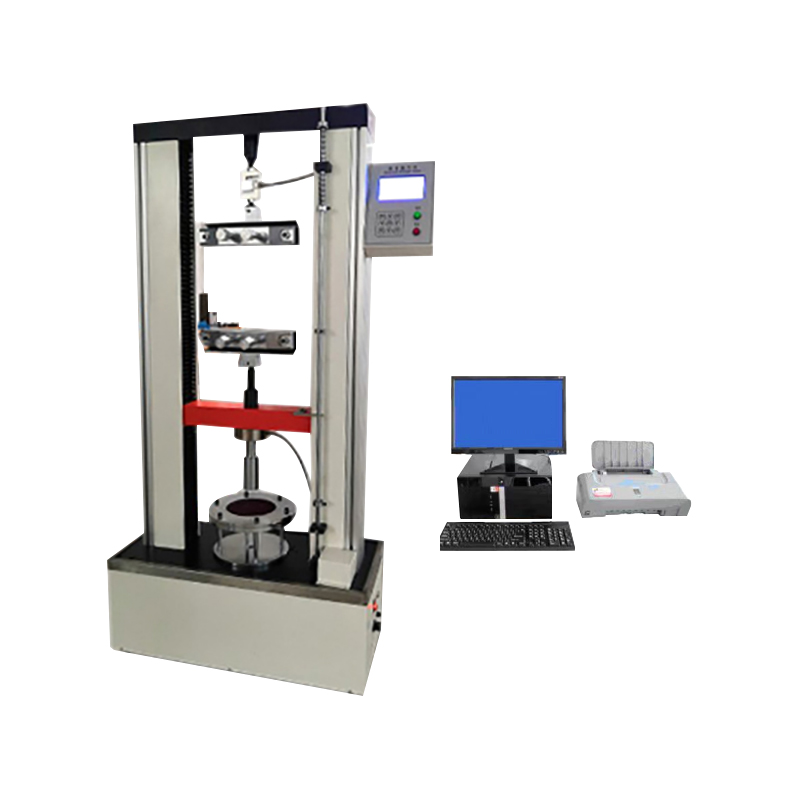 Custom Geotextile Strength Testing MachineTests breaking strength and elongation of geotextiles, geomaterials and related materials using CRE principle and computer-controlled curve recording for in-house material verification.View Product →
A pre-purchase checklist that survives contact with production
- Run a trial on your own polymer grade, supplied by your own compounder, not a sample chosen by the seller.
- Confirm the tensile class the line holds continuously across a full shift, not the best single roll of the demonstration.
- Request temperature uniformity data across the full web width at the target line speed.
- Ask for punch die and stretching roller lead times, because these are the parts that stop a line for weeks.
- Confirm what commissioning includes, who witnesses the acceptance test, and what the acceptance criteria are in writing.
- Check the training scope for operators and maintenance staff, including on-site sessions rather than a manual.
- Visit a line already running your intended product mix, and talk to the people who operate it.
Uniaxial capacity deserves separate scrutiny, because embankment and slope work tolerates less compromise on rib geometry and long-term creep behaviour than road reinforcement does. A supplier with two decades in this equipment category, a 50,000 m² manufacturing site and commissioning engineers who handle both mechanical and electrical installation is easier to hold to these criteria than one selling a catalogue entry — and detailed on-site operator and maintenance training at handover is the difference between a line that reaches rated output in months and one that never quite does.
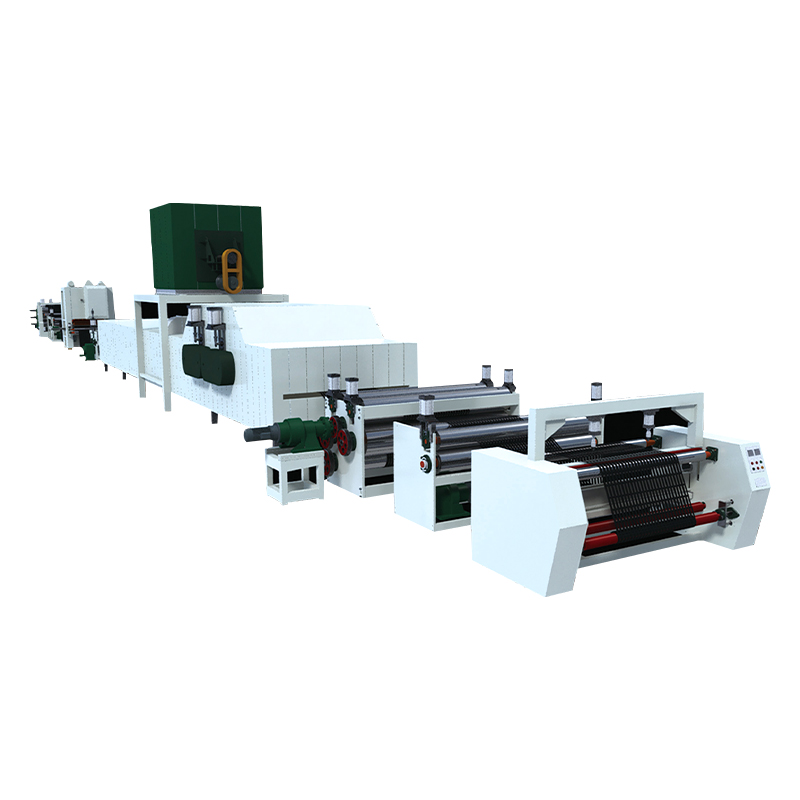 Uniaxial Tensile Geogrid Production LineProduces unidirectional stretch plastic geogrid with strong tensile strength through extrusion, punching, oven heating and stretching, plus installation and training support.View Product →
Frequently asked questions
Does a slowdown in infrastructure spending immediately cut geogrid equipment orders?
No. There is a lag in both directions. Projects already under construction keep consuming material for years, and capacity decisions are made against a multi-year pipeline rather than a single quarter. What changes first is the mix of grades ordered, not the total.
Can one line produce both uniaxial and biaxial geogrid?
Not practically. Uniaxial production stretches in one direction only, while biaxial production adds a transverse stretching stage with its own heating and tension control. Retrofitting one into the other is usually more expensive and less stable than buying the right architecture.
How long does it take from order to stable production?
Manufacturing, shipment, installation, commissioning and a stabilisation period all sit in the sequence, and the last two are routinely underestimated. The realistic question is not how fast a line can be delivered, but how quickly it reaches consistent output at your hardest product — and that depends largely on how well the operator training and acceptance testing were scoped at contract stage.
What single specification detail most affects machine price?
The tensile class the line must hold at a stated strain. It drives oven length, the number of stretching stages, roller specification and control architecture — and it is the requirement most often left vague in early enquiries, which is why early quotations can differ by a wide margin for what sounds like the same machine.