中文简体
中文简体 русский
 عربى
عربى

Content
- 1 Why Landfill and Mining Bases Are a Different Reinforcement Problem
- 2 Matching Geogrid Type to the Application
- 3 Specification Checks That Decide Whether a Geogrid Works
- 4 Mining-Specific Details: Impact, Abrasion and Acidic Water
- 5 Production Consistency: Where the Material Properties Are Set
- 6 Testing, Delivery and On-Site Practicalities
- 7 Frequently Asked Questions
Two failures keep showing up on geogrid-reinforced landfill and mining bases when the material is chosen on price alone. The first is rutting in the first wet season, because the grid looked strong on the datasheet but was too flexible at the strain the subgrade actually imposes. The second is invisible: a slow loss of strength where the polymer could not tolerate leachate or acid mine drainage.
For most projects the safe route is a stiff polypropylene or HDPE-based geogrid, an aperture matched to the site aggregate, creep and chemical-resistance data that reflect the real design life, and a production process that holds its tolerances batch after batch.
Why Landfill and Mining Bases Are a Different Reinforcement Problem
A landfill working platform is not a road. Refuse trucks and tracked compactors run over waste that settles unevenly, so the base layer has to bridge local voids rather than simply spread a wheel load. Mine haul roads are the other extreme: 200 t to 400 t trucks on sharp crushed rock, often on a gradient and often over a subgrade that was never designed for that traffic.
In both cases the geogrid separates, confines the aggregate and reinforces the base in tension, and that third function only works if the grid is stiff at low strain. A product that reaches 40 kN/m at 10% elongation behaves very differently from one that reaches 20 kN/m at 2%, even though the second figure looks smaller in a quotation.
The symptoms are easy to read on site. Rutting in the first wet season usually means insufficient stiffness rather than the wrong aggregate. A base pushing outward at the shoulders points to missing edge anchorage. A punched or cracked lining points to a base layer that let aggregate through. Containment also needs an impermeable layer, so composite geomembrane is normally reviewed alongside the geogrid.
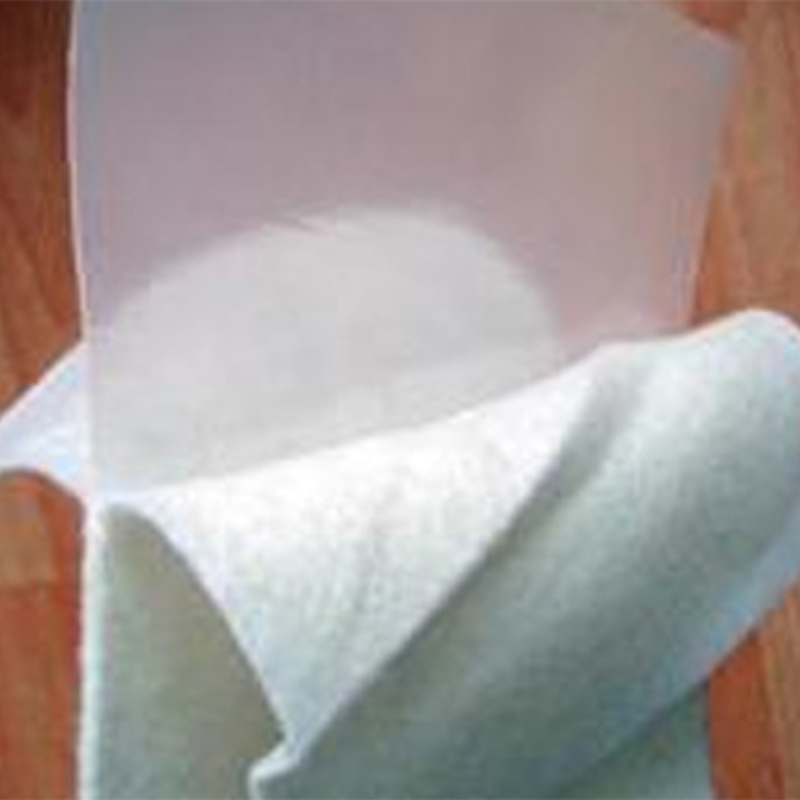 Custom Composite Geomembrane for Seepage Control and IsolationCombines an impermeable membrane with protective geotextile for dams, reservoirs, tunnels, basements, and waste containment where an impermeable barrier is required.View Product →
Matching Geogrid Type to the Application
The most common specification error is using a pavement-reinforcement grid in a base-reinforcement role, or the reverse. The two functions load the material differently, and the product families are not interchangeable.
| Geogrid type | Typical project use | Property that matters most |
|---|---|---|
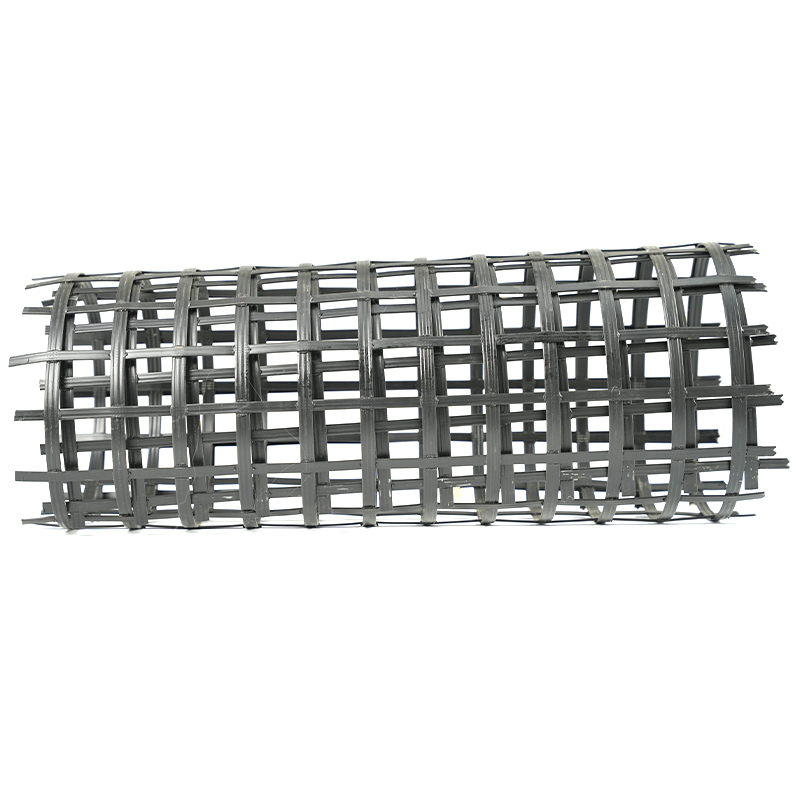
| Uniaxial stretched polypropylene or polyester | Mine haul road base, landfill access roads, slope reinforcement | Tensile strength at 2% strain; ribs laid across the traffic direction |
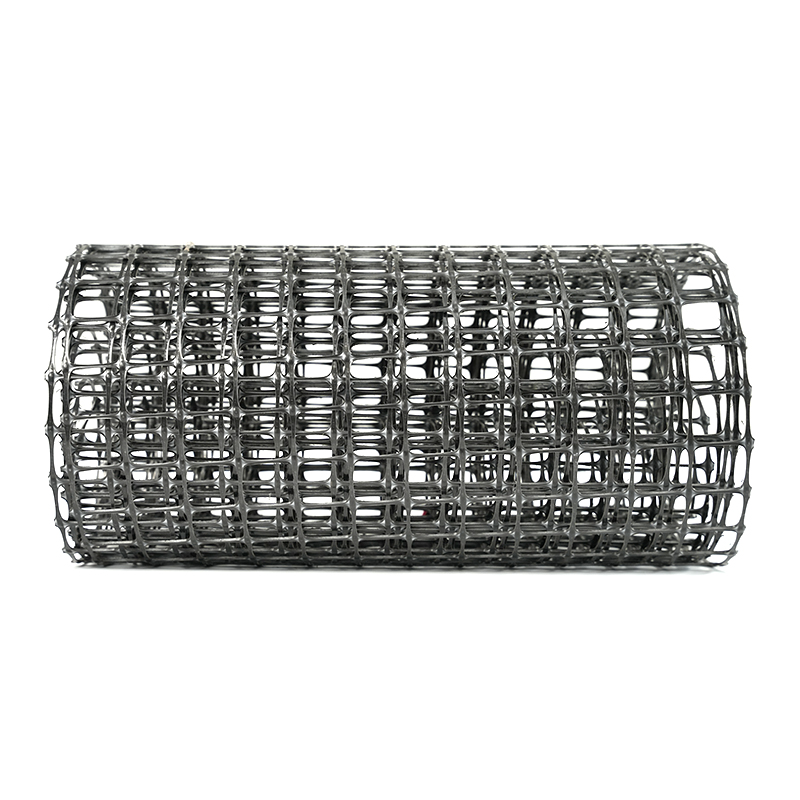
| Biaxial stretched polypropylene | Landfill working platforms, soft subgrade access, temporary haul roads | Balanced strength in both axes; 30–50 mm aperture to interlock with 40–80 mm aggregate |
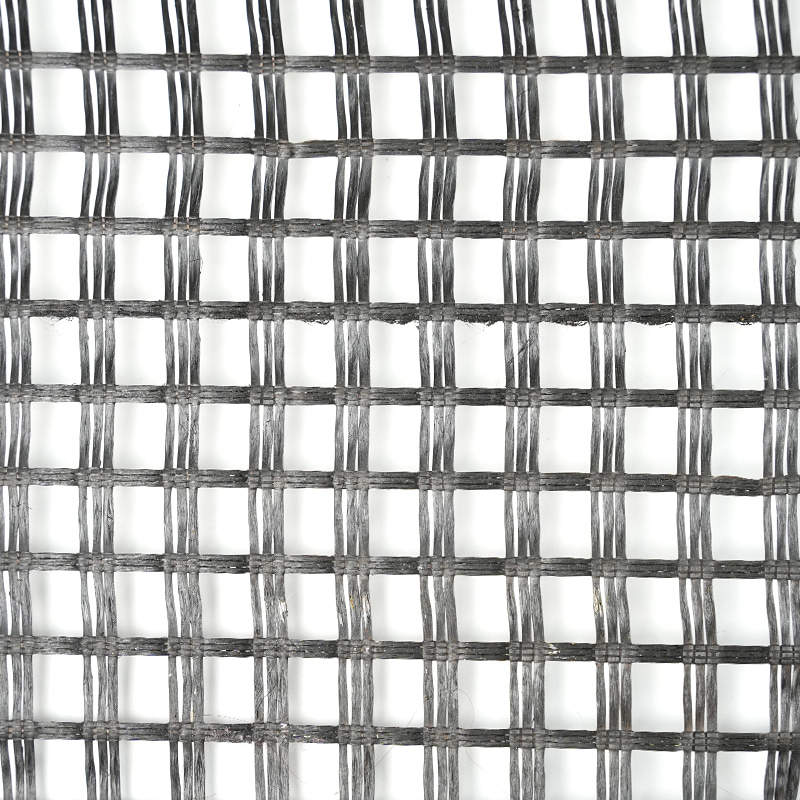
| Fiberglass geogrid | Asphalt reinforcement on haul roads, site entrances, hardstands | High modulus and low elongation; it reinforces the bound layer, not the soil |
| Steel-plastic geogrid | High-load stockyards, heavy embankments, mine infrastructure | Very high tensile strength with low creep; heavier rolls needing machine handling |
| Warp-knitted polyester geogrid | Weak foundation treatment, embankments over soft ground | High strength with controlled creep; flexible enough to follow an uneven formation |
On a landfill expansion, a frequent arrangement is a uniaxial geogrid in the haul road and working platform base, with a biaxial grid over wider areas where the load direction is unpredictable. Mining projects follow the same logic at higher loads, with the ribs running across the road and the number of layers set by the bearing capacity calculation rather than by a standard roll length.
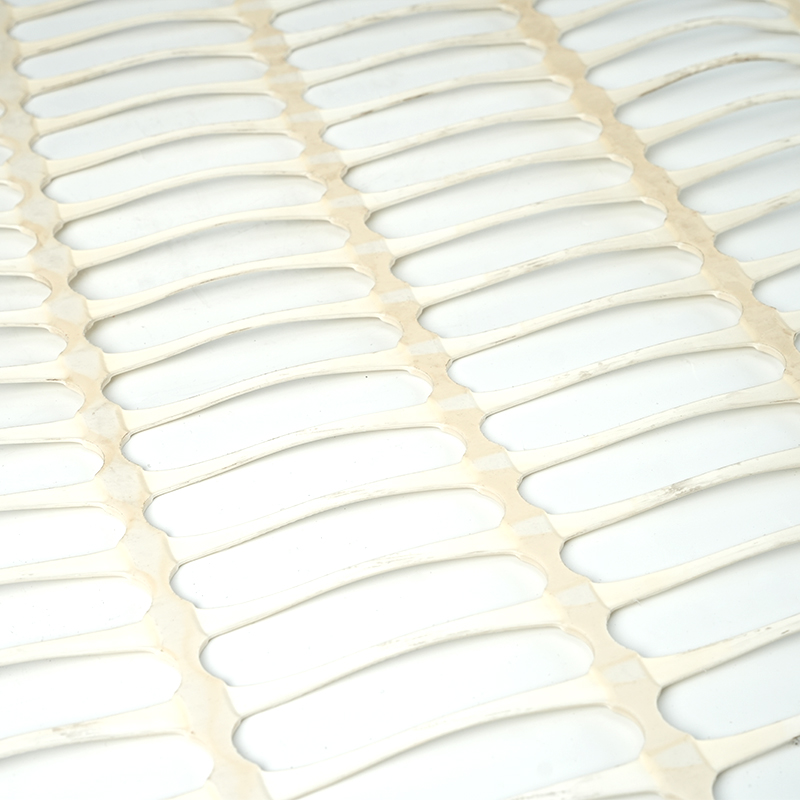 Unidirectional Stretch Plastic Geogrid for Base ReinforcementHigh-strength geogrid for highway, railway, embankment, retaining wall, and reinforced soil applications where unidirectional load support and gravel friction are needed.View Product →
Specification Checks That Decide Whether a Geogrid Works
Once the type is settled, five values decide in-service performance. Ask for them in writing, per batch, rather than as brochure figures.
- Tensile strength at 2% and 5% strain. Ultimate strength is a marketing number; design uses stiffness in the strain range the subgrade mobilises.
- Creep reduction factor. Landfill and mine infrastructure are often assessed over 50 to 100 years, so the long-term design strength is the short-term value divided by a factor of roughly 2.6 to 3.5 for polypropylene at 20 °C.
- Aperture against fill size. The working rule is an aperture between 0.5 and 1.5 times the D50 of the aggregate you will actually place.
- Junction strength. A stretched grid with weak nodes pulls apart under load; junction efficiency below about 80% of rib strength is a warning sign.
- Chemical resistance. Polypropylene and HDPE tolerate the pH range usually found in leachate and acid mine drainage, while polyester is more sensitive to hydrolysis at high pH and elevated temperature.
Mining-Specific Details: Impact, Abrasion and Acidic Water
Mine haul roads add three loads a landfill rarely sees. Impact: a loaded truck dropping onto the base transfers energy through the aggregate, and a thin or brittle grid can be damaged during construction before the first truck even arrives. Abrasion: sharp crushed rock under cyclic loading argues for heavier rib profiles and a separation layer that stops stone punching into the subgrade. Chemistry: acid mine drainage attacks some polymers far more aggressively than clean groundwater does.
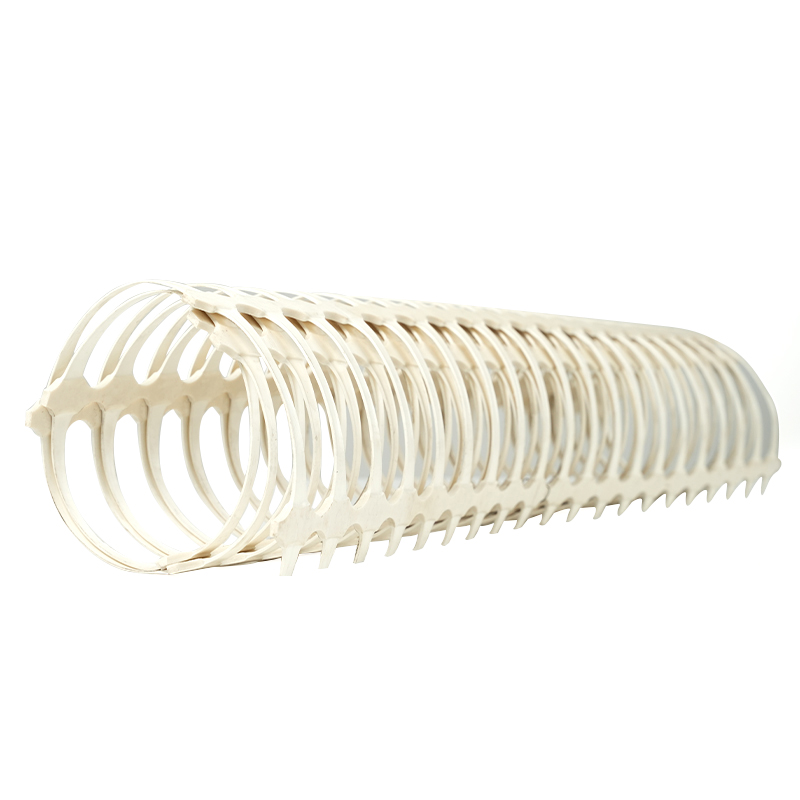
Underground coal work uses a different product family again — composite false roof net for roadway support, where flame resistance and antistatic behaviour are set by mine safety rules rather than by tensile strength alone.
For the reinforcement calculation itself, it helps to understand how the grid changes the bearing capacity of the base: the mechanism behind geogrid reinforcement in roads and foundations explains why stiffness at low strain, not ultimate strength, drives the design value.
Production Consistency: Where the Material Properties Are Set
A datasheet describes one roll. A project needs several hundred rolls to behave the same way, and that consistency comes from the production line: the temperature profile in the heating oven, the accuracy of longitudinal and transverse stretching, and the stability of the cooling and winding stages.
Stretching and dipping lines
Biaxial and uniaxial geogrids are made by heating a punched polypropylene sheet and stretching it in one or two directions. Uneven heating produces ribs of varying thickness across the roll width, and the weakest rib sets the strength of the whole sheet. Fiberglass geogrids take a different route, through a dipping and curing line where resin pick-up and oven dwell time control the finished modulus.
What to look for in a supplier's process control
- Batch records for oven temperatures, stretch ratios and line speed.
- In-house tensile testing on samples taken across the full roll width, not only from the centre.
- A certified quality system, such as ISO 9001:2000, with the scope covering the geogrid lines.
- A willingness to run a trial roll to your specification before the main order.
Jiangsu Saide Machinery, the company behind this geogridmachine.com site, has built geogrid and geomembrane production equipment for more than 20 years from a 25,000 m² production building, with installations in more than 45 countries. The range covers uniaxial and biaxial stretching lines, fiberglass geogrid dipping lines, composite geomembrane lines, and the crushing and granulating equipment that returns off-spec trim to usable material. For a project buyer the value is practical: the company that builds the line can state what tolerance it holds, and documented process control is what keeps a delivered roll inside that tolerance.
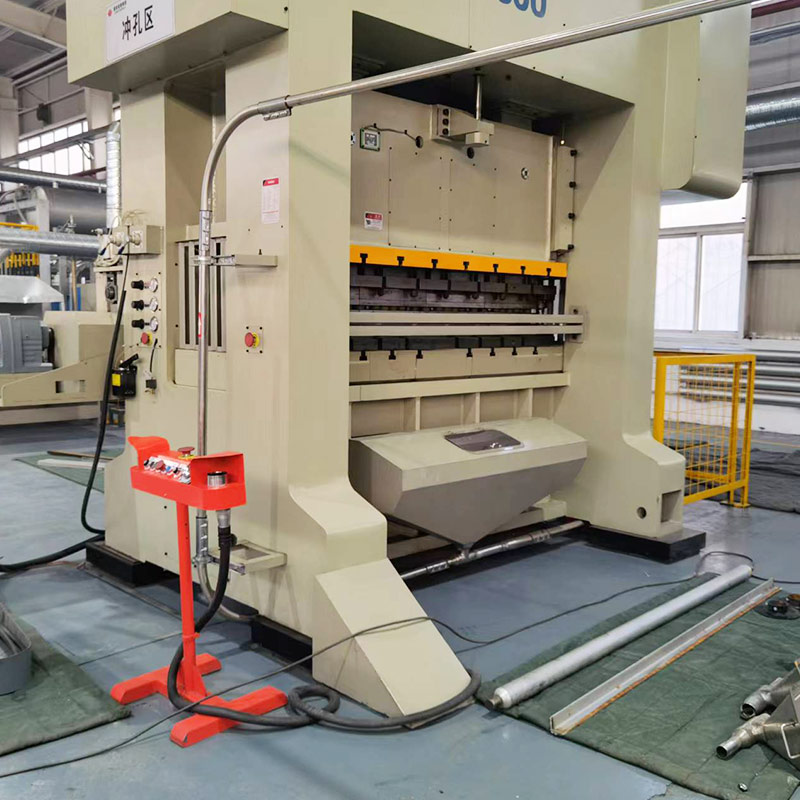 Bidirectional Plastic Geogrid Production Line for GeosyntheticsExtrudes, punches, and stretches plastic into biaxial geogrid using longitudinal and transverse ovens for PP or PE geogrid production.View Product →
Testing, Delivery and On-Site Practicalities
Three documents are worth insisting on before shipment: a batch-specific tensile test at 2% and 5% strain, a creep statement tied to the design life, and a declaration of polymer type and additives. Independent verification, for example on a geotextile strength machine, costs very little compared with replacing a base layer under a working landfill.
On site, the avoidable failures are mundane. Rolls stored in direct sunlight for weeks lose strength to UV, so the base layer should be covered within a few days of installation. Overlaps are specified in the design, commonly 300 mm in the direction of load spread, and a grid laid the wrong way round still passes a visual inspection, so orientation marks should be checked before aggregate placement. Where equipment is part of the scope, commissioning support and operator training matter as much as the hardware: the wider range of geosynthetic production equipment is usually reviewed together with the material specification when a producer expands capacity.
Frequently Asked Questions
Is a biaxial geogrid strong enough for a mine haul road?
Usually not on its own. Biaxial grids work well for working platforms and soft access roads where loads arrive from unpredictable directions. For a haul road carrying 200 t trucks, a uniaxial geogrid with high stiffness at 2% strain, laid across the road, is the more common choice, often combined with a separation geotextile.
How long does a geogrid last in a landfill?
Design lives of 50 to 100 years are routinely assumed. The material does not wear out in the usual sense; the limiting factors are creep, chemical attack and installation damage. Polymer selection, a creep reduction factor applied to the design strength, and careful installation cover most of the risk.
How do I choose the aperture size?
Match it to the fill. As a rule, the aperture should fall between 0.5 and 1.5 times the D50 of the aggregate. For a typical 40–80 mm crushed base course, a 30–50 mm aperture interlocks well.
A geogrid specification for a landfill or mining project comes down to three things: the right product family for the load direction and the water chemistry, design values taken at the strain the subgrade actually mobilises, and a production process that holds those values across every roll. Get all three right and the base layer performs as calculated; miss any one and the cost reappears as rutting, settlement or a repair carried out under live traffic.
Where a project also involves producing the material rather than buying it, the equipment specification deserves the same attention as the material specification, because the tolerance of the line becomes the tolerance of the product.