中文简体
 русский
 عربى


Content
When you compare technical specifications for geogrid production equipment, the automation level is often listed as one line at the bottom of the datasheet. Yet in practice, it determines more than any single mechanical parameter how consistently your plant will run, how quickly you can respond to material variations, and what your true per-ton operating cost will be over five years.
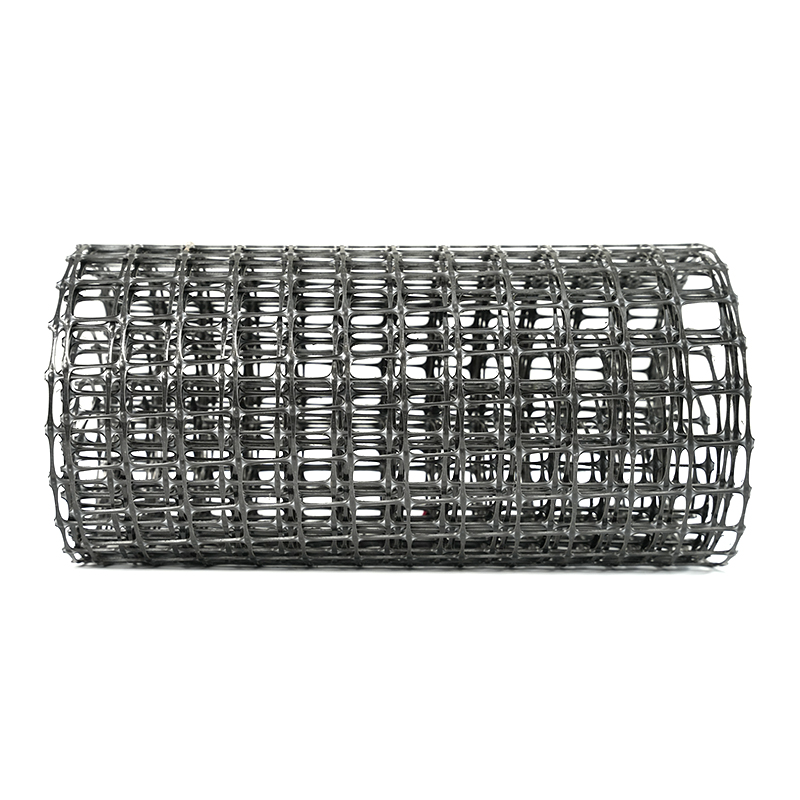
The automation level in modern geogrid manufacturing equipment can be broken down into four actionable layers: control core and drive architecture, process stability and closed-loop regulation, data integration for quality traceability, and operator interface for day-to-day efficiency. Each layer directly influences the output quality of products such as 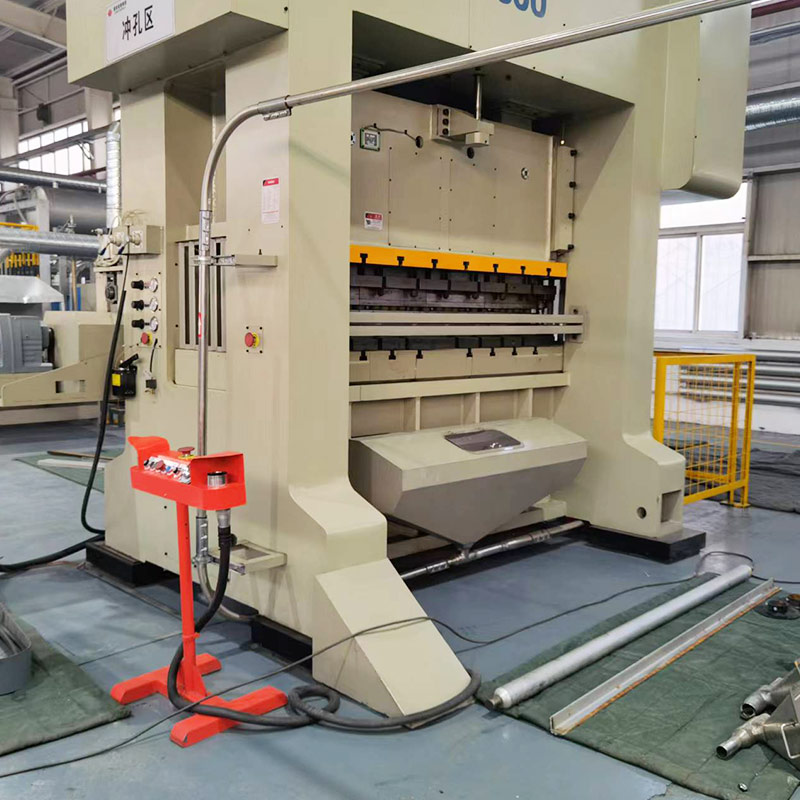 Bidirectional Geogrid Production Line with PLC and Servo Drive ControlThis line integrates a PLC-based control core and servo drives for precise speed and position control of feeding, heating, stretching, cooling, and winding, forming the automation foundation for multi-layer process stability.View Product → and
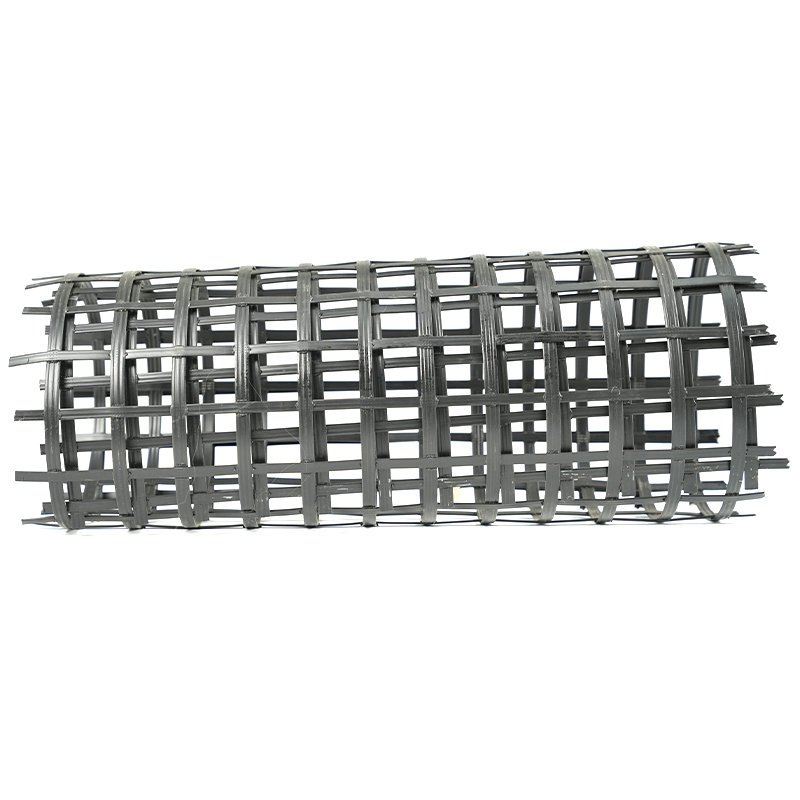
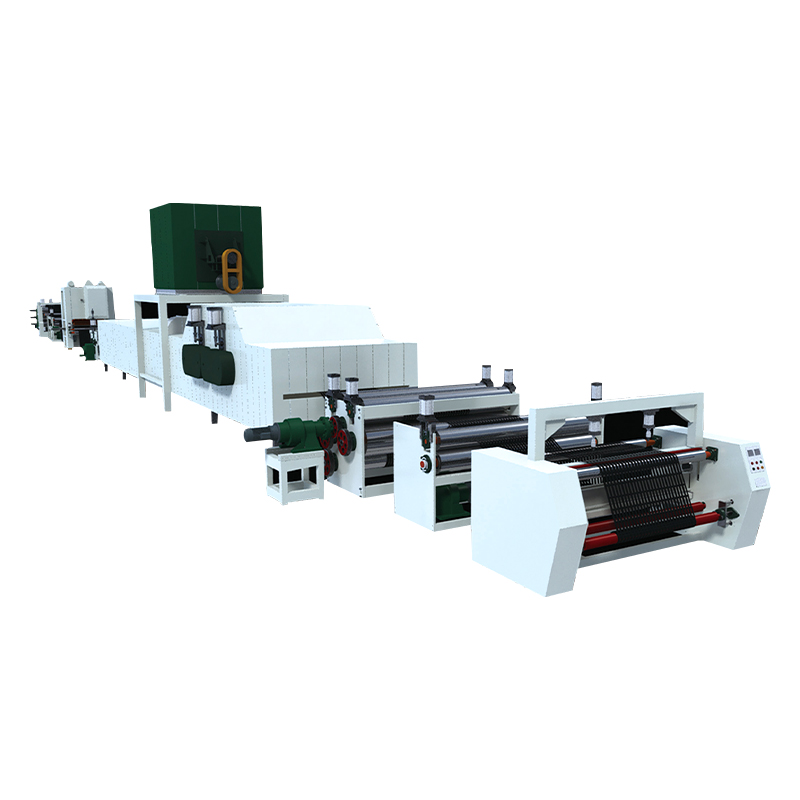 Uniaxial Tensile Geogrid Production Line with Automated ControlLike the bidirectional counterpart, this line employs PLC and servo drive architecture to govern sequential stretching operations, ensuring accurate speed and tension control for high-quality uniaxial geogrid output.View Product →.
1. Control Core and Drive Architecture – The Foundation of Automation
The central controller governs every sequential action on the line: feeding, heating, stretching, cooling, and winding. In modern geogrid equipment, PLC-based control with servo drives is the industry baseline. A programmable logic controller (PLC) processes sensor feedback and issues commands to servo motors that drive the rollers, clamps, and traversing mechanisms with precise speed and position control.
The reliability of the PLC platform matters for spare part availability and long-term support. Industrial-standard brands ensure that if a module fails, you can source a replacement without re-engineering the entire control cabinet. Servo drives, as opposed to frequency converters with induction motors, provide better torque control at low speeds and faster response to load changes, which is critical during the stretching phase where even a 1 % speed deviation can alter product elongation.
What to look for in drive hardware
A line equipped with servo drives operating on a digital communication network such as EtherCAT or Profinet will achieve cycle times under 1 ms between sensor read and actuator command. This level of responsiveness directly translates to uniform aperture width and thickness across the entire sheet.
2. Process Stability and Closed-Loop Regulation
Automation level is not about how many screens a panel has, but about how many process variables are automatically maintained without operator intervention. In geogrid stretching, the key variables are temperature across the heating zone, stretching ratio, and stretching speed.
Closed-loop control means that each zone of the infrared or hot-air heater has its own thermocouple feeding back to a PID controller inside the PLC. If the material feed rate changes or ambient temperature drops, the controller adjusts the heating power in real time to keep the polymer within its optimal forming window — typically ±2 °C for polypropylene and ±3 °C for polyethylene.
Similarly, the stretching ratio should be maintained by a force or position loop. A constant-strain stretching mechanism using servo-driven rollers with encoder feedback can hold the draw ratio within ±0.5 %, which is the difference between a geogrid that meets ASTM D6637 tensile requirements and one that fails quality control.
| Process Parameter | Manual / Semi-automated Line | Modern Full-automated Line |
|---|---|---|
| Heating zone temperature tolerance | ±5 °C | ±2 °C |
| Longitudinal stretching ratio accuracy | ±1.5 % | ±0.5 % |
| Transverse stretching synchronization delay | 0.3–0.5 s | < 0.05 s |
| Web tension fluctuation (during winding) | ±10 % | ±3 % |
The practical consequence is that a fully automated line can run for hours at target tensile strength with less than 2 % variation between rolls, while a line with only open-loop control may require frequent adjustments and produce more waste during changeover or material grade transitions.
3. Data Integration and Quality Traceability
Modern geogrid manufacturing equipment increasingly includes a data acquisition system that records every batch run: melt temperature profile, stretching force curves, line speed, and final roll weight. This data can be exported to a plant-level MES (Manufacturing Execution System) or simply stored locally for traceability.
For a manufacturer supplying geogrids to infrastructure projects where certifications must accompany every shipment, the ability to produce a machine-generated report for each roll is more than a convenience — it is a compliance requirement. The automation level here is measured by how many data points are automatically logged versus manually entered. A system that tags every 5 seconds of production with time-stamped process values provides the granularity needed for root cause analysis when a batch deviates from spec.
Common data points tracked by automated lines
- Roller speed (m/min) and cumulative length
- Heating zone temperatures (zone 1 through zone 6 or more)
- Stretching ratio in machine direction (MD) and transverse direction (TD)
- Cooling water temperature and flow rate
- Final roll weight and winding tension
When the data is integrated with an operator dashboard, the visibility extends to real-time OEE (Overall Equipment Effectiveness). This allows plant managers to identify slowdowns or rejects immediately rather than discovering them at the end of a shift.
4. Operator Interface and Ease of Use
An often underestimated aspect of automation is how much the interface reduces human error. A well-designed HMI (Human-Machine Interface) should present the production status in a single glance: green for normal operation, yellow for a warning near the control limit, and red for a deviation that requires action.
Recipe management is a practical example. On a modern line, the operator can load a stored recipe for a specific product — say, 50 kN/m bidirectional geogrid — and the PLC automatically sets all zone temperatures, stretching speeds, and winding parameters. This eliminates the risk of manual entry mistakes and reduces changeover time from 45 minutes to under 10 minutes.
Maintenance reminders are another layer. The control system can track running hours for bearings, gearboxes, and screens, and display a preventive maintenance alarm based on actual usage rather than calendar intervals.
For equipment such as  Heavy-Duty Plastic Crusher Machine with Advanced Z-CuttingFeaturing a Z-cutting rotor, openable chassis, and rugged construction, this crusher minimizes downtime and maintenance; paired with automated diagnostics, it boosts line uptime in material recovery applications.View Product → used in material recovery, a simple touchscreen interface with fault diagnostics helps the booth operator clear small jams without calling an electrician, which directly improves line uptime.
Comparing semi-automated and fully automated operational demands
- Semi-automated line: Operator manually sets heater bank power, adjusts stretching roller gap via handwheel, and records production logs on paper.
- Fully automated line: Operator loads recipe, monitors status on screen, and acknowledges alerts. The PLC handles all adjustments during normal running.
Frequently Asked Questions
Does higher automation always mean higher cost?
Initial capital expenditure is higher, but the total cost of ownership over five years is often lower due to reduced waste, less downtime, and lower labor cost per ton. For a line running three shifts, the payback period for a full automation upgrade is typically between 12 and 18 months.
Can an existing semi-automated line be retrofitted with higher automation?
Yes, depending on the mechanical condition. Retrofitting a new PLC, servo drives, and HMIs is common. The mechanical parts — such as chain-driven rollers — may need updates to achieve the precision required for closed-loop control.
What automation level is sufficient for a new startup manufacturer?
A PLC-controlled line with at least two servo-driven axes (one for feeding, one for winding) and PID temperature control is a practical starting point. Full automation with data logging can be phased in as production volume and quality requirements grow.
Takeaway: Matching Automation Level to Your Production Goals
The automation level of geogrid manufacturing equipment is not a fixed specification — it is a tool that should match your product mix, labor skill level, and market quality expectations. For commodity geogrids with standard specifications, a semi-automated line with reliable PLC control and servo drives may be sufficient. For specialized products where tensile strength and elongation tolerances are tight, full automation with closed-loop regulation and data traceability becomes necessary.
When evaluating equipment from suppliers, ask for real production data from their lines — not just a list of components. Pay attention to how many process variables are automatically controlled, how the system handles a material grade change, and what kind of reporting is available. These details will tell you much more about the true automation level than the brochure ever will.
For further insight on maintaining consistent quality on automated lines, you can read our article on quality and stability in geogrid production.