中文简体
 русский
 عربى


Content
- 1 Match the Failure Mode, Then Choose the Material
- 2 What a Geotextile Contributes, and Where It Stops
- 3 What a Geogrid Contributes, and Where It Stops
- 4 Geotextile vs Geogrid: Side-by-Side
- 5 When You Need Both, and Why the Order Matters
- 6 Specification and Purchasing Checks That Save Money
- 7 FAQ: Geotextile vs Geogrid in the Field
A 500 m unpaved haul road is going in across wet silt this spring. The contractor has one pallet of nonwoven geotextile and one pallet of biaxial geogrid sitting on site, and the question on the table is simple: which one goes down first, or do both go down?
Here is the short answer. They solve different problems. A geotextile separates, filters, drains and protects. A geogrid reinforces and spreads load by interlocking with aggregate. If fines are pumping up into your stone base, you need a geotextile. If your stone base is punching down into soft ground under wheel loads, you need a geogrid. On very soft ground you need both, with the geotextile first and the geogrid above it.
Match the Failure Mode, Then Choose the Material
Choosing between the two gets easier once you stop comparing products and start naming the failure you are trying to prevent. Five mechanical functions matter in most earthworks: separation, reinforcement, filtration, drainage and protection. A geotextile can deliver all five at a modest strength level. A geogrid delivers one of them, reinforcement, but does it far better than any fabric can.
Use this list to place your own project before you open a catalogue:
- Fines migrating up into the aggregate base. Geotextile, used as a separator.
- Rutting and bearing failure over soft clay or peat. Geogrid for reinforcement, usually with a geotextile beneath it.
- Water pressure building behind a retaining wall. Geotextile wrapped around drainage stone, acting as a filter.
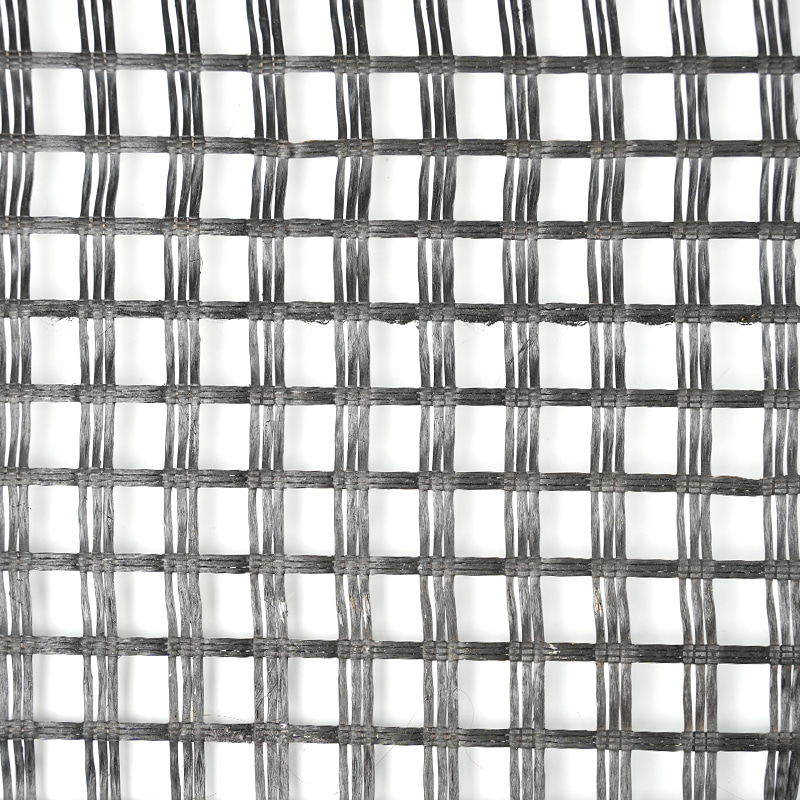
- Reflective cracking through an asphalt overlay. Geogrid, such as fiberglass or a biaxial grid with low strain at 2%.
- Angular stone threatening a geomembrane. Geotextile as a cushion and protection layer.
What a Geotextile Contributes, and Where It Stops
A geotextile is a continuous sheet. Woven grades are interlaced yarns, chosen where tensile strength and low elongation matter. Nonwoven grades, needle-punched or hot-rolled spunbond, are chosen where filtration, drainage and cushioning matter, because their fibre structure lets water move in-plane while still holding soil particles back.
When you specify one, the numbers that decide performance are mass per unit area, apparent opening size (AOS), permittivity and wide-width tensile strength. For a filter, the AOS must be small enough to retain the soil it sits against and large enough to pass water; many designers work in the range of 0.075 mm to 0.6 mm and require the fabric's permeability to exceed that of the protected soil.
Where geotextiles stop matters just as much. They are rarely counted as structural reinforcement, their tensile modulus is low, and a poorly matched AOS can blind or clog, at which point drainage stops and pore pressures climb.
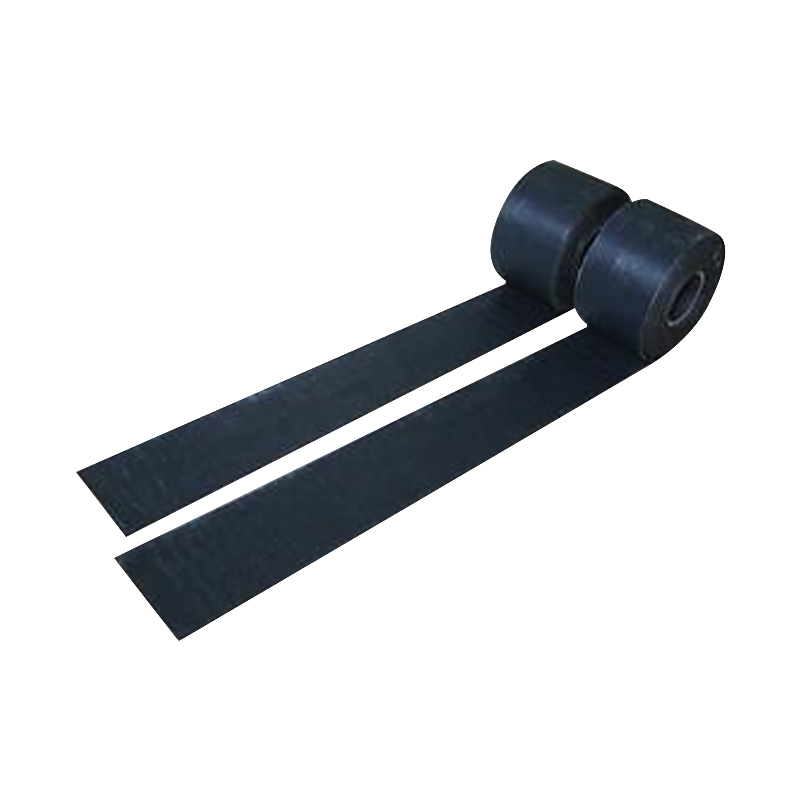
 Geotextile for Filtration and Drainage in Civil ProjectsProvides filtration, drainage, and separation in soil structures; suitable for railways, highways, and hydraulic projects where fine particle retention is needed.View Product →
What a Geogrid Contributes, and Where It Stops
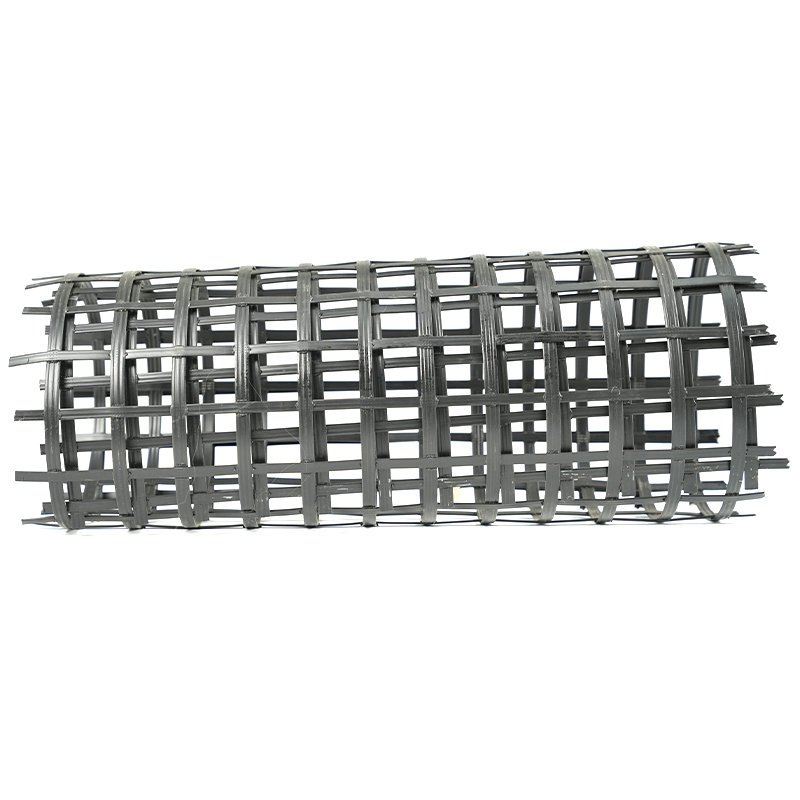
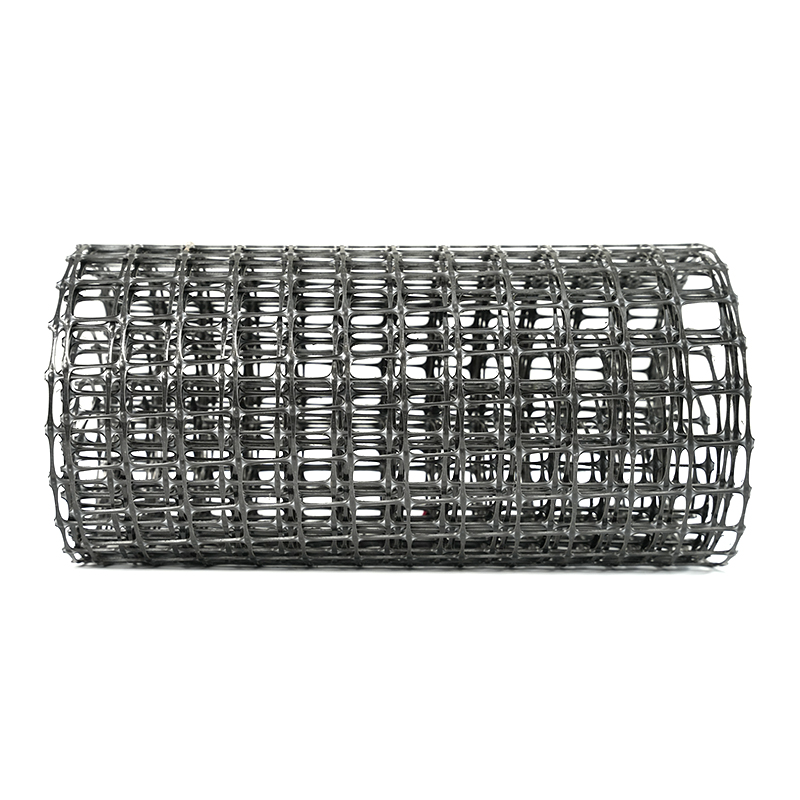
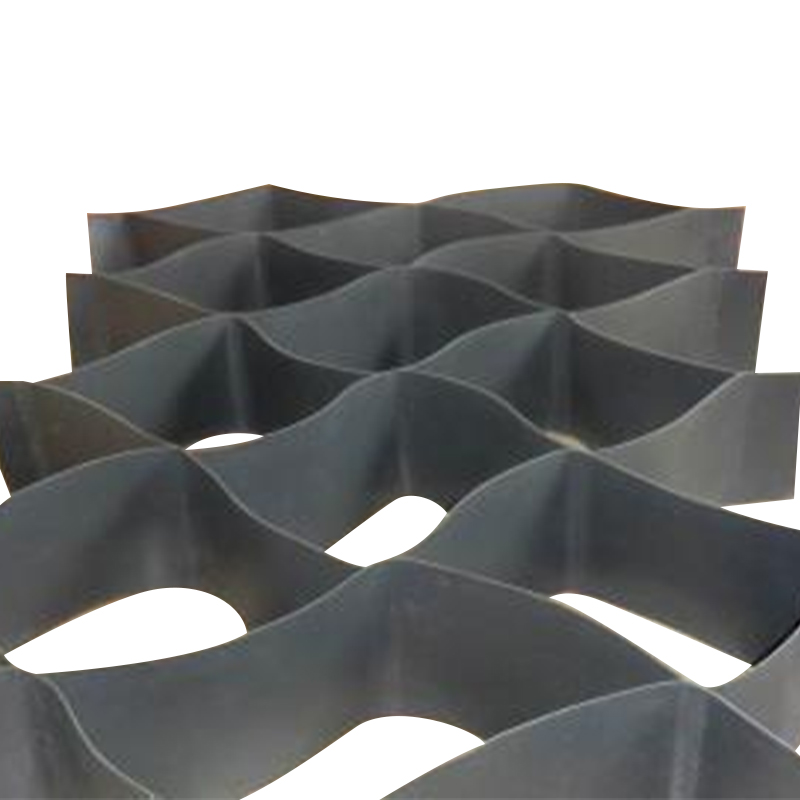
A geogrid is an open grid of ribs and junctions, with apertures typically between 25 mm and 150 mm. That openness is the whole point: aggregate interlocks inside the apertures, so when the subgrade tries to deform, the grid picks up tension and spreads load across a wider area.
The family is broad. Uniaxial grids go into slopes and mechanically stabilised earth walls, where load runs in one direction. Biaxial grids go under roads, working platforms and crane pads. Fiberglass grids are used in asphalt because they mobilise strength at very low strain, while steel-plastic and warp-knitted polyester grids appear where higher long-term strength is needed.
Specification focuses on aperture size relative to the aggregate, junction efficiency, tensile strength at 2% and 5% strain, and the long-term design strength left after creep, installation damage and durability factors are applied. What a geogrid cannot do is filter or drain. If fines are still moving through the system, a stronger grid will not stop the pumping.
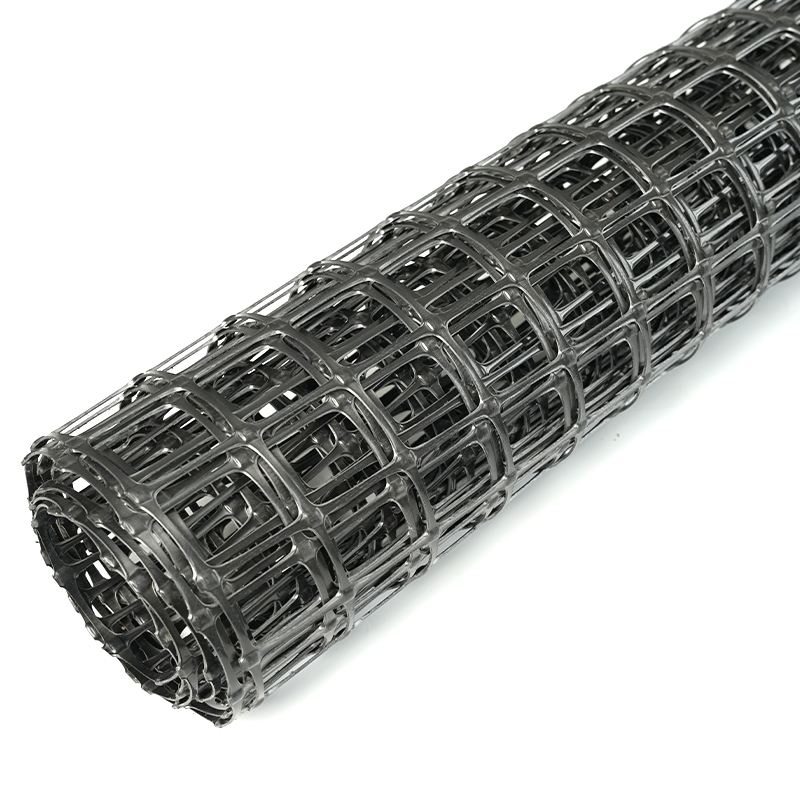 TGSG Series Bidirectional Geogrid for Soil ReinforcementProvides high tensile strength in both directions for soil reinforcement; used in roadbeds, slopes, and foundations to improve bearing capacity.View Product →
Geotextile vs Geogrid: Side-by-Side
| Question | Geotextile | Geogrid |
|---|---|---|
| Primary function | Separation, filtration, drainage, protection | Reinforcement and load distribution |
| Physical form | Continuous flexible sheet, woven or nonwoven | Open grid of ribs and junctions |
| How load is carried | In-plane flow of water and particles, modest tensile strength | Interlock with aggregate plus tensile membrane action |
| Opening size | AOS roughly 0.075 mm to 0.6 mm | Apertures roughly 25 mm to 150 mm |
| Specs engineers check | Mass per area, AOS, permittivity, wide-width tensile | Aperture, junction efficiency, tensile at 2% and 5% strain, long-term design strength |
| Typical applications | Under aggregate over soft subgrade, around drainage, beneath geomembranes | Working platforms, unpaved haul roads, earth walls, asphalt overlays |
| If misapplied | Blinding or clogging, or fines still migrating | No interlock, ribs punching through, fines passing between ribs |
When You Need Both, and Why the Order Matters
The clearest case for both materials is a very soft subgrade, with an undrained shear strength under roughly 40 kPa or a measured CBR below about 2 to 3. The geotextile stops fines migrating upward; the geogrid stops aggregate punching downward. Drop either one and you usually pay for it in added aggregate thickness, often the most expensive item on the job.
Sequence is not negotiable. Geotextile first, directly on the prepared formation, geogrid above it, then aggregate. Reverse the layers and you lose twice: fabric sitting on top of the grid separates the stone from the grid and kills interlock, while a grid lying directly on wet silt lets fines move freely between the ribs.
Overlaps deserve the same discipline. Geotextile rolls are commonly overlapped 300 mm to 600 mm, while geogrid overlaps follow the load direction and the supplier's data, often 150 mm to 300 mm or at least one aperture. In embankment work the same principle holds, where filtration and separation govern long-term performance long before any reinforcement is mobilised.
Specification and Purchasing Checks That Save Money
Most disputes over geosynthetics come from buying on index properties instead of design values. Index tensile strength is measured on a fresh sample in a quick test; the design value is what remains after creep, installation damage and durability factors are applied. On a long-life structure the gap between the two can exceed a factor of three.
For geotextiles, ask for AOS, permittivity, wide-width tensile strength and puncture or CBR resistance, plus UV exposure limits and how long a roll may stay uncovered. For geogrids, ask for aperture, junction efficiency, tensile strength at 2% strain where asphalt is involved, and the reduction factors behind the long-term design strength.
Then verify. Incoming samples should be tested rather than trusted, and a wide-width strength machine is what turns a supplier's certificate into a number you can defend. A machinery manufacturer with more than 20 years in geosynthetics equipment, certified to ISO 9001:2000 and supplying more than 45 markets, builds the lines behind both material families — biaxial and uniaxial stretching, fiberglass dipping and composite geomembrane — along with the testing equipment that keeps them honest.
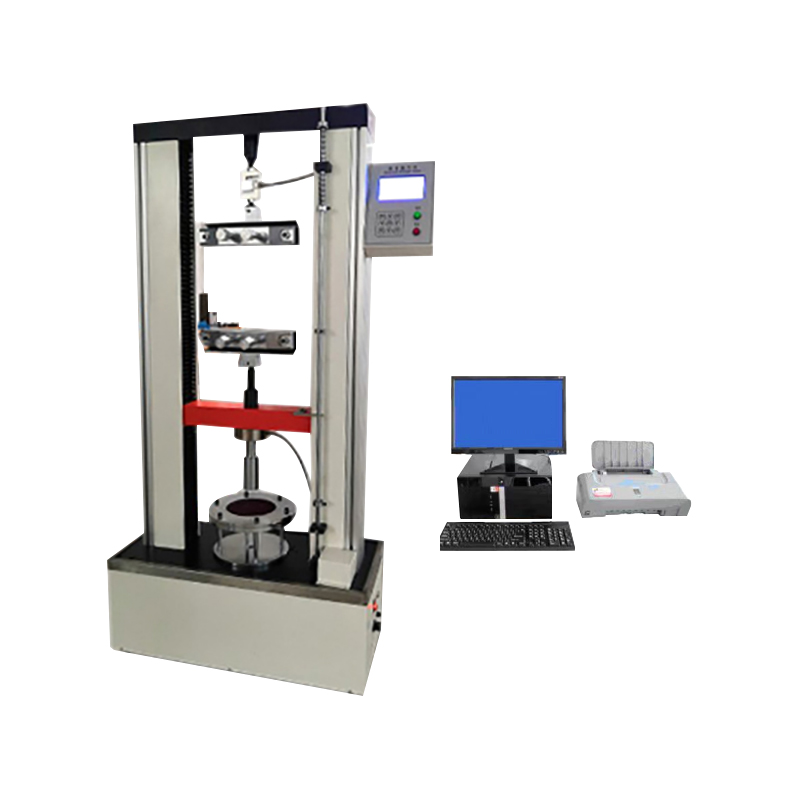 Computer-Controlled Geotextile Strength Testing MachineTests breaking strength and elongation of geotextiles and geomaterials; helps verify incoming samples and maintain quality control in production.View Product →
FAQ: Geotextile vs Geogrid in the Field
Can a geogrid replace a geotextile for separation?
No. Separation needs openings small enough to hold back fine particles, and a grid with 25 mm to 150 mm apertures lets fines and water pass straight through. A grid is the wrong tool for that job.
Does a geotextile add any reinforcement?
Some, but most design methods ignore it for reinforcement. Use the fabric for separation, filtration and drainage, and let the grid carry tensile load.
How much overlap is enough?
Geotextiles are typically overlapped 300 mm to 600 mm, more on fine-grained or uneven ground. Geogrid overlaps are usually 150 mm to 300 mm, or at least one aperture in the load direction.
Is one always the cheaper option?
Per square metre, geotextile usually costs less. But if reinforcement is needed and fabric is used instead, you pay in aggregate thickness and future maintenance.
Choosing between a geotextile and a geogrid is not a matter of preference; it is a matter of which failure mode you are paying to prevent. Name the failure first, then let each material do the job it was designed for. Where the ground is soft enough to need both, get the layering order right, because everything above it depends on that order.