中文简体
中文简体 русский
 عربى
عربى

Content
Take a 6 km toll link crossing peat over soft marine clay outside Palembang. Subgrade CBR sits near 1.5 percent, the water table is 0.6 m below formation level, and the pavement design calls for a 500 mm granular base if nothing else is done. Add one layer of biaxial geogrid, and that base course typically drops by 30 to 40 percent while the embankment stops spreading under monsoon loading.
That arithmetic is why geogrid consumption across Southeast Asian road construction is climbing faster than the global average, and why the constraint most projects now hit is neither design knowledge nor polymer supply. It is whether enough locally produced geogrid is available at the right tensile strength, at the right roll width, and at the right time.
How Fast the Geogrid Market in Southeast Asia Is Moving
Start with global anchors, because they set the baseline. Published estimates put the global geogrid market near USD 1.22 billion in 2024 and about USD 1.88 billion by 2032, a compound annual growth rate close to 5.5 percent. HDPE geogrid alone is projected to move from roughly USD 484 million in 2024 to USD 693 million by 2032 at 4.6 percent, while combined geotextile-and-geogrid demand and warp-knitted geogrid have both been modelled at around 7 percent a year.
Southeast Asian road construction generally runs above that global line, and the reasons are geological rather than promotional.
Soft ground is the default condition
Peat in Sumatra and Kalimantan, soft marine clay across the Mekong Delta, and reclaimed coastal fill in Java and Luzon share one property: soaked CBR values between 1 and 3 percent. Once the required base course passes roughly 600 to 700 mm, hauling and compacting more aggregate stops being the cheap option.
Rehabilitation spends differently from new build
Widening, overlaying and slope repair generate steady, repeatable geogrid volume, and those packages tolerate long import lead times far less than greenfield projects do. A slope that fails during the wet season costs several times what the reinforcement would have cost.
Published CAGR by geogrid-related market segment; regional road demand in Southeast Asia generally sits above the global line.
Base Course or Geogrid: Where the Money Actually Goes
On soft subgrade, reinforced pavement almost always wins on installed cost, but only when the geogrid is chosen against the failure mode instead of by habit. These four options cover most road and embankment packages in the region.
| Solution | Where it fits | Typical effect | Main risk |
|---|---|---|---|
| Aggregate thickening only | Competent subgrade, CBR above 5 percent | Base course stays at design thickness | Settlement keeps going in soft clay |
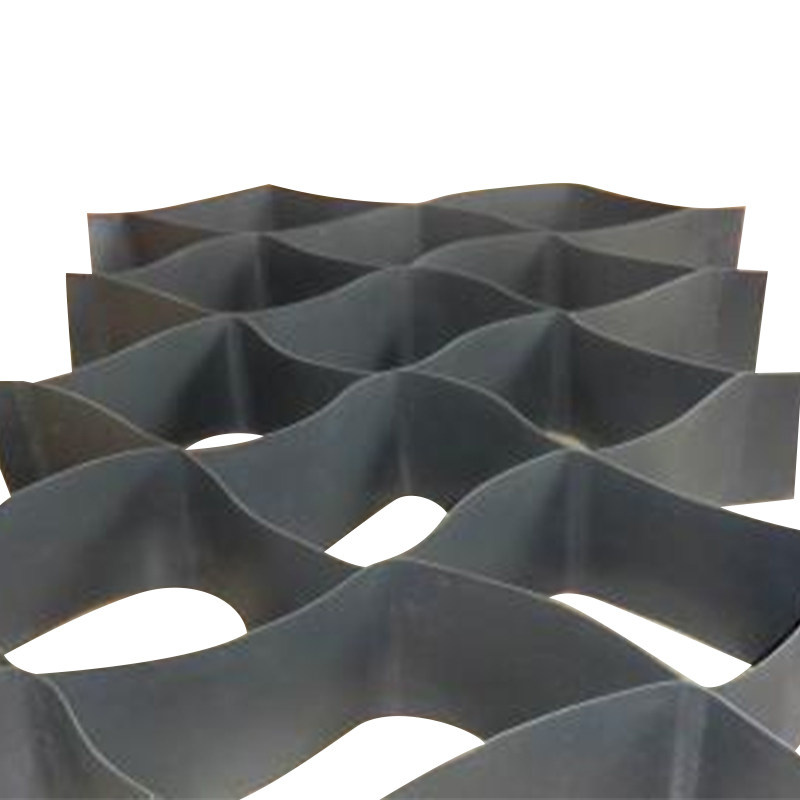
| Biaxial geogrid in base | Soft subgrade, haul roads, widening strips | 30 to 40 percent less granular material | Wrong aperture or weak junctions |
| Uniaxial geogrid in fill | Steep embankments, walls, abutments | Higher pull-out resistance in one direction | Installed in the wrong direction |
| Fiberglass geogrid | Asphalt overlays, reflective cracking | Delays crack reflection | Brittle, easily damaged on site |
The comparison is easiest to read as relative thickness. Treating an aggregate-only design as an index of 100, a biaxial layer in the base usually brings required granular thickness down to roughly 68, and adding uniaxial reinforcement in the embankment pushes it lower again, because part of the load is carried by the grid rather than the fill.
Relative granular base thickness index for a soft-clay subgrade; aggregate-only design set at 100.
Which Geogrid Fits Which Road Problem
Product families are not interchangeable, and picking the wrong one usually shows up as rutting in the first wet season rather than as a paperwork problem.
Biaxial geogrid for base and subbase
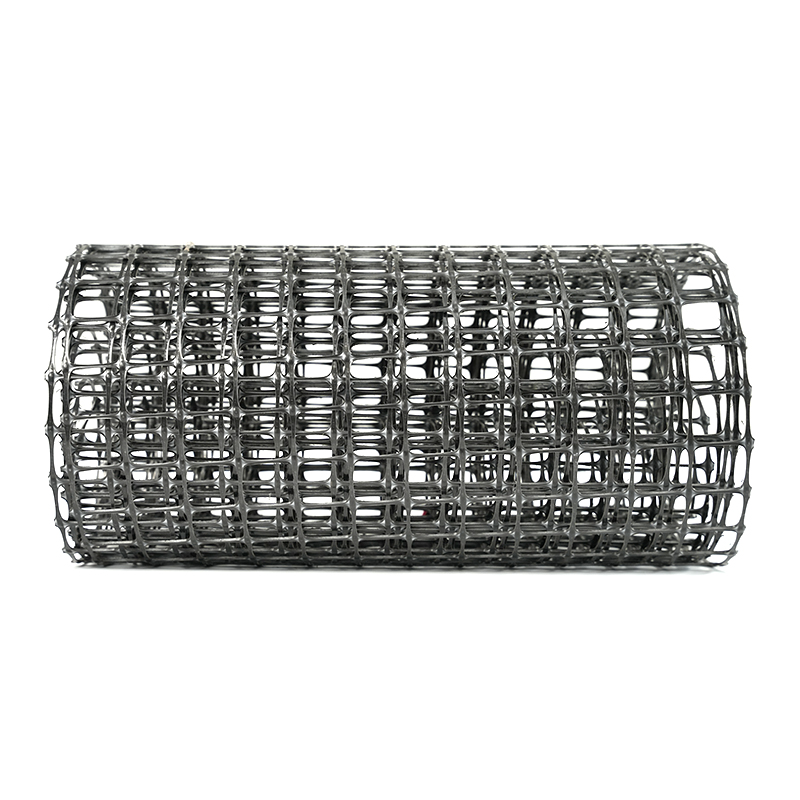
A punched and drawn polypropylene or HDPE sheet stretched in two directions, with apertures typically 30 to 40 mm and junction efficiency above 90 percent. It suits load spreading in two directions: haul roads, widening strips and granular base over soft clay.
Uniaxial geogrid for slopes and walls
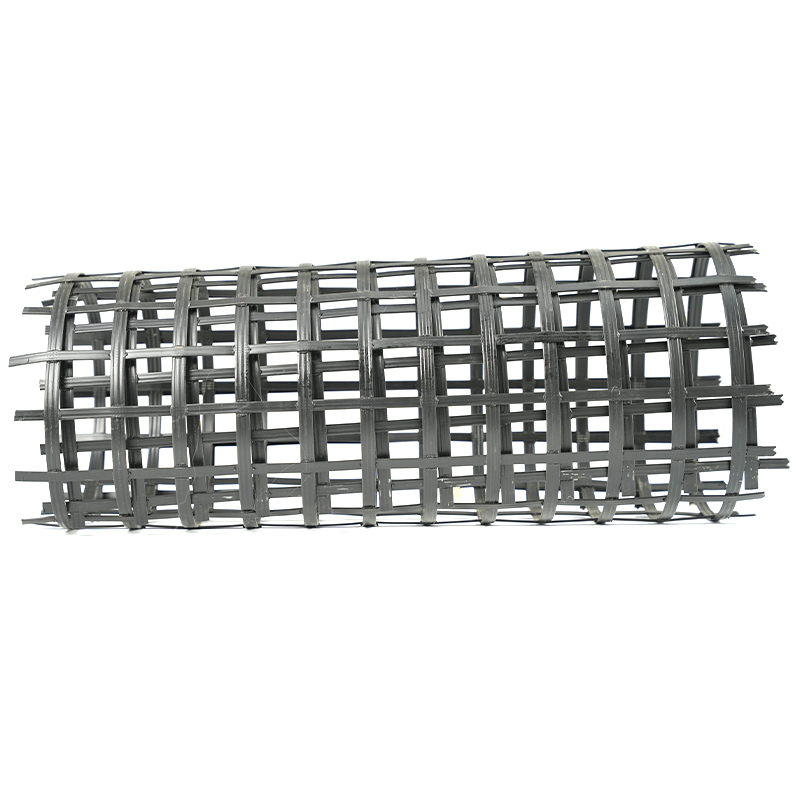
Stretched mainly in one direction, with design strengths commonly specified between 40 and 100 kN/m at 2 percent strain. It belongs in steep embankments, reinforced soil walls and bridge abutments, where the pull is one-directional and pull-out resistance matters more than interlock.
Fiberglass geogrid for asphalt layers
Higher modulus, low elongation and tolerance of hot-mix temperatures make it the right choice against reflective cracking in overlays. The trade-off is brittleness, since a roll damaged in handling loses most of its value before installation.
Steel-plastic and warp-knitted geogrid
These cover the high-stress end of the range: steep reinforced slopes, weak foundations, and applications where creep behaviour over decades is the deciding factor.
The load-transfer mechanics are worth understanding before writing a specification, and this note on how biaxial geogrid raises the bearing capacity of road foundations explains them in plain terms.
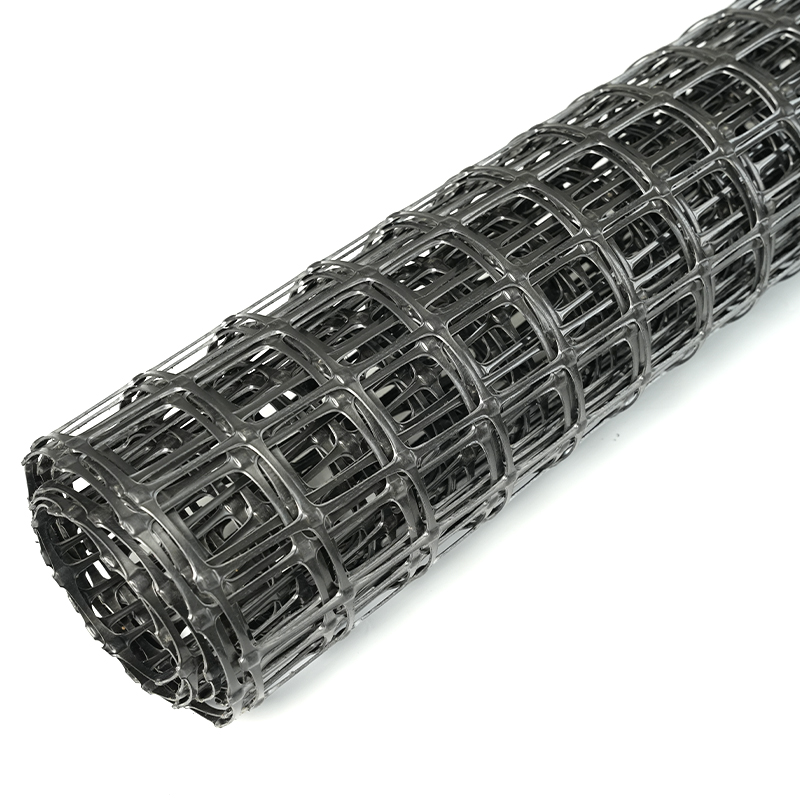 TGSG Series Custom Biaxial Geogrid for Foundation ReinforcementTGSG-series biaxial geogrid for road, railway, and embankment reinforcement; models offer 15–50 kN/m tensile yield force in both directions for load transfer.View Product →
- Biaxial PP / HDPE geogrid, 45%
- Uniaxial geogrid, 25%
- Fiberglass geogrid, 18%
- Steel-plastic and other, 12%
Indicative split of geogrid types specified on regional road and embankment packages.
The Real Bottleneck Is Local Production, Not Resin Supply
Imported geogrid solves a specification problem and creates a scheduling one. Ocean freight from Europe to Jakarta, Hai Phong or Manila adds four to ten weeks before customs clearance and inland haulage, and that window is exactly when a wet-season programme slips.
For markets with a steady pipeline of road and embankment works, domestic production capacity is the more durable answer, and that capacity depends on the drawing and stretching lines behind it rather than on the polymer.
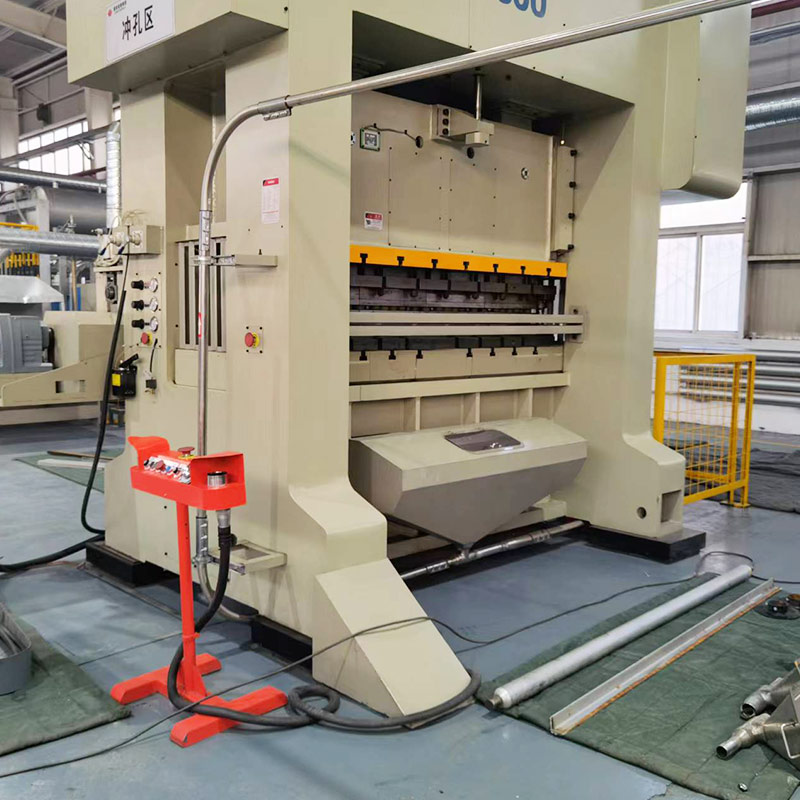 Bidirectional Geogrid Production Line for Biaxial Tensile Geogrid ManufacturingFor road and embankment works needing domestic capacity, this line combines extruder, calender, punching, and biaxial stretching oven to make biaxial tensile geogrid.View Product →
A biaxial line has to hold stretch ratios in both directions within tolerance. If heating is uneven or grip spacing drifts, junction strength falls and the roll fails on site instead of in a laboratory sample. Consistency at 30 kN/m is a process question before it is a materials question.
 Custom Unidirectional Plastic Geogrid Equipment for Uniaxial Tensile Geogrid ProductionUniaxial line extrudes, punches, heats, and stretches plastic into unidirectional geogrid; buyers should verify commissioning support and spare-part availability.View Product →
Uniaxial lines follow a different discipline: the transverse direction is deliberately kept weak, so the longitudinal stretching stage decides whether the finished grid lands at 40 kN/m or considerably higher at 2 percent strain. Either way, the questions a buyer should press on are commissioning support, spare-part availability, and whether operators are trained before the first run rather than after the first scrap roll.
Working with a partner that supplies both the line and the finished material keeps process settings and product data aligned, which is why it helps to compare the geogrid production equipment and product range side by side before committing to a specification.
A Specification and Procurement Checklist
- Quote tensile strength at the strain your design method uses, 2 or 5 percent, not the ultimate value printed on the datasheet cover.
- Match aperture size to aggregate gradation; an aperture that is too large lets base course particles punch through the grid.
- Ask for resin grade and UV stabiliser content in writing, especially for rolls that will sit on site through a tropical wet season.
- Confirm roll width and length against your installation equipment, because overlap losses at 3.95 m and 5.0 m widths differ more than most buyers expect.
- Check the test regime: index tests and wide-width tensile tests produce very different numbers from the same roll.
- Get lead time in writing, including the months when haulage slows, and agree what happens if a batch fails retesting.
- Budget for operator training before commissioning, since production lines running without trained crews lose more material in the first month than the training costs.
Frequently Asked Questions
How fast is the geogrid market growing in Southeast Asia?
Global geogrid demand is expanding at roughly 5 to 7 percent a year depending on the segment, and regional road, port and industrial programmes keep Southeast Asian consumption above that band. The gap comes from ground conditions rather than a different growth model.
Is biaxial geogrid enough for soft clay?
For base reinforcement over soft clay, usually yes. If the governing failure mode is lateral spreading of an embankment or overall slope stability, uniaxial reinforcement placed in the fill is what carries the load.
What tensile strength is typical for road subgrade reinforcement?
Base reinforcement specifications commonly fall between 20 and 40 kN/m at 2 percent strain. Slope, wall and abutment applications typically start at 40 kN/m and run considerably higher.
What does it take to start local geogrid production?
A biaxial or uniaxial line, stable polymer supply, a trained crew and a quality regime that tests every batch. Factory space, power supply and installation support shape the timeline more than the machine itself.
The growth numbers for geogrid in Southeast Asian road construction are not driven by fashion. They follow soft ground, monsoon loading, and the cost of hauling aggregate that does not need to be there. The projects that gain most are the ones that treat the geogrid supply chain, and the production capacity behind it, as part of the pavement design rather than as a purchase made the week before paving starts.