中文简体
 русский
 عربى


Content
- 1 How a Geogrid Changes the Stress Path
- 2 Four Mechanisms That Add Service Life
- 3 Matching the Grid to the Layer You Are Reinforcing
- 4 Design Values Worth Checking Before You Buy
- 5 Installation Details That Decide Whether You Get the Years
- 6 Where Geogrid Reinforcement Will Not Save You
- 7 Why Material Consistency Matters as Much as Strength
- 8 Pavement Geogrid FAQ
A pavement designed for fifteen years that starts rutting in year four is rarely a materials failure. In most cases the bound layer has been asked to carry tensile strain it cannot survive, or the subgrade beneath it has been loaded over too narrow a footprint. Geogrid reinforcement extends pavement life by attacking both problems at once: it interlocks the base aggregate so the granular layer behaves as a stiffer, more confined mass, and it carries horizontal tension so the layer above does not have to.
The gain is not a fixed number of years. Reinforcement usually multiplies service life rather than adding a constant, so a structure that would have needed reconstruction at year five can often reach year ten to fifteen, with rutting reduced and cracking delayed rather than eliminated. How much you get depends on four variables:
- Tensile stiffness at low strain, because a working pavement mobilises the grid at 1 to 3 percent strain, not at ultimate load
- Aperture size relative to the aggregate, which decides whether particles lock into the grid or slide over it
- Installation tension, because a slack or wrinkled grid begins working only after the pavement has deformed
- Drainage below the pavement, since a saturated subgrade will rut whatever is buried in the base
How a Geogrid Changes the Stress Path
Every wheel pass pushes base aggregate sideways before it pushes it down. If the stone can move laterally, the layer loses confinement, the load reaches the subgrade over a narrow footprint, and both rutting and settlement follow. A geogrid placed at the interface interrupts that sequence. Aggregate particles partially penetrate the apertures, the ribs restrain them from rolling, and the layer develops the stiffness of a confined, interlocked mass instead of a loose pile of stones.
Two further effects come free once the grid is taut. When the base deflects, the grid stretches into a shallow catenary and carries part of the load in tension, spreading it before it reaches the subgrade. Where the grid sits at the bottom of a bound layer, it absorbs the tensile strain that would otherwise initiate a fatigue crack at the underside, the classic failure mode in thin asphalt over a stiff base.
Name the failure mode before you buy anything
Rutting, fatigue cracking, reflective cracking and subgrade settlement respond to reinforcement differently. A grid that controls rutting in a well-drained crushed-stone base will do very little for reflection cracking in a 60 mm asphalt overlay, and the reverse is equally true. Decide which failure you expect at year five; that decision, not the tensile strength printed on the data sheet, determines whether the reinforcement pays for itself.
Four Mechanisms That Add Service Life
Reinforcement works through four mechanisms. They act together, but the dominant one depends entirely on where the grid sits in the structure.
| Mechanism | Where it acts | What it changes in service |
|---|---|---|
| Lateral restraint and interlock | Grid at the base-to-subgrade or base-to-subbase interface | Raises the confined modulus of the granular layer, cutting rutting and allowing a thinner base |
| Tension membrane | Grid bridging a deforming subgrade | Carries load in tension and spreads it over a wider area, reducing vertical stress on the subgrade |
| Tensile reinforcement | Grid at the underside of the bound layer | Delays fatigue crack initiation where bending strain is highest |
| Crack arresting interlayer | Grid bonded under or inside an asphalt overlay | Slows the upward reflection of existing joints and cracks |
Matching the Grid to the Layer You Are Reinforcing
Chemistry and structure matter because pavements fail at different strains, temperatures and loading durations. Three families cover most road work.
Granular base and subgrade
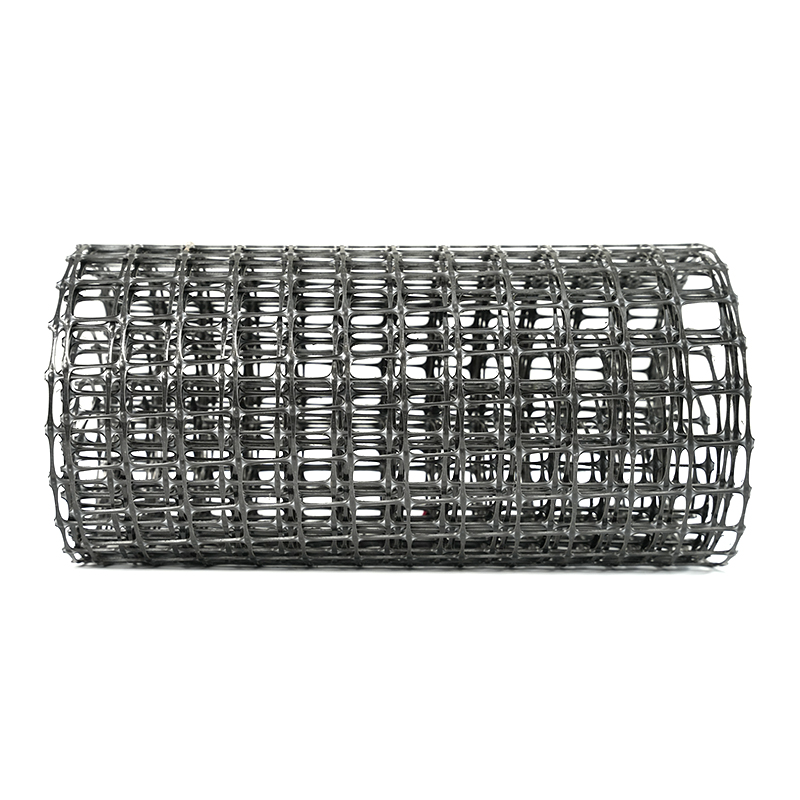
Punched and biaxially stretched polypropylene grids remain the workhorse for base reinforcement. Apertures of roughly 25 to 50 mm let angular crushed stone lock in, and the ribs mobilise quickly at low strain. Check tensile strength at 2 percent strain rather than ultimate strength, and junction efficiency above about 90 percent so the node does not unzip under repeated load.
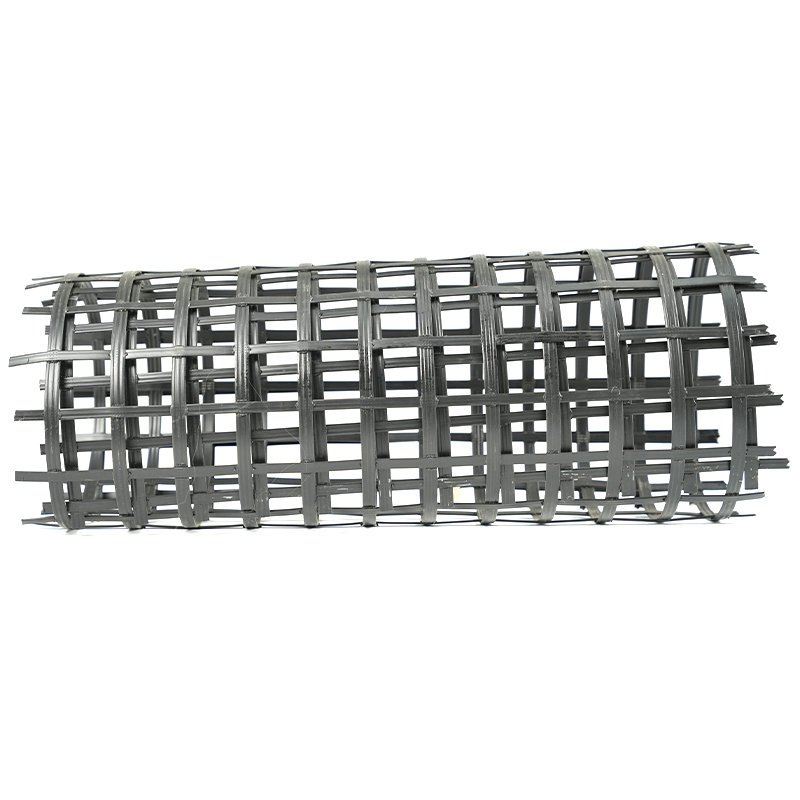
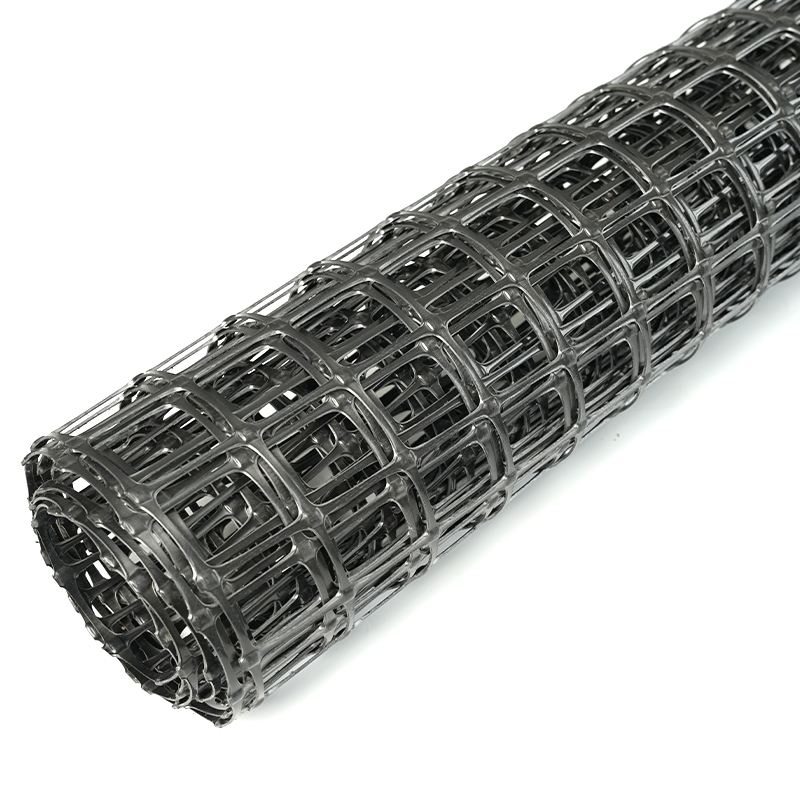 Bidirectional Geogrid for Base and Foundation ReinforcementBiaxially stretched polymer geogrid with TGSG 15-15 to 50-50 grades provides two-directional tensile strength for base, roadbed, slope, and permanent foundation reinforcement.View Product →
Asphalt overlays and reflective cracking
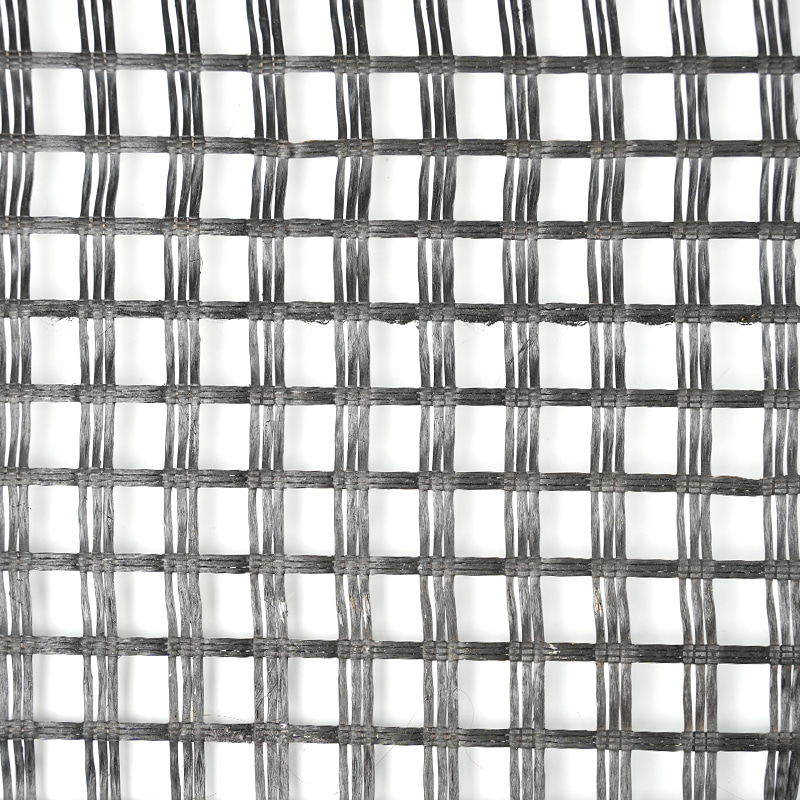
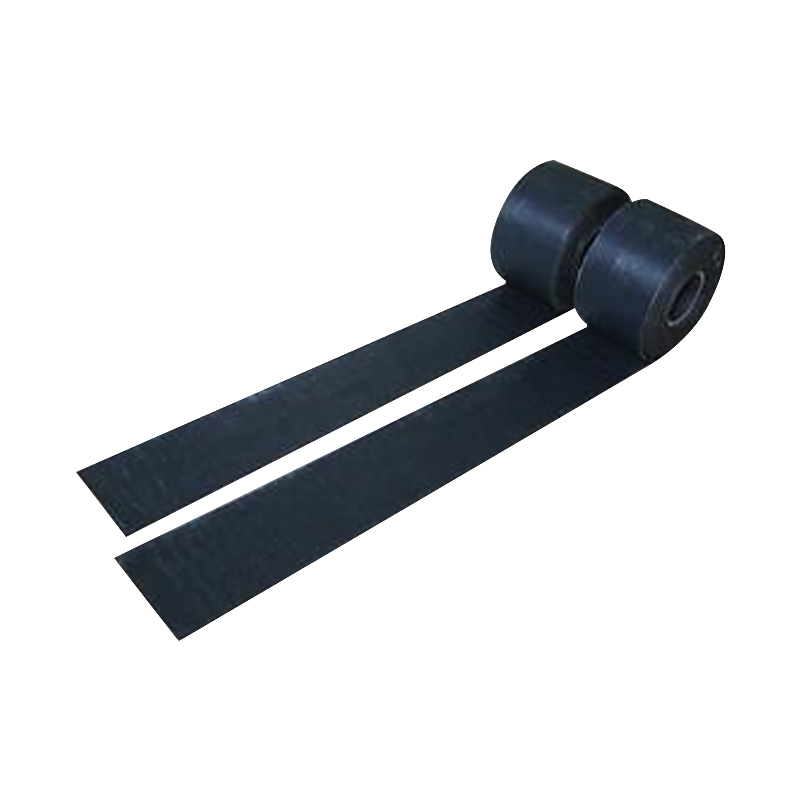
In an overlay the grid must survive paving temperatures and bond with the mix, so asphalt-coated glass fibre grids are the usual choice. Their high modulus and low elongation pull strain out of the asphalt almost immediately, which matters when a crack underneath opens a fraction of a millimetre with every truck pass. The interaction between grid and mix is described in more detail in this note on fiberglass geogrid in asphalt pavement reinforcement.
 Fiberglass Geogrid for Asphalt Pavement ReinforcementAlkali-free glass fiber geogrid with asphalt coating, high tensile strength and low elongation for asphalt pavement, subgrade, and reflection-crack reinforcement.View Product →
Weak foundations, haul roads and slopes
Where sustained load and creep control the design, warp-knitted polyester and steel-plastic grids hold tensile capacity for decades without relaxing. On slopes, shoulders and widening strips, where the force direction is known, a uniaxial grid delivers more capacity per unit of material because the ribs are aligned with the load. Specifying a biaxial product for a slope is one of the most common and most expensive selection errors.
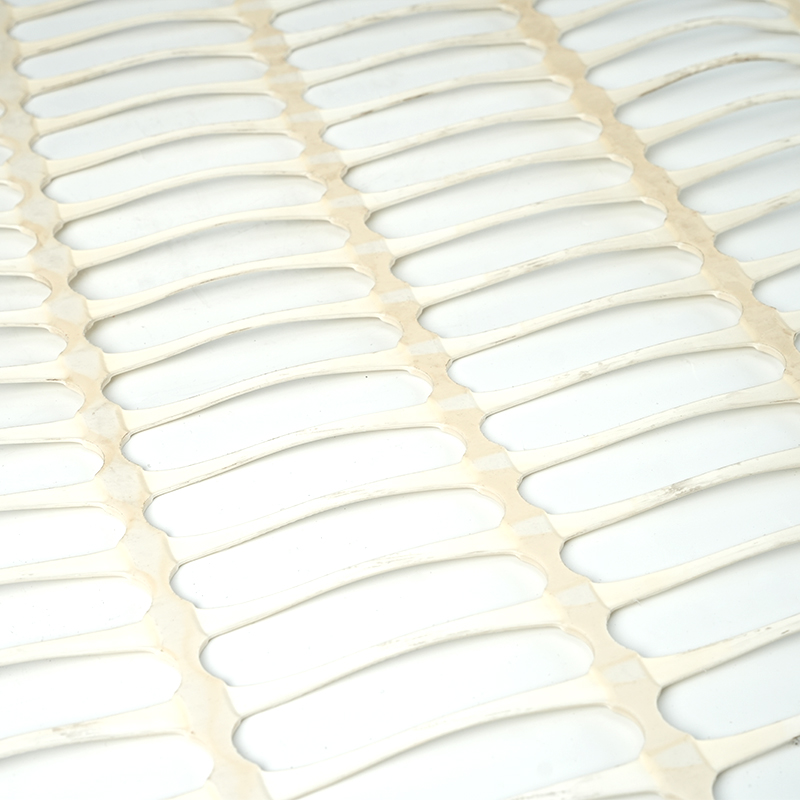 Unidirectional Stretch Plastic Geogrid for Soil ReinforcementHigh-polymer unidirectional geogrid with ultraviolet and aging additives, providing creep-resistant tensile strength for retaining walls, embankments, and slope reinforcement.View Product →
Design Values Worth Checking Before You Buy
Data sheets are written to flatter the product. These are the values that decide how a pavement behaves:
- Tensile strength at 2 and 5 percent strain. A 100 kN/m ultimate grid that reaches only 20 kN/m at 2 percent strain is effectively a weak grid in a working pavement.
- Junction efficiency. Node strength expressed as a percentage of rib strength; below roughly 90 percent in a biaxial grid, load transfer across the node becomes doubtful.
- Creep-limited strength for permanent structures. Relevant to polypropylene and polyester, largely irrelevant to glass fibre and steel-plastic.
- Aperture and rib geometry. A rule of thumb is an aperture between 1.5 and 2 times the D50 of the base aggregate. Too small and the stone bridges over the grid; too large and the ribs cannot grip individual particles.
- Overlap and anchorage. Typically 300 mm between rolls, more on curves, with the overlap laid in the direction of aggregate placement.
Installation Details That Decide Whether You Get the Years
A well-specified grid installed badly performs worse than no grid at all, because the project pays for material and still gets the unreinforced failure. The sequence that works:
- Compact and proof-roll the subgrade first. Reinforcement transfers load; it does not create bearing capacity where none exists.
- Strip sharp objects and protruding stones that could puncture or tear the sheet.
- Roll the grid out flat and let it relax. Wrinkles become slack zones that mobilise only after the pavement has begun to rut.
- Tension the grid lightly, 1 to 2 percent elongation is enough, and anchor the ends so it stays taut while aggregate is placed.
- Spread the first aggregate lift from the front of the roll rather than on top of the loose end, then compact to specification before delivery trucks enter the layer.
- Keep tracked plant off the bare grid; a machine turning on exposed ribs will pull them out of alignment.
Two checks at handover catch most problems: lift the edge of the first lift in one location to confirm the grid is still taut and undamaged, and run a plate load or dynamic cone test on the reinforced layer to confirm the modulus gain the design assumed.
Where Geogrid Reinforcement Will Not Save You
Reinforcement is sometimes sold as a cure for every pavement problem. It is not.
- Standing water in the subgrade. Fix drainage first; no grid performs in a saturated, pumping layer.
- Poor compaction of the base. Reinforcement multiplies the modulus of a properly compacted layer and does nothing for a loose one.
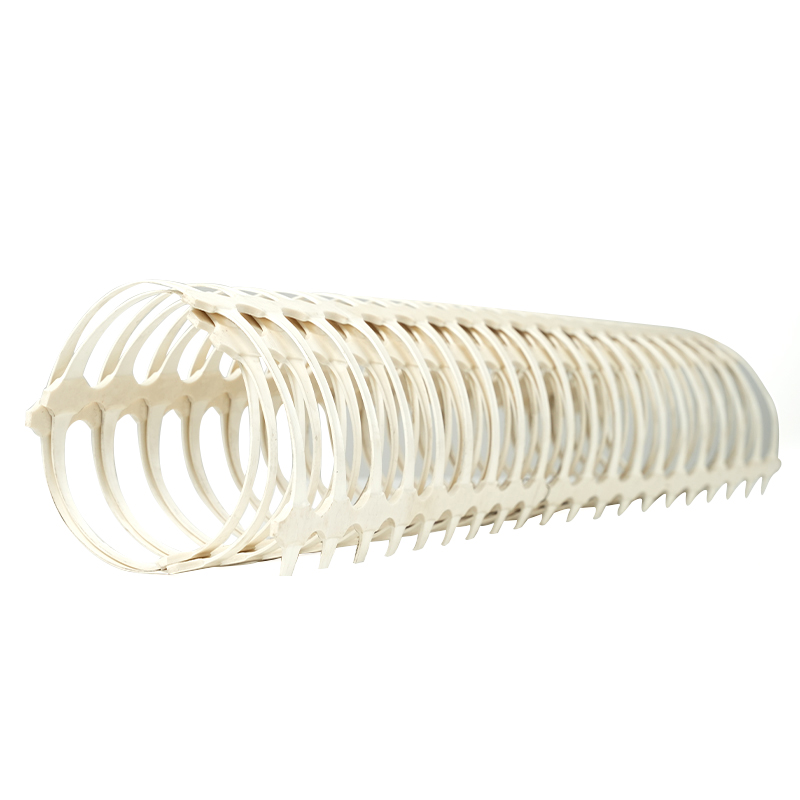
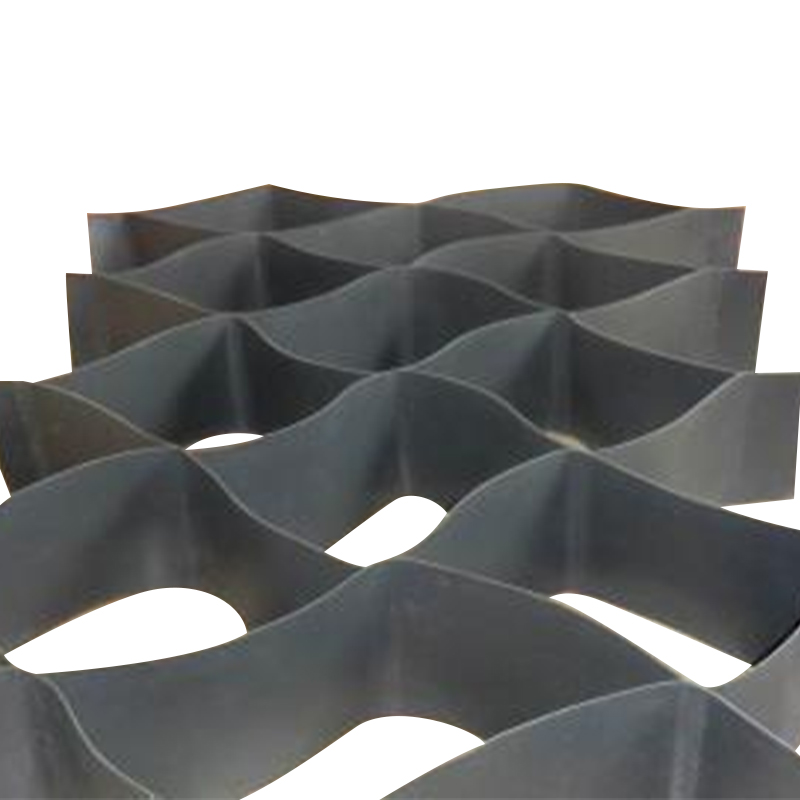
- Deep-seated subgrade failure. When the failure plane runs well below the base, a single planar grid must be paired with subgrade improvement or a three-dimensional confinement system.
- Aperture mismatch. If most of the aggregate passes over the grid instead of locking into it, the material behaves as a separator and adds nothing structural.
Why Material Consistency Matters as Much as Strength
Two grids can carry the same data sheet value and behave differently in service, because stretch ratio, rib orientation and junction quality are set during production rather than in the final test. A line that holds uniform heating and stretch across the full web produces ribs with consistent molecular orientation; a line that drifts produces soft spots that become the first point of failure. That is why manufacturers who also build the geosynthetic production lines tend to publish tighter tolerances, and why batch testing on samples cut from delivered rolls, checked for tensile strength at 2 percent strain and junction strength, is worth insisting on for any large pavement project.
Pavement Geogrid FAQ
How much extra life does geogrid reinforcement actually deliver?
Reported gains range from roughly 30 percent to more than double, depending on structure, traffic and the failure mode the grid addresses. The upper end usually involves base reinforcement over a soft subgrade, where the reinforced pavement can also be built thinner for the same design life.
Can the reinforcement reduce base thickness instead of extending life?
Yes. Many designers convert the benefit into a thinner granular base rather than additional years, particularly where aggregate haul costs are high. Both outcomes are legitimate; decide which one the project wants before comparing tenders.
Does a grid help if the existing pavement is badly cracked?
An overlay grid slows reflection cracking but does not stop it permanently. Where cracks are wide or the old pavement is structurally tired, sealing, a stress-absorbing membrane or a thicker overlay should accompany the grid.
What is the most common mistake on site?
Laying the grid slack and then covering it with a first lift too thin to protect it from construction traffic. The material rarely fails; the installation does.
Extending pavement life with geogrid reinforcement comes down to sequence. Identify the failure mode you expect, place the reinforcement at the interface where that failure begins, choose a grid whose stiffness at 2 percent strain matches the load it will see, and protect the installation until the first lift is compacted. Do all four and the reinforcement earns its cost in reduced rutting and delayed cracking. Skip any one of them and the grid becomes an expensive separator under a pavement that fails on schedule anyway.