中文简体
 русский
 عربى


Content
- 1 Three Layers of ISO, and the Question Each One Answers
- 2 Reading an ISO 9001 Certificate Without Being Misled
- 3 Machinery Safety Standards That Apply to the Line Itself
- 4 Where the Standards Bite Differently: Biaxial, Uniaxial and Fiberglass Lines
- 5 The Output Side: Which ISO Test Methods Belong in Your Acceptance Criteria
- 6 A Practical Checklist Before the Down Payment
- 7 Frequently Asked Questions
- 7.1 Is there an ISO standard written specifically for geogrid production equipment?
- 7.2 Does a CE mark mean the machine complies with ISO standards?
- 7.3 What is the difference between ISO 9001 and ISO/IEC 17025?
- 7.4 Will an in-house test give the same result as an accredited ISO test?
- 7.5 How often should the quality file be refreshed?
Your engineering team has already signed off the screw configuration, the oven length and the stretching ratios. Then purchasing asks the question that stalls the down payment: which ISO certificates will actually arrive with the geogrid production equipment?
The straight answer is that no ISO standard describes how to build a geogrid line. ISO work on this subject sits in three separate layers: a management-system certificate, a family of machinery-safety standards, and a group of material test methods. Each layer answers a different question, and a supplier holding one is not automatically compliant with the other two.
What follows is the practical version, written for the people signing the acceptance report rather than the brochure.
Three Layers of ISO, and the Question Each One Answers
Treat every certificate you receive as the answer to one specific question. When the question and the certificate do not match, keep asking. This is the split that matters on a geogrid line.
| Layer | Representative standards | The question it answers |
|---|---|---|
| Quality management | ISO 9001:2015 | Can this builder consistently control design, purchasing, welding, assembly and after-sales service? |
| Machinery safety | ISO 12100, ISO 13849-1, IEC 60204-1, ISO 14119, ISO 14120 | Have the oven, nip points, winders and electrical cabinet been assessed and guarded using recognised methodology? |
| Material test methods | ISO 10319, ISO 12236, ISO 13433, ISO 9863-1 | Can the geogrid coming off the line be measured against the same yardstick used in the design specification? |
A single sentence such as "our equipment is ISO certified" quietly merges all three. Ask instead which layer, which standard number, and which revision year. Suppliers with a genuine file will answer in seconds; those without one will answer with adjectives.
Reading an ISO 9001 Certificate Without Being Misled
ISO 9001 is a management-system standard, not a product standard. It confirms that the manufacturer runs documented processes for design control, supplier evaluation, in-process inspection and corrective action. It does not state that a stretching oven holds its set point within a given tolerance, and it does not certify the tensile strength of the geogrid the line produces.
| Field on the certificate | What it tells you | What to verify |
|---|---|---|
| Scope wording | The activities actually audited | A scope covering manufacture of geosynthetic machinery is stronger than one covering sales or trade only |
| Revision year | Which version of the standard was applied | 2015 is the current revision; certificates to earlier revisions should have been transitioned or withdrawn |
| Certification body | Who performed the audit | Check the body is accredited and that the certificate appears in an IAF-recognised database |
| Site addresses | Where the audited work happens | Confirm your line is built at a listed site rather than an unlisted subcontractor workshop |
| Validity and surveillance dates | Whether the system is still under audit | Expired or suspended certificates survive in PDF brochures for years |
One clause is worth raising in the technical meeting. Design and development under clause 8.3 can be legitimately excluded if a builder only manufactures to the customer's drawings. If the certificate shows that exclusion, then the custom stretch-ratio changes and oven modifications you are requesting sit outside the audited scope, and the design responsibility is yours, not theirs. That is not a fault; it is simply a fact you should know before the layout is frozen.
Machinery Safety Standards That Apply to the Line Itself
This is the layer that affects operators every shift. In the European market a geogrid line falls under the Machinery Directive 2006/42/EC, with its successor Regulation (EU) 2023/1230 applying from 20 January 2027. Conformity is normally demonstrated against harmonised standards, and those are ISO or EN ISO documents with numbers you can ask for by name.
| Standard | Scope | Document to request |
|---|---|---|
| ISO 12100 | Risk assessment and risk reduction methodology | Hazard list, risk assessment report, residual-risk sign-off |
| ISO 13849-1 | Safety-related parts of control systems, performance level | PL validation for oven access doors, winding stations and stop circuits |
| IEC 60204-1 | Electrical equipment of machines | Schematics, protective bonding records, insulation test results |
| ISO 14119 | Interlocking devices associated with guards | Interlock selection rationale and defeat-prevention measures |
| ISO 14120 | Fixed and movable guards | Guard drawings with mesh size and fixing details |
| ISO 13857 | Safety distances to prevent reach into danger zones | Reach distance calculations for roller trains and winders |
| ISO 3834-2 and ISO 9606-1 | Welding quality requirements and welder qualification | Welding procedure specifications and welder certificates for the main frame |
Numbers printed on a quotation are not compliance. The deliverable is the documentation trail: a line claimed to follow ISO 13849-1 but supplied without performance-level validation is an assertion, not evidence. Ask for the validation report by name and check that the safety functions listed match the guarding actually installed on your machine.
Where the Standards Bite Differently: Biaxial, Uniaxial and Fiberglass Lines
A generic safety file carried over from another project is rarely sufficient, because the three common line types carry quite different risk and quality profiles.
Biaxial stretching lines
Heating uniformity and sequential stretching dominate. If the sheet temperature drifts across the width, longitudinal and transverse strengths fall out of balance and the product grade quietly changes. Thermally, the oven and hot nip points drive the risk assessment, so the ISO 13849-1 validation for oven access doors and the temperature uniformity data belong in the same acceptance folder. A useful companion read is this overview of the geogrid production line process flow, which makes it easier to map each standard to a specific station.
Uniaxial tensile lines
Long roller trains and sustained high longitudinal tension make guarding distances and interlock integrity the critical items under ISO 13857 and ISO 14119. Load cell calibration traceability matters just as much, because the strength guarantee is only as good as the measurement behind it.
Fiberglass and chemical-fiber dipping lines
The bath is the focal point: fume extraction, chemical handling, splash guarding and, where solvents are involved, area classification. Pneumatic components should be specified to ISO 8573-1 air quality classes, since moisture and oil contamination shorten valve life and cause inconsistent dip pickup.
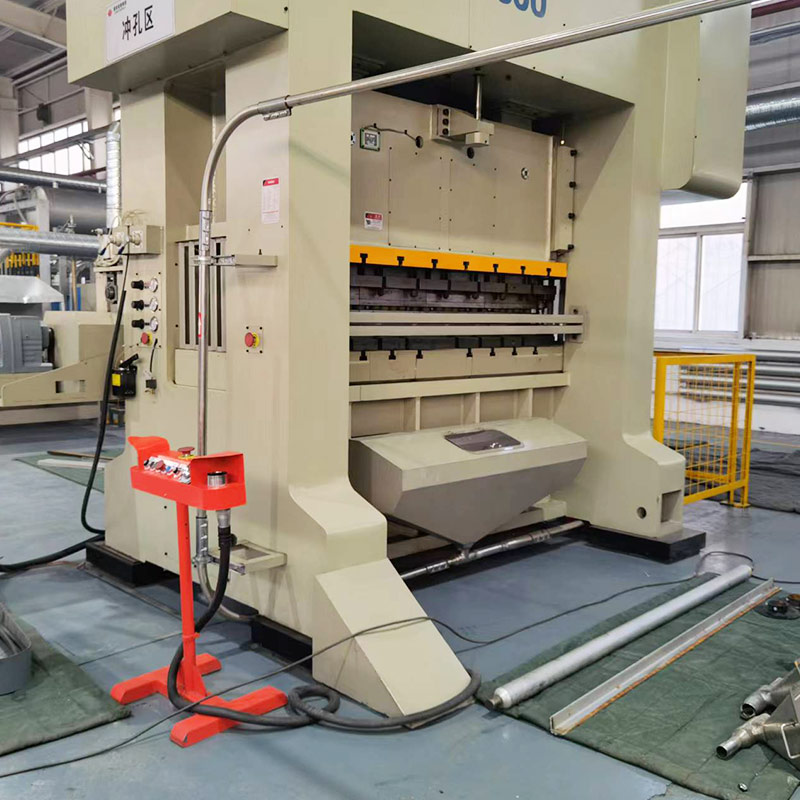 Biaxial Plastic Geogrid Production LineExtrusion, punching and two-axis stretching line for PP/PE biaxial geogrid, with compact oven temperature control and a clamping fixture designed from production experience.View Product →
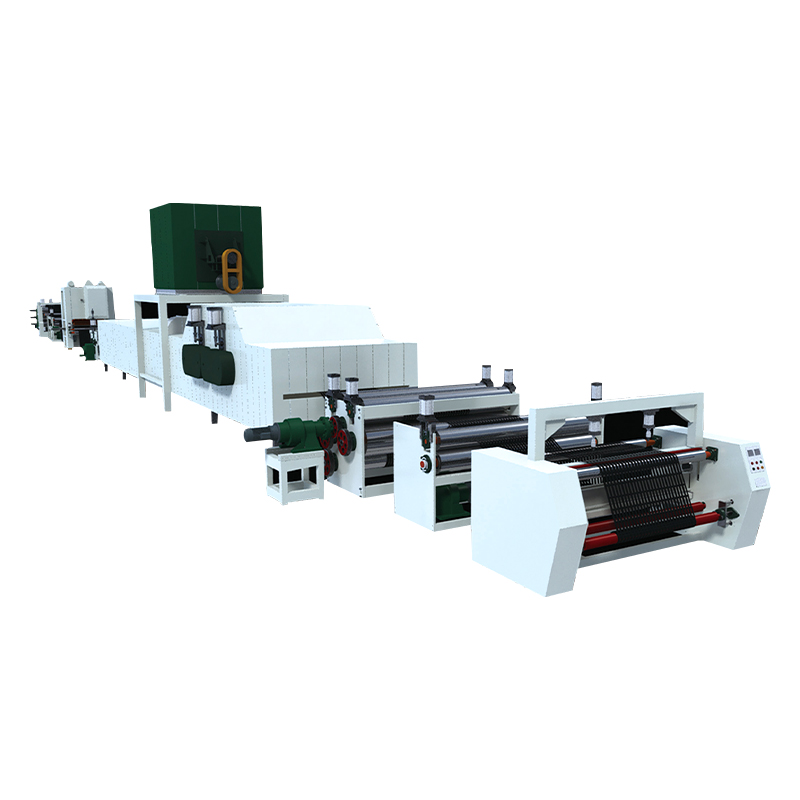 Unidirectional Plastic Geogrid Production LineCustom line for uniaxial tensile geogrid, covering extrusion, three-roller forming, punching, oven heating and stretching, plus measurement, rolling and packing.View Product →
 Fiberglass and Chemical Fiber Geogrid Dipping LineContinuous dipping system for knitted fiberglass or chemical fiber geogrid, with unwinding, dipping and extrusion, pre-drying, stenter oven and non-stop winding.View Product →
Each of these line types therefore needs its own document set. Copying a biaxial file across to a dipping line leaves the chemical hazards unassessed, which is exactly the gap an auditor or a plant safety officer will find first.
The Output Side: Which ISO Test Methods Belong in Your Acceptance Criteria
A production line is only verified by what it produces. Build the factory acceptance test around the same methods your own customer will apply on site, and write the standard number into the purchase order.
| Standard | Property measured | Where it belongs |
|---|---|---|
| ISO 10319 | Wide-width tensile strength and elongation | Grade confirmation at factory and site acceptance testing |
| ISO 12236 | CBR puncture resistance | Puncture specification for geotextile and membrane products |
| ISO 13433 | Dynamic perforation, cone drop | Installation damage resistance |
| ISO 9863-1 | Thickness at specified pressure | Dimensional consistency between batches |
| ISO 9864 | Mass per unit area | Raw material control and product consistency |
Two details decide whether a test report survives scrutiny. First, conditioning: ISO test methods normally require specimens held at 23 +/- 2 degrees C and 50 +/- 10 percent relative humidity, and results from unconditioned samples are difficult to defend. Second, laboratory competence: a report from an ISO/IEC 17025 accredited laboratory carries far more weight in a contract dispute than an in-house printout, even when both used the same standard.
A Practical Checklist Before the Down Payment
Put the following in the purchase order as deliverables rather than verbal assurances, so the file is complete before the container is loaded.
- ISO 9001:2015 certificate showing scope, revision, site addresses and a current surveillance date.
- Risk assessment to ISO 12100, including the residual-risk list and sign-off.
- ISO 13849-1 performance-level validation covering guarding, interlock and stop functions.
- IEC 60204-1 electrical documentation with bonding and insulation test records.
- Guard drawings showing ISO 14120 guard type and ISO 13857 distance calculations.
- Factory acceptance test report citing ISO 10319 and ISO 9863-1, with conditioning details, sample count and the testing laboratory identified.
- Calibration certificates for load cells, temperature sensors and pressure gauges.
- Installation, commissioning and operator training plan, because a line only reaches its performance window when the shift team knows how to hold it there.
Timing matters as much as content. Documents promised for delivery day tend to arrive after the balance payment, when your leverage is lowest. Ask for the certificate set at pre-shipment inspection, alongside the trial run data.
Frequently Asked Questions
Is there an ISO standard written specifically for geogrid production equipment?
No. No ISO standard is titled for geogrid lines. Manufacturers work from the generic machinery-safety family, their ISO 9001 quality system, and the geosynthetic test methods that define the output. Anyone claiming a dedicated ISO number for geogrid machinery should be asked to show it.
Does a CE mark mean the machine complies with ISO standards?
CE marking is a declaration against EU legislation, and harmonised standards such as EN ISO 12100 are the usual route to presumption of conformity. A CE plate backed by a technical file that references those standards is meaningful; a sticker alone is decoration.
What is the difference between ISO 9001 and ISO/IEC 17025?
ISO 9001 applies to a manufacturer's management system. ISO/IEC 17025 applies to a testing laboratory's competence and measurement traceability. If your acceptance report may be used in a claim, ask which one sits behind the data.
Will an in-house test give the same result as an accredited ISO test?
Often close, rarely identical. Specimen width, grip distance, loading rate and conditioning all shift the numbers. State the standard and the conditioning regime on the specification, then hold both parties to it.
How often should the quality file be refreshed?
On every new line order and on any certificate revision. A file from a previous project tells you what the builder could do then, not what will be handed over now.
The useful habit is to stop treating "ISO certified" as a single badge. Ask which layer the certificate belongs to, which standard number supports the claim, and which document will be physically handed over at acceptance. Those three questions separate a supplier who understands the standards from one who has merely printed them.