中文简体
中文简体 русский
 عربى
عربى

Content
- 1 Why Tensile Strength Is the Defining Specification
- 2 Tensile Strength Requirements by Application
- 3 Road and Subgrade Applications: Biaxial vs. Uniaxial Strength
- 4 Retaining Walls and Steep Slopes: Where Uniaxial Geogrid Dominates
- 5 Erosion Control and Hydraulic Engineering: Dynamic Load Considerations
- 6 Composite Systems: Combining Geotextile with Geogrid Production Lines
- 7 How to Test and Verify Tensile Strength
- 8 The Overspecification Trap: Avoiding Unnecessary Cost
- 9 Matching Your Application to the Right Geogrid Equipment and Testing Standard
The tensile strength you need depends directly on your application: 10–40 kN/m for separation and filtration, 40–80 kN/m for road construction and subgrade stabilization, and 80–200 kN/m for retaining walls, dike reinforcement, and heavy-duty geogrid composite systems. Choosing the wrong grade — too low or too high — creates either structural failure or unnecessary cost overruns.
Why Tensile Strength Is the Defining Specification
Tensile strength, measured in kilonewtons per meter (kN/m), quantifies the maximum load a geotextile can absorb before rupturing. It is not a single fixed value — it varies by fabric type, polymer base, and construction method. Woven polypropylene (PP) geotextiles used in bidirectional plastic geogrid composite non-woven production lines, for instance, can achieve tensile strengths from 40 kN/m up to 320 kN/m, while standard nonwoven geotextiles typically range between 20 and 100 kN/m with much higher elongation at failure (up to 50–100%).
The key industry test standards governing these measurements are ASTM D4595 (wide-width strip method), ASTM D4632 (grab tensile), and ISO 10319, the latter being the baseline referenced by geogrid equipment manufacturers and geogrid production line certifications globally. Understanding which standard your project specifies determines how you read and compare supplier data sheets.
Tensile Strength Requirements by Application
The table below consolidates recommended tensile strength ranges across the most common geotextile applications. These figures align with AASHTO M288-21 and CUR hydraulic engineering guidelines.
| Application | Recommended Tensile Strength | Typical Geosynthetic Type |
|---|---|---|
| Separation / Filtration (light subgrade) | 10–40 kN/m | Nonwoven PP / PE geotextile |
| Road construction, subgrade stabilization | 40–80 kN/m | Woven geotextile, biaxial geogrid |
| Coastal protection, erosion control | 60–80 kN/m | Woven geotextile, fiberglass geogrid |
| Retaining walls, reinforced slopes | 80–200 kN/m | Uniaxial geogrid, high-strength woven |
| Dike and levee reinforcement | 80–200 kN/m | High-strength woven geotextile |
| Railroads, heavy storage platforms | 80+ kN/m | Biaxial / uniaxial PP geogrid |
| Soft ground bridging (construction equipment support) | 40–100 kN/m | Geocell, biaxial geogrid composite |
Road and Subgrade Applications: Biaxial vs. Uniaxial Strength
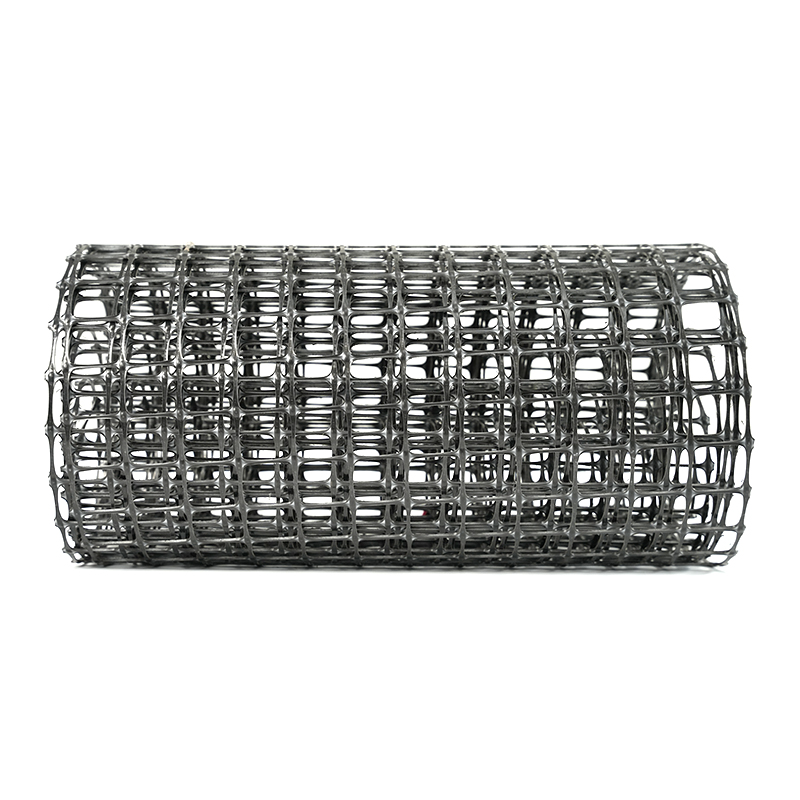
Road construction and runway projects require biaxial tensile strength — the ability to resist load symmetrically in both the machine direction (MD) and cross direction (CD). This is why bidirectional plastic geogrid equipment and PP/PE geogrid production lines are specifically engineered to produce balanced MD/CD strength profiles.
A typical biaxial geogrid for subgrade enhancement carries a minimum tensile strength of 30 kN/m in both directions, with junction strength and aperture size equally critical parameters. Research supported by the California DOT recommends that subgrade enhancement geogrids (SEG) meet specific junction strength thresholds in addition to tensile values, because interlocking performance — not just raw strength — determines rutting prevention.
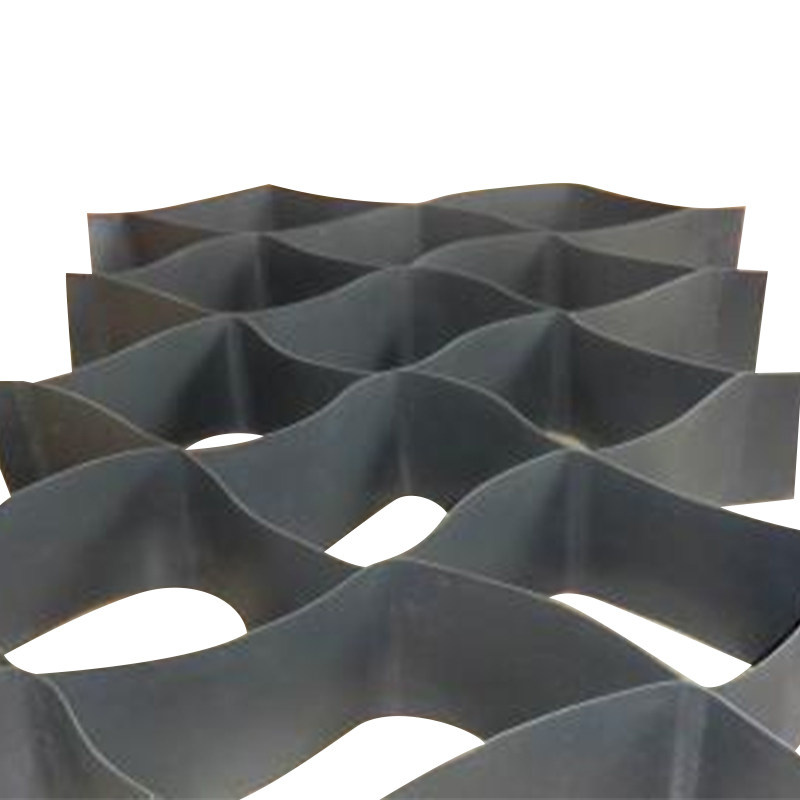
For soft subgrade bridging where construction equipment must operate before embankment fill is complete, tensile strengths of 40–100 kN/m combined with a geocell or composite nonwoven layer are frequently specified to distribute point loads without differential settlement.
Retaining Walls and Steep Slopes: Where Uniaxial Geogrid Dominates
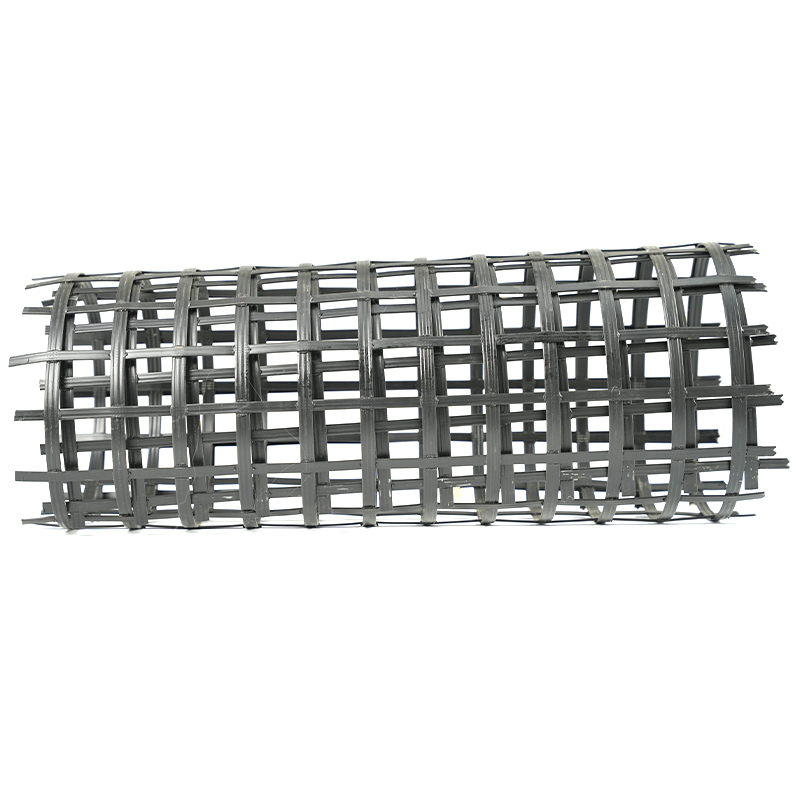
Retaining wall and steep-slope applications apply load predominantly in one direction, which is why unidirectional plastic geogrid equipment is engineered to maximize tensile performance along a single axis. Uniaxial geogrids used here typically achieve 80–200 kN/m in the primary reinforcement direction, with creep reduction factors applied to derive the long-term design strength.
For geoseismic design, Japanese research on polyester-fiber geogrids demonstrates that the allowable tensile strength after sustained creep loading (at 74 kN/m reference load) must include an additional safety coefficient to account for residual strength loss during seismic events. This makes accurate tensile testing equipment — such as ISO 10319-compliant universal testing machines — indispensable for any geogrid manufacturer or geogrid equipment supplier certifying products for high-risk zones.
Geotextile fabrics for retaining walls under AASHTO M288-21 Class 2 compliance typically specify a wide-width tensile strength of 20–100 kN/m, combined with grab tensile values of 200–450 lbs (ASTM D4632), apparent opening size of 0.05–0.25 mm, and flow rates up to 100–150 gpm/ft² to manage hydrostatic pressure buildup.
Erosion Control and Hydraulic Engineering: Dynamic Load Considerations
Erosion control applications introduce dynamic, repeated loading from wave action and water flow — conditions that differ fundamentally from the static loads in reinforcement design. For coastal protection and slope erosion control, geotextiles must combine tensile strength with resistance to UV degradation, sustained hydraulic pressure, and installation damage.
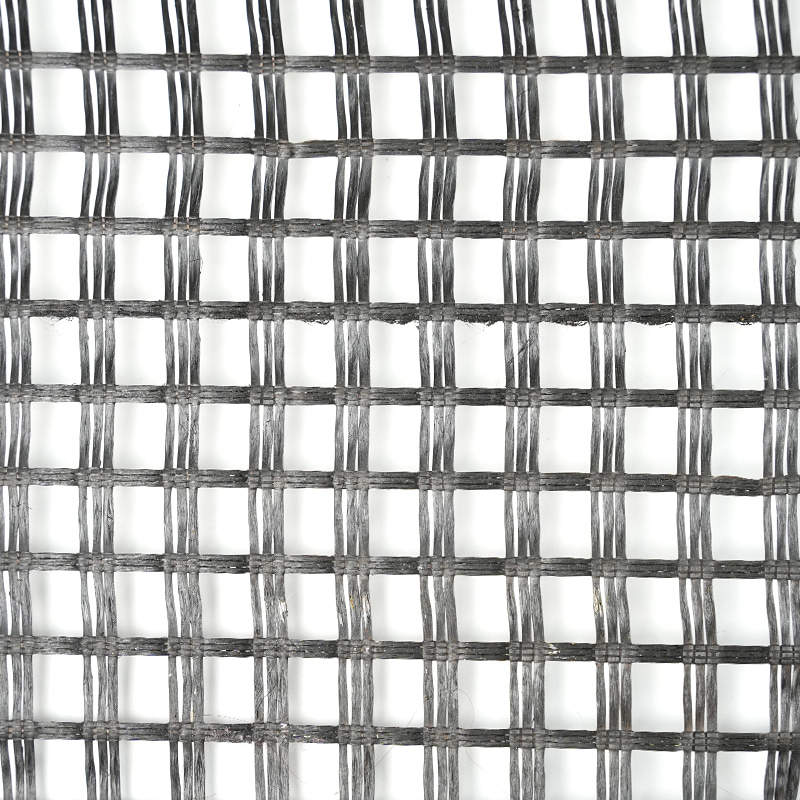
Industry guidance places erosion control geotextile requirements at 60–80 kN/m, with fiberglass geogrid equipment-produced materials offering particular advantages in high-temperature or chemically aggressive environments where PP and PE degrade faster. Dutch dike reinforcement projects along the North Sea coast, for example, specify geotextiles in the 80–200 kN/m band to ensure structural integrity across the design lifetime of the structure.
In silt fence and temporary erosion control applications — where the primary function is particle retention rather than structural reinforcement — much lower tensile strengths of 10–20 kN/m are standard, with emphasis on filtration ratings (AOS) rather than load-bearing capacity.
Composite Systems: Combining Geotextile with Geogrid Production Lines
Modern infrastructure increasingly relies on composite geosynthetic systems rather than single-layer solutions. A typical composite non-woven production line integrates a nonwoven filtration geotextile bonded to a biaxial or fiberglass geogrid, combining the drainage and separation functions of the textile with the high tensile reinforcement of the grid.
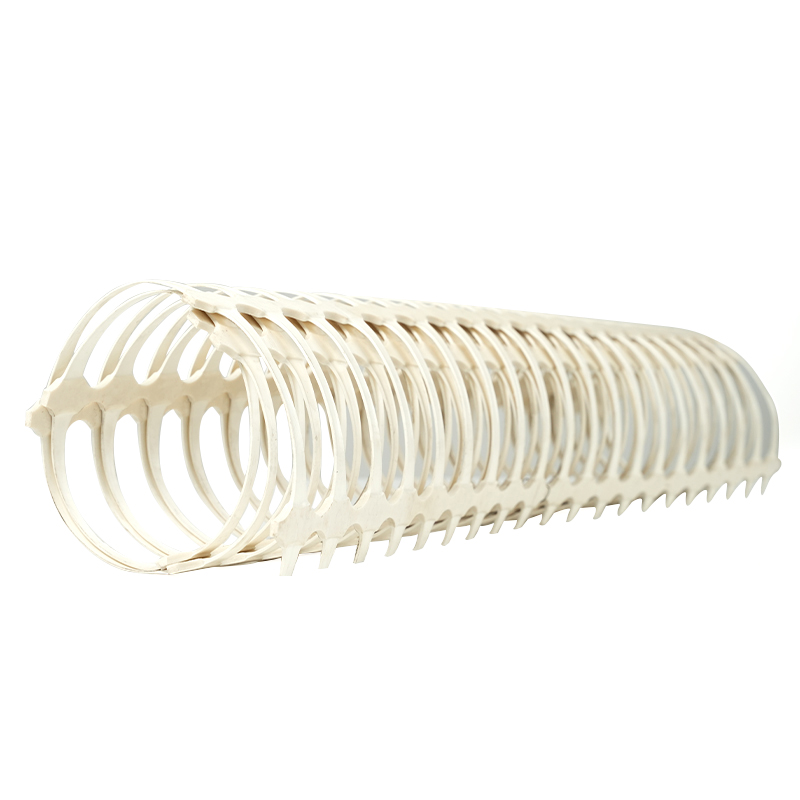
In these systems, the tensile strength specification applies to the composite assembly rather than each layer individually. A geocell filled with compacted aggregate, for instance, derives its load-bearing capacity from both the confining tensile resistance of the cell walls and the friction developed with the infill, making the cell's tensile specification — typically 75–250 kN/m at 2% strain in critical infrastructure — the governing design parameter.
PP and PE geogrids produced on dedicated geogrid equipment lines are frequently paired with nonwoven geotextiles to create composite drainage and reinforcement layers for embankment bases, delivering tensile values at 2% strain in the range of 6–22 kN/m while maintaining adequate filtration performance.
How to Test and Verify Tensile Strength
Specifying a tensile strength value is only meaningful if the test method is clearly defined. The three principal test methods used across geogrid and geotextile projects are:
Wide-width strip tensile test. The industry standard for geotextiles and geogrid equipment output. Measures strength across a 200 mm wide specimen; eliminates the neck-down effect. Used to certify PP geogrid production line output and fiberglass geogrid products.
Grab tensile test. Uses a 25 mm grip width on a wider sample. Faster and simpler than wide-width, suitable for quality control on nonwoven geotextile production lines and composite non-woven production line output. Reported in lbs or kN.
Tensile creep and creep rupture test. Critical for long-term reinforcement applications. Determines what percentage of short-term tensile strength remains available after sustained loading — essential for retaining wall and seismic design using uniaxial geogrid equipment-produced materials.
A fully equipped geotextile tensile strength machine with servo-controlled loading, digital force measurement up to 300 kN, and dual-column frame architecture can test products across the full application range — from lightweight nonwoven filtration fabrics through to heavy-duty fiberglass geogrid composites.
The Overspecification Trap: Avoiding Unnecessary Cost
A common mistake in geosynthetic procurement is equating higher tensile strength with superior performance across all applications. Overspecification — selecting an 80 kN/m woven geotextile for a basic separation application requiring 20 kN/m — inflates material costs, increases installation difficulty due to greater fabric stiffness, and adds unnecessary environmental impact without improving performance.
The correct selection process starts with the application's functional requirement (reinforcement, filtration, separation, drainage, or erosion control), then defines the load scenario (static vs. dynamic, short-term vs. long-term), and finally applies the appropriate reduction factors for installation damage, creep, chemical degradation, and biological deterioration to arrive at the required ultimate tensile strength. For most road separation applications, a nonwoven PP geotextile at 20–40 kN/m with the correct filtration rating outperforms an over-engineered high-strength woven at a fraction of the cost.
Matching Your Application to the Right Geogrid Equipment and Testing Standard
Whether your project involves a PP geogrid production line for road base reinforcement, a unidirectional plastic geogrid equipment line for retaining wall manufacture, a fiberglass geogrid system for asphalt reinforcement, or a geocell and composite non-woven production line for soft ground improvement — the tensile strength specification must be tied to a verified test method and application-specific design standard.
Investing in a calibrated geotextile tensile strength machine that complies with ISO 10319, ASTM D4595, and ASTM D4632 allows manufacturers and contractors to generate first-party test data, reduce reliance on unverified supplier claims, and demonstrate compliance with AASHTO M288, CUR, or project-specific specifications. For any geogrid manufacturer or geogrid equipment supplier targeting international markets, this testing capability is not optional — it is the foundation of product credibility.