中文简体
中文简体 русский
 عربى
عربى

Content
Two rolls of uniaxial HDPE geogrid can leave the same extruder, carry the same punch pattern, and still test far apart on tensile strength. The resin is identical and the tooling is identical, yet one roll comfortably meets its grade and the other does not. More often than not, the variable that changed is the draw ratio applied in the stretching ovens. The short answer to how draw ratio affects geogrid strength and aperture size is this: draw ratio is the strongest single lever a producer has over both properties. Raising it aligns polymer molecules into the ribs and drives tensile strength up sharply, until the gains flatten and the grid turns brittle. Every extra percent of stretch also physically enlarges the openings and thins the ribs that must survive installation. Setting that number correctly, and holding it stable roll after roll, is what separates a dependable grade from a disappointing one.
What Draw Ratio Actually Means
Draw ratio is the ratio between the length of sheet leaving a stretching unit and the length entering it. On a punched-and-drawn line, the polymer sheet is extruded flat, holes are punched in a fixed pattern, and the sheet is then pulled through heated ovens by roll trains running at progressively higher speeds. That speed difference is the draw ratio, and it is the point where the material's final character is decided.
The right number is product-specific. Uniaxial HDPE geogrids, which stretch in one direction only, are commonly drawn in the region of six to nine times in total. Biaxial polypropylene geogrids stretch in two directions, machine direction first and then transverse, and typically run at lower ratios of roughly four to six times per direction. Modern lines rarely apply the stretch in a single step; the total is split across several stages, and a final heat-setting stage lets the oriented structure relax into a stable form. If you want to see where the ovens and roll trains sit in the wider sequence, the geogrid production line process flow page walks through the complete chain.
How Draw Ratio Builds Tensile Strength
Stretching changes the polymer in a way nothing else in the process can. Before drawing, the chains in the sheet are coiled and randomly arranged, so a rib under load fails through molecular slip. As the sheet is drawn, those chains unfold and align along the rib axis, and tensile load is then carried by oriented chains instead. Strength climbs fast.
The gains do not stay linear. The curve rises steeply through the early and middle draw range, then flattens as achievable orientation saturates, while elongation at break keeps falling the whole way. That combination is exactly what soil reinforcement wants, because high strength with low yield elongation gives a stiff, predictable rib. But pushing past the designed window leaves too little residual ductility, and ribs crack under installation stress instead of stretching. Heat setting matters as much as the draw itself: a properly annealed oriented structure holds its strength under sustained load far better, whereas an over-drawn sheet with residual stress locked in can look strong on a short-term test and still be the poorer long-term bet.
Hitting that curve consistently, stage after stage, is exactly what a uniaxial tensile geogrid production line is built for.
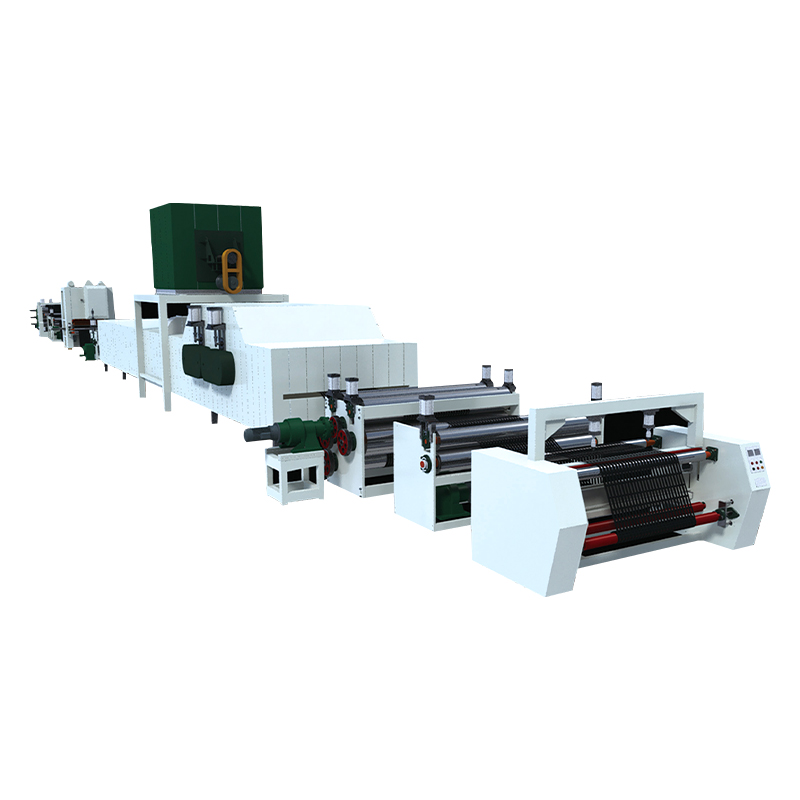 Uniaxial Tensile Geogrid Production LineThis line stretches punched HDPE sheet in one direction to reach the final aperture geometry and rib dimensions. It suits manufacturers who need consistent draw ratios stage after stage to keep finished geogrid openings within tolerance.View Product →
How Draw Ratio Sets Aperture Size and Rib Width
Aperture size is not a free styling choice. On a stretched grid, the finished opening is the arithmetic of the punch pattern multiplied by the draw ratio. Stretch the sheet along the machine direction and every opening elongates into its final slot shape while the sheet narrows across its width, so the ribs between openings thin down at the same time. Change the draw ratio and you change the delivered geometry, even with identical tooling.
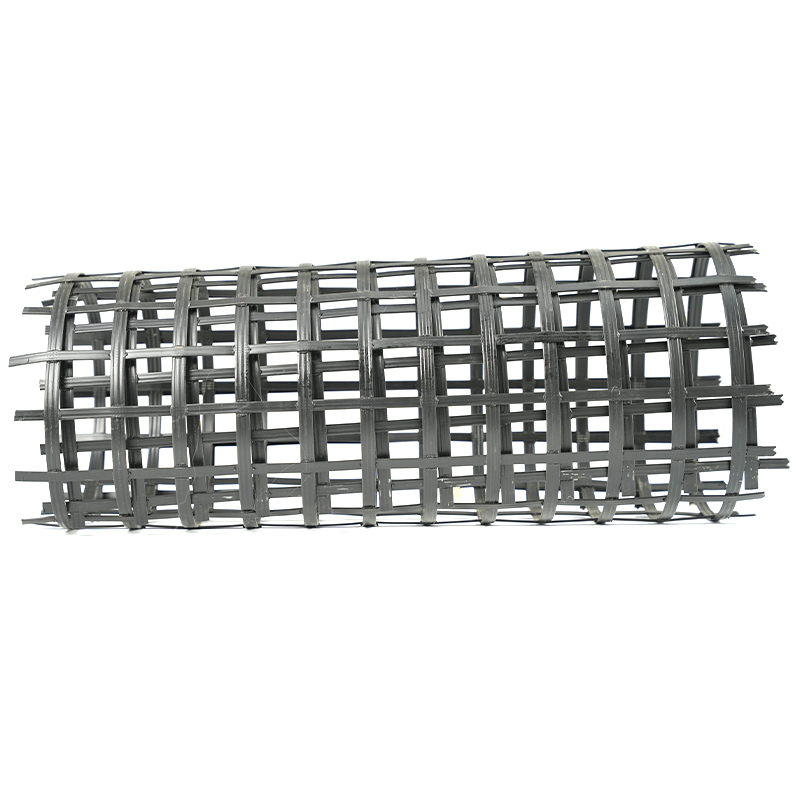
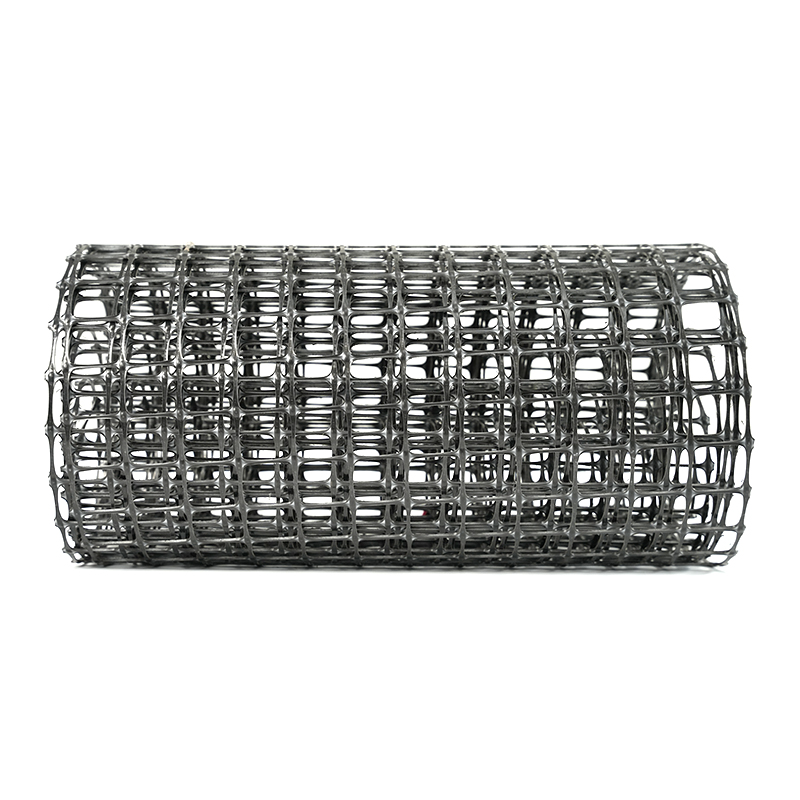
That geometry carries real engineering weight. Studies of soil-geogrid interaction consistently show that interlock depends on how well aperture size matches the surrounding particles; research on railway ballast reinforcement, for example, points to an aperture of roughly 1.4 times the nominal aggregate size. Openings that are too small prevent proper interlock and produce scattered, unreliable test results, while openings that are too large leave fewer ribs in contact with the fill and push more load onto the junctions. Rib width matters in its own right, because wider ribs help a grid survive sharp aggregate and machine traffic during installation. The draw ratio, in short, decides whether the finished geometry, the kind you can inspect on a product such as our unidirectional stretch plastic geogrid, locks into the fill or simply floats in it.
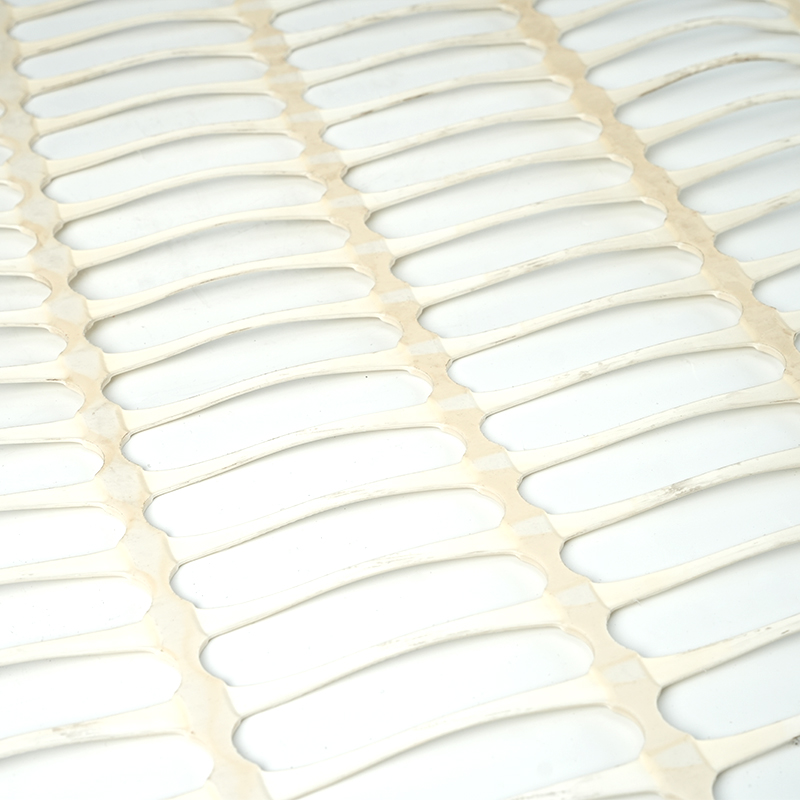 Unidirectional Stretch Plastic GeogridA finished uniaxial geogrid whose aperture size, rib width and junction quality determine interlock with surrounding fill. Checking its delivered geometry against tolerance shows whether the draw-ratio process achieved reliable soil reinforcement performance.View Product →
Living in the Working Window
Between under-drawing and over-drawing sits a controlled window where strength, elongation, aperture tolerance and junction quality all land inside specification at the same time. The table below summarizes how the same punched sheet behaves at the two extremes and inside that window.
| Aspect | Draw ratio too low | Controlled working window | Draw ratio too high |
|---|---|---|---|
| Tensile strength | Under-oriented ribs; strength sits well below grade potential | Grade strength achieved with consistent test results | Peak strength possible but brittle, with wider roll-to-roll scatter |
| Elongation | High residual elongation; ribs keep deforming under load | Low yield elongation with enough residual ductility for installation | Very low elongation; ribs crack rather than stretch |
| Aperture size | Openings stay small; poor interlock with coarse aggregate | Openings matched to the target fill or ballast gradation | Ribs narrow down and openings drift out of tolerance |
| Nodes and junctions | Nodes remain thick and under-oriented | Nodes set cleanly and carry junction strength | Node distortion and splitting at the rib-node transition |
| Long-term behavior | More creep under sustained load | Orientation and heat setting balanced for creep control | Residual stress locked in; higher long-term risk |
What Draw Ratio Does Not Control
It would be convenient if draw ratio were the whole story, but it shares the outcome with three other decisions. Resin grade determines how much orientation the material can accept and how it behaves under sustained load. Aperture and rib geometry decide how the grid engages the soil. Node and junction quality determine whether the ribs work together or individually. A rough way to picture that balance is shown below.
Where Draw Ratio Control Happens on the Production Line
Because draw ratio exists only as a relationship between roll speeds and sheet temperature, it is also where production quality is won or lost. Three control points decide whether the target becomes a stable product characteristic:
- Oven temperature uniformity. A sheet that heats unevenly necks unevenly, so aperture size and rib thickness vary across the width even when line speed is perfectly synchronized.
- Roll speed synchronization. The draw ratio is only as stable as the speed ratio between successive roll trains; any drift shows up directly in strength and geometry.
- Heat setting after the final stage. This stabilizes the oriented structure so the strength measured in the laboratory is the strength the customer actually keeps.
For buyers, the practical consequence is that finished-goods testing reveals draw-ratio quality before anything else does: aperture dimensions against stated tolerance, rib width consistency, tensile strength and elongation tested to ISO 10319 or ASTM D6637, and junction efficiency. Lines that stretch in two directions carry a double synchronization load, which is the defining challenge of a bidirectional geogrid production line.
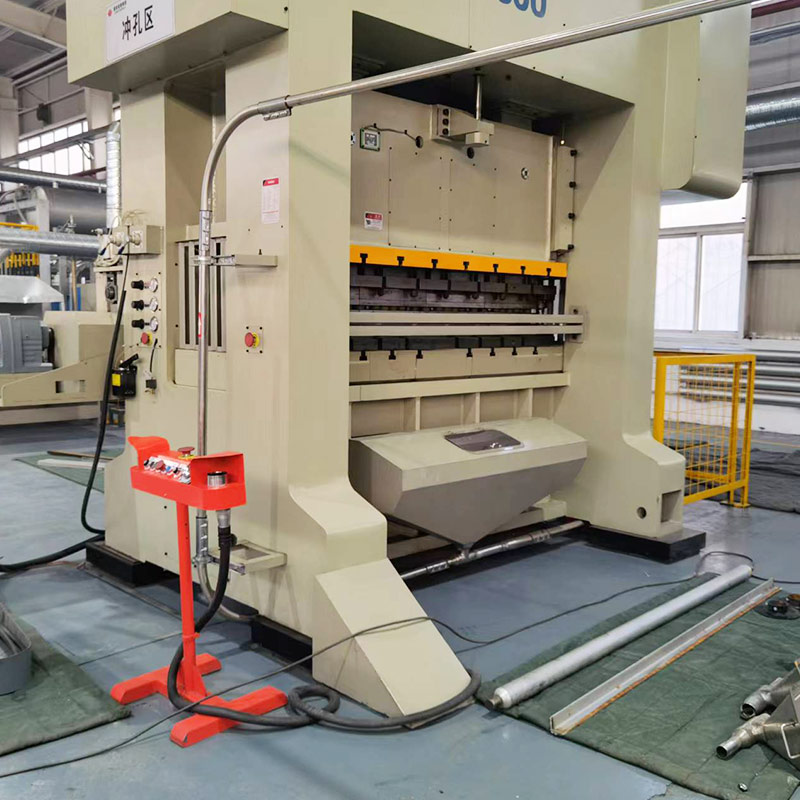 Bidirectional Geogrid Production LineThis line stretches punched sheet in both longitudinal and transverse directions, carrying a double synchronization load. It is relevant when finished-goods testing must confirm strength, elongation and aperture consistency across two directions.View Product →
Frequently Asked Questions
Does a higher draw ratio always mean a stronger geogrid?
No. Strength rises steeply at first and then flattens, while elongation keeps falling. Beyond the designed window you buy marginal strength at the cost of brittle ribs, distorted nodes and wider roll-to-roll scatter.
How does draw ratio show up in a product datasheet?
Indirectly but clearly. Rib width, aperture dimensions with tolerances, tensile strength, elongation at maximum load and junction strength all move with draw ratio, so those are the lines to read first when comparing grades.
Can aperture size be adjusted without new punch tooling?
Only within limits. Raising or lowering the draw ratio changes the finished openings, but a large change thins the ribs and pushes every dimension off tolerance, so meaningful aperture changes normally require a revised punch pattern as well.
Which tests should I insist on at acceptance?
Wide-width tensile testing to ISO 10319 or single-rib testing to ASTM D6637, plus aperture measurement against the stated tolerance. Consistent results across several rolls matter more than one impressive number.
Draw ratio is where polymer science, machine control and product geometry meet in a single number. Held in its working window, it delivers the combination reinforcement projects actually need: high tensile strength, low yield elongation, apertures sized to the fill, and ribs that survive installation. If you are weighing up production lines or finished geogrids and want to discuss how a line keeps its draw ratio stable, the equipment and product range on our homepage is a practical place to start.