中文简体
中文简体 русский
 عربى
عربى

Content
- 1 Material Feeding Instability: Starvation, Bridging, and Surge
- 2 Temperature Fluctuations in Barrel and Die Zones
- 3 Uneven Stretching and Thickness Variation in the Drawing Section
- 4 Die Lines, Melt Fracture, and Other Surface Defects
- 5 Equipment Wear, Jamming, and the True Cost of Skipped Maintenance
- 6 Frequently Asked Questions
- 6.1 Why does my geogrid sheet vary in thickness across the width?
- 6.2 How often should I clean the die on a geogrid extrusion line?
- 6.3 What is a normal service life for the screw and barrel?
- 6.4 How can I tell if my stretching rolls are worn before they cause quality issues?
- 6.5 Can regrind quality really affect extrusion stability?
- 7 Bottom Line
Every geogrid plant manager knows the scene. The line is running, barrel temperatures look normal, and suddenly the melt pressure starts fluctuating. Within an hour, the extruded sheet shows thickness variation, the stretching frame produces uneven draw ratios, and a whole batch falls outside tensile strength tolerance. The causes are rarely mysterious. In more than 20 years of building and commissioning geogrid extrusion lines, we have found that most failures trace back to five recurring areas: feeding instability, temperature drift, uneven stretching, die contamination, and skipped maintenance. Here is how to diagnose each one and solve it before it costs you a shift.
Material Feeding Instability: Starvation, Bridging, and Surge
Start at the hopper, not the screw. If the extruder output fluctuates or the melt pressure surges, an unstable feed rate is the most likely culprit. Feed-related problems account for roughly one-quarter of unscheduled stops on geogrid extrusion lines, according to field service records collected across more than 40 installations.
Three patterns repeat. Bridging occurs when pellets and regrind form an arch above the screw, starving the feed section. Rat-holing happens when material discharges only down the centre of the hopper, leaving stagnant material on the walls. Surging appears as periodic swings in screw load and die pressure, usually caused by inconsistent granule size or moisture content.
The fixes are practical: keep regrind particle size uniform, blend regrind with virgin material before the hopper, and install an agitated hopper or a crammer feeder when fluff and film scrap are part of the mix. Moisture content should also be checked before blaming the mechanical side of the line.
Figure 1. Share of unscheduled stops by root cause on geogrid extrusion lines
For plants that regrind edge trims and rejected geogrid sheets, a granulator with consistent output size is the first line of defense. Our industrial granulator range produces uniform regrind, which directly reduces feeding fluctuations at the extruder.
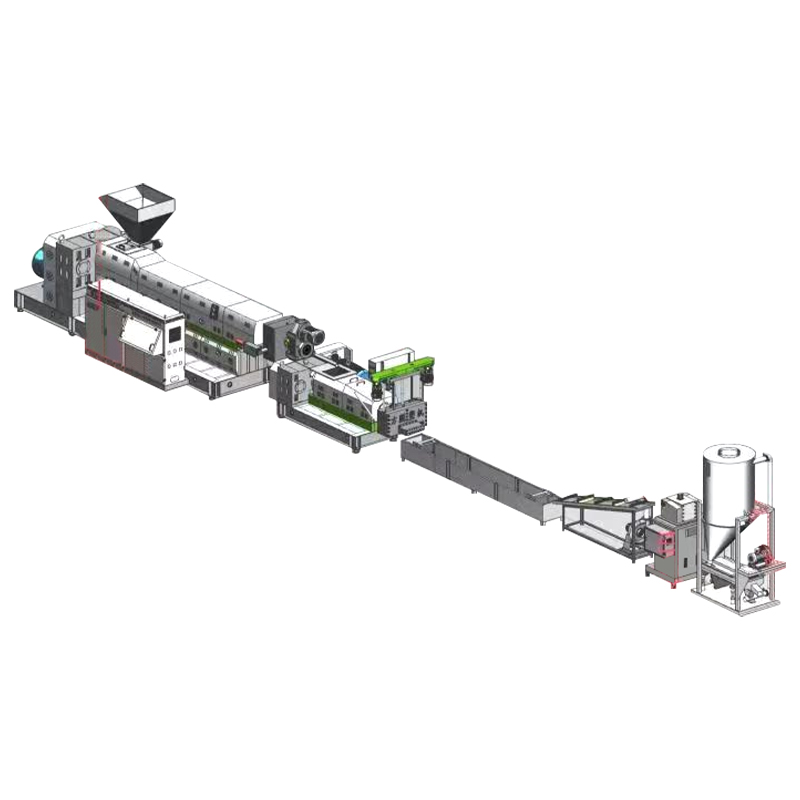 Custom Granulator Manufacturer, Suppliers - Jiangsu Saide Machinery Co., LtdJiangsu Saide Machinery Co., Ltd is a China Granulator manufacturer and Granulator supplier, specializing in custom Granulator sales, fac...View Product →
Temperature Fluctuations in Barrel and Die Zones
Temperature control is the second most common source of quality defects. A 10 degrees Celsius swing in one barrel zone changes polymer viscosity enough to shift the extruded sheet thickness by several tenths of a millimetre. In geogrid production, that small variation becomes much larger, because the stretching section multiplies any gauge difference into visible changes in rib cross-section and tensile strength.
The practical causes are usually mundane: a worn thermocouple seated too far from the melt, heater bands with electrical resistance drift, or a PID controller tuned on a cold line and never rechecked at operating temperature. Die zones are also vulnerable to drafts from cooling fans and open doors.
Solve temperature problems by logging zone temperatures against melt pressure for one full shift, cleaning thermocouple wells, replacing heater bands with more than 10 percent resistance deviation, and confirming that cooling air is not blowing across the die.
Figure 2. Barrel zone temperature deviation and resulting sheet thickness variation
Uneven Stretching and Thickness Variation in the Drawing Section
After the sheet leaves the die, the drawing section becomes the main source of customer complaints. Uneven heating across the sheet width, a speed mismatch between roller groups, or a worn draw roller all show up as variable tensile strength in the finished geogrid. The conclusion is straightforward: if laboratory results drift between the edges and the centre of the sheet, inspect the oven and roll speeds before touching the extruder.
Speed mismatch is the most common fix. Roller groups that differ by even 0.5 percent in surface speed produce visible draw-ratio changes. Worn rubber-coated rolls slip under heat, and bearing clearance in idler rolls adds periodic tension variation.
On new lines, closed-loop speed control and multi-zone heating keep these variables tight. If you are shopping for equipment, make sure the supplier documents how the drawing ratios are controlled. If you are not sure how each stage affects the next, read our explanation of the geogrid production process flow.
| Symptom | Likely cause | Corrective action |
|---|---|---|
| Edge curling | End zones colder than centre | Balance oven zone outputs |
| Periodic thickness bands | Roller bearing play or slip | Replace worn bearings or re-coat rolls |
| Low tensile at one edge | Nip roll pressure uneven | Realign nip rolls and check level |
| Draw resonance | Take-off speed too high | Reduce line speed and adjust draw ratio |
Our bidirectional geogrid production line uses servo-driven drawing sections and multi-zone ovens, which eliminate the speed-matching problem at the design stage.
 Bidirectional PP PE Geogrid Production Line ManufacturerJiangsu Saide is a China bidirectional plastic geogrid equipment manufacturer and PP PE geogrid production line supplier, specializing in...View Product →
Die Lines, Melt Fracture, and Other Surface Defects
Surface defects are the fastest visible sign that the die is dirty or the melt temperature is wrong. Die lines appear when carbonised polymer or foreign particles lodge on the die lips; the lines transfer directly onto the extruded sheet and remain visible after stretching. In most cases, the contamination builds in the low-flow corners at the ends of the die.
Melt fracture is the second issue. At high shear rates, the extrudate surface turns rough, a defect often called sharkskin. It is a process-condition problem, not usually a mechanical failure. Reducing screw speed, raising melt temperature, or increasing the die land length to lower shear stress all help.
Cleaning schedules matter. A die that runs carbon-black polypropylene should be wiped and inspected at planned intervals, not when defects appear. Keep a record of which zones build carbon fastest; that tells you where the thermal profile is causing localised degradation.
Equipment Wear, Jamming, and the True Cost of Skipped Maintenance
The most expensive problems are the gradual ones. A screw that loses flight depth or a reducer bearing with growing backlash does not stop the line on day one; it quietly reduces output and raises specific energy consumption. When a sudden jam finally happens, operators blame the material, not the maintenance schedule.
In our field experience, worn screw and barrel sets are the leading mechanical replacement on geogrid lines, followed by thrust bearings and heater bands. The pattern is avoidable with a basic preventive schedule: monthly lubrication and vibration checks, quarterly heater-band resistance testing, annual screw-to-barrel clearance measurement, and replacement of draw-roll bearings before they start slipping.
Our uniaxial tensile geogrid production line is built with heavy-duty reducers and accessible service points, so a maintenance team can complete a monthly inspection in less than two hours. For the full preventive maintenance checklist we provide with every machine, visit our geogrid machine website and request the service manual.
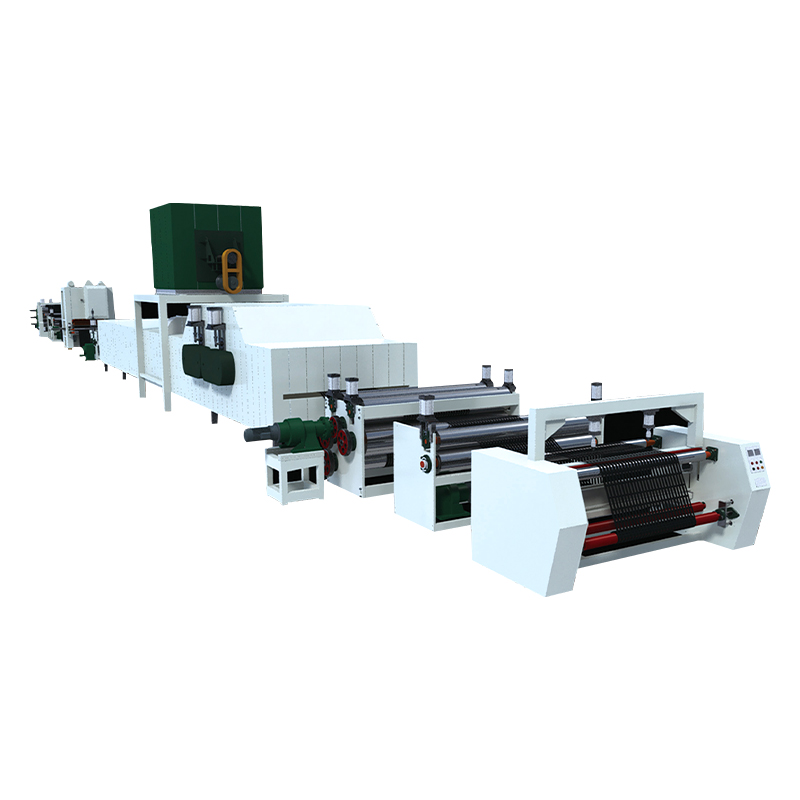 Unidirectional Plastic Geogrid Equipment Manufacturer, SuppliersJiangsu Saide Machinery Co., Ltd is a China unidirectional plastic geogrid equipment manufacturer and production line of uniaxial tensile...View Product →
Frequently Asked Questions
Why does my geogrid sheet vary in thickness across the width?
The usual causes are an unbalanced die temperature profile, a dirty die lip, or worn die gap adjustment bolts. Measure the temperature across the die body and compare it to the setpoint; a deviation of more than 5 degrees Celsius between the edge and centre zones is enough to explain the variation.
How often should I clean the die on a geogrid extrusion line?
For carbon-black polypropylene, plan a visual inspection every two weeks and a full wipe-down at least once per month. Lines running heavily filled compounds may need more frequent cleaning.
What is a normal service life for the screw and barrel?
With polypropylene containing carbon black, a nitrided screw and barrel typically last 18 to 30 months before the screw-to-barrel clearance exceeds 0.4 mm, depending on screw speed and the amount of regrind in the feed.
How can I tell if my stretching rolls are worn before they cause quality issues?
Listen for unusual bearing noise, look for thickness bands that repeat at the roll circumference, and measure roll diameters with a laser gauge during a planned stop. A diameter loss of more than 0.2 percent on a drawn roll means it is time to re-coat or replace it.
Can regrind quality really affect extrusion stability?
Yes. Inconsistent granule size changes the bulk density entering the screw, which produces feed surge and pressure fluctuation. Keeping blade sharpness and screen size consistent is one of the cheapest stability upgrades a plant can make.
Bottom Line
The pattern is consistent across geogrid plants: most extrusion line problems are predictable, and most are preventable. Feeding instability, temperature drift, stretching imbalance, die contamination, and skipped maintenance account for the large majority of downtime. Fixing them starts with systematic observation and simple measurement, and prevention is far cheaper than repair. If you are planning a new production line or need help with a persistent fault, our engineering team can help you specify equipment that suits your raw materials, output targets, and maintenance capacity.