中文简体
中文简体 русский
 عربى
عربى

HDPE vs PP Geogrid Production Line: The Short Answer
If you are comparing HDPE and PP geogrid production lines, the deciding factors are not the extruder brand or the sheet width. They are the stretching oven design, temperature control range, stretch ratio, and post-stretch annealing section. These elements decide whether the finished grid meets tensile strength, elongation, and aperture specifications, and a line set up for one polymer will usually produce poor-quality grids from the other.
HDPE uniaxial geogrid lines are built around a high machine-direction stretch ratio, typically 6:1 to 10:1, which creates high one-directional tensile strength and stiffness. PP biaxial geogrid lines stretch the sheet in both the machine direction and the transverse direction at a lower ratio, producing balanced two-directional strength. Choose an HDPE line when your customers need reinforcement for retaining walls, steep slopes, or landfill base layers. Choose a PP biaxial line when the project needs road base and soft-foundation stabilization at a lower resin cost per square metre.
Material Differences That Force Different Line Configurations
Before comparing machinery, compare the resin itself. The production line must be engineered around the melting point, crystallinity, and stretch behaviour of the polymer, and HDPE and PP differ enough that the entire thermal profile changes.
| Property | HDPE | PP |
|---|---|---|
| Density | 0.94-0.97 g/cm³ | 0.90-0.91 g/cm³ |
| Melting point | 120-135°C | 160-165°C |
| Typical extrusion melt temperature | 190-230°C | 220-255°C |
| Stretching temperature window | About 90-120°C | About 120-160°C |
| Tensile strength after drawing | Higher at equal weight | Lower but more balanced in biaxial form |
| Impact resistance at low temperature | Better | Moderate |
| Natural UV resistance | Better | Requires stabilizers |
| Typical grid form | Uniaxial | Biaxial |
Two practical consequences follow. First, PP's higher melting point means the extruder, die, and stretching ovens run hotter, and temperature control must be tight because PP degrades quickly near 280°C. Second, HDPE's higher crystallinity allows deep drawing at a high ratio, while PP's lower melt strength and different crystalline structure limit the practical stretch ratio and make balanced biaxial orientation the most economical route.
How the Production Line Changes from Polymer to Finished Grid
The overall geogrid production process is similar for both materials: resin dosing, extrusion, sheet cooling, punching, stretching in a heated oven, annealing, and winding. Each station, however, is tuned differently.
Extrusion and die design
HDPE lines typically use a single-screw extruder with a longer L/D ratio to homogenize the melt, and the die gap is set for a thicker sheet because uniaxial drawing reduces thickness sharply. PP lines run at a higher melt temperature and often use a shallower die gap, since the sheet must keep its dimensional stability before punching.
Punching pattern
The hole geometry in the punched sheet is determined by the stretch ratio. HDPE uniaxial lines use a staggered pattern with holes that elongate in the machine direction during pulling. PP biaxial lines need a starting geometry designed so the holes grow in both directions, which requires a more symmetrical pattern and tighter punching tolerance.
Stretching ovens: the real differentiator
This is where the difference is most visible. An HDPE uniaxial line has a long single stretching oven, sometimes 12 m or more, with multiple temperature zones between 90°C and 120°C. The sheet is gripped by chain pins or clamps and pulled at a ratio of 6:1 to 10:1. A PP biaxial line has two ovens: the first stretches the sheet in the machine direction, the second in the transverse direction, with the temperature rising from roughly 120°C toward 160°C. The chain width and speed must be synchronized precisely to produce a uniform aperture.
Annealing and cooling
HDPE grids must be annealed under tension to stabilize the oriented molecules and reduce shrinkage. PP grids are given a controlled relaxation phase after biaxial stretching. If the cooling is too fast in either process, the grid becomes brittle and the aperture dimensions drift.
What to Check on an HDPE Uniaxial Geogrid Production Line
An HDPE uniaxial line is the right choice when your customers need high tensile strength in one direction, low elongation, and long-term performance in soil reinforcement. Typical uniaxial grids reach 50-200 kN/m in the machine direction at 2% or 5% elongation, depending on the standard used.
- Stretch ratio capability: the line should allow 6:1 to 10:1 with fine adjustment of the pin-chain speed.
- Oven length and zone control: more zones mean better temperature uniformity and fewer neck-in marks.
- Cooling section under tension: this locks in molecular orientation and controls final elongation at break.
- Creep-related design margin: if the grid will support a retaining wall for decades, the process must deliver consistent orientation across the full sheet.
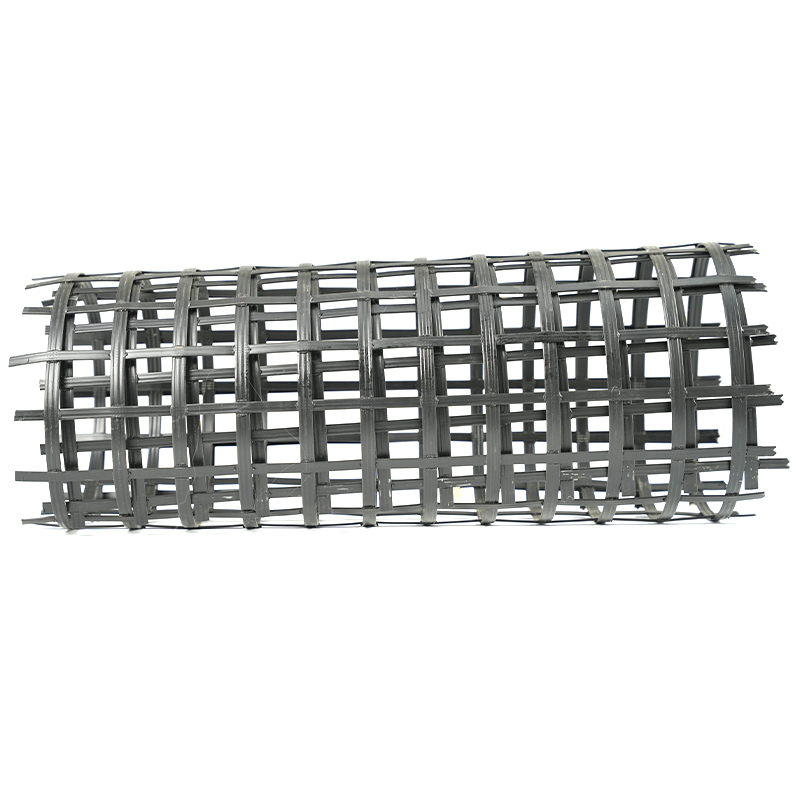
Our uniaxial tensile geogrid production line is configured for HDPE sheet with a multi-zone oven and tension-controlled annealing. For more on the quality side, see how uniaxial line quality control works in practice.
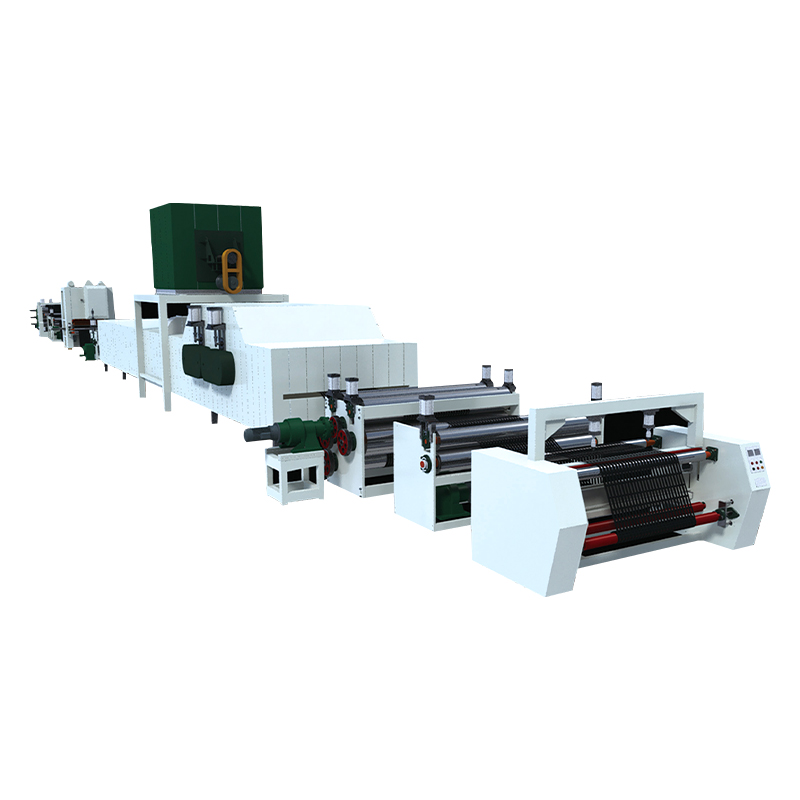 Unidirectional Plastic Geogrid Equipment Manufacturer, SuppliersJiangsu Saide Machinery Co., Ltd is a China unidirectional plastic geogrid equipment manufacturer and production line of uniaxial tensile...View Product →
What to Check on a PP Biaxial Geogrid Production Line
PP biaxial geogrids are the workhorse of road base reinforcement and soft-ground stabilization. They offer balanced strength in two directions and are lighter: because PP density is lower and the grid has a more open aperture structure, one kilogram of resin covers more square metres than HDPE.
- Two-stage stretching: the machine-direction and transverse-direction stretching units must be controllable independently because PP behaviour changes with temperature and speed.
- Temperature uniformity across the full sheet width: even a few degrees of difference causes necking and uneven aperture geometry.
- Clamp or pin-chain quality: the pins carry the full pulling load during biaxial stretching.
- Output balance: because the stretch ratio is lower than HDPE, the line can often run faster per metre of oven length.
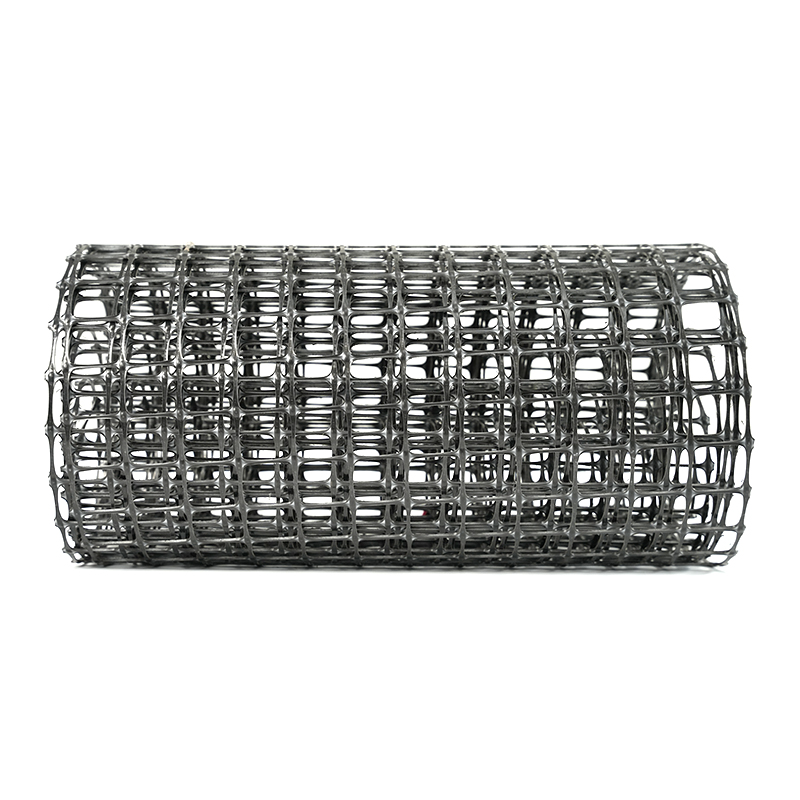
Our bidirectional geogrid production line is built for PP biaxial grids with synchronized machine-direction and transverse-direction stretching, and it can be tuned for different aperture sizes and tensile grades.
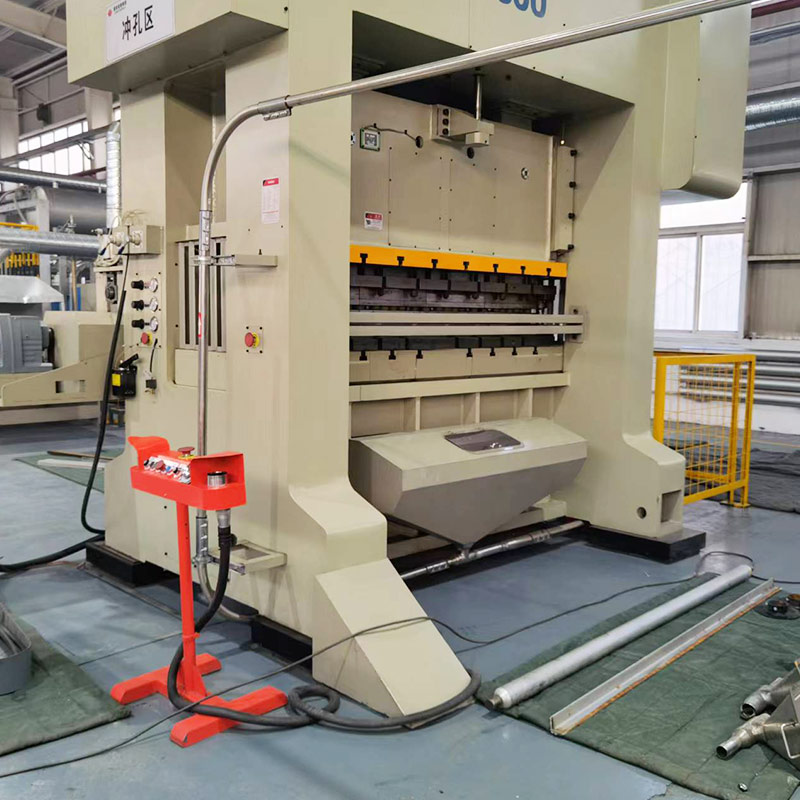 Bidirectional PP PE Geogrid Production Line ManufacturerJiangsu Saide is a China bidirectional plastic geogrid equipment manufacturer and PP PE geogrid production line supplier, specializing in...View Product →
Finished Grid Comparison: What the Buyer Will Test
The line choice ultimately shows up in the finished product test report. A typical comparison of HDPE uniaxial and PP biaxial grids from equivalent lines looks like this.
This explains the application split. HDPE uniaxial grids go into retaining walls, steep slopes, embankments, and landfill base reinforcement, where the load is carried mainly in one direction. PP biaxial grids go into road bases, working platforms, and soft-subgrade stabilization, where reinforcement must act in two directions simultaneously.
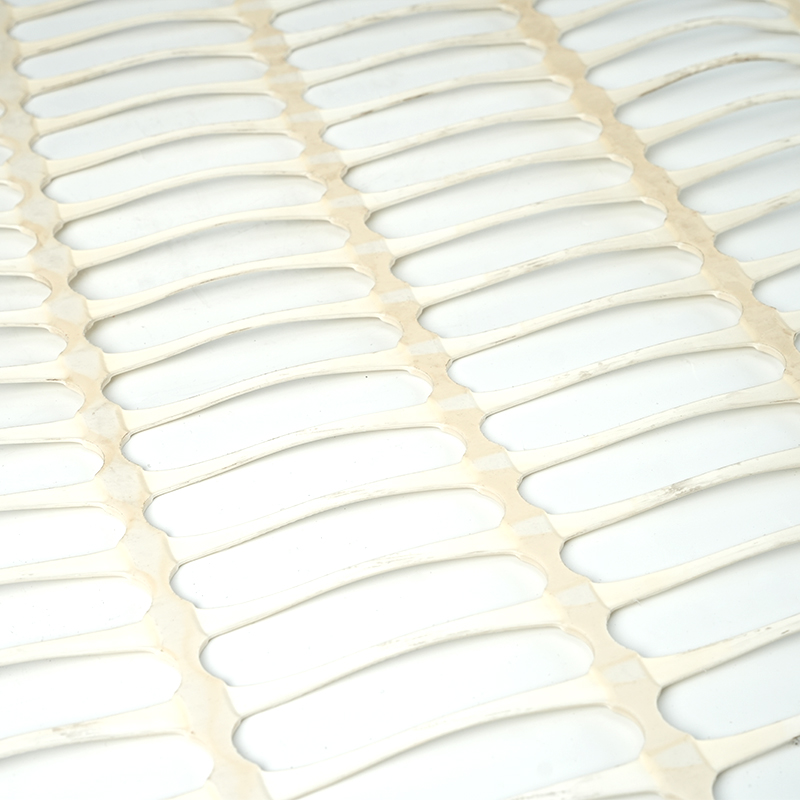
If you plan to supply both material families, check the finished unidirectional stretch plastic geogrid as a benchmark for what a well-tuned HDPE line should produce.
 Custom Unidirectional stretch plastic geogrid Manufacturer, Suppliers - Jiangsu Jiangsu Saide Machinery Co., Ltd is a China Unidirectional stretch plastic geogrid manufacturer and Unidirectional stretch plastic geogri...View Product →
Frequently Asked Questions
Can one geogrid production line run both HDPE and PP?
Partially, but not optimally. The stretching temperature window and stretch ratio are different, so a line designed for HDPE uniaxial grids will not produce high-quality PP biaxial grids, and the reverse is also true. You can change resin and run trials, but throughput and product quality will normally drop.
Which production line is more expensive, HDPE uniaxial or PP biaxial?
PP biaxial lines are often more complex because they need two synchronized stretching sections, which can push the equipment price higher. However, lower resin cost per ton and lower PP density can offset that difference in the operating phase. Evaluate the total cost per square metre of finished grid, not the line price alone.
Does HDPE or PP produce stronger geogrids?
HDPE geogrids generally show higher tensile strength and higher initial modulus for the same weight, which is why they are used for heavy one-directional loads. PP geogrids provide balanced two-directional strength and are adequate for road and foundation reinforcement. Stronger depends on which direction you are loading the grid.
Why does the stretching temperature matter so much?
If the sheet is stretched below the correct window, it breaks or forms inconsistent apertures. If it is stretched too close to the melting point, the polymer relaxes and the orientation is lost. HDPE needs a window of roughly 90-120°C, while PP needs roughly 120-160°C, so the oven design and temperature control are the most important quality factors in the entire line.